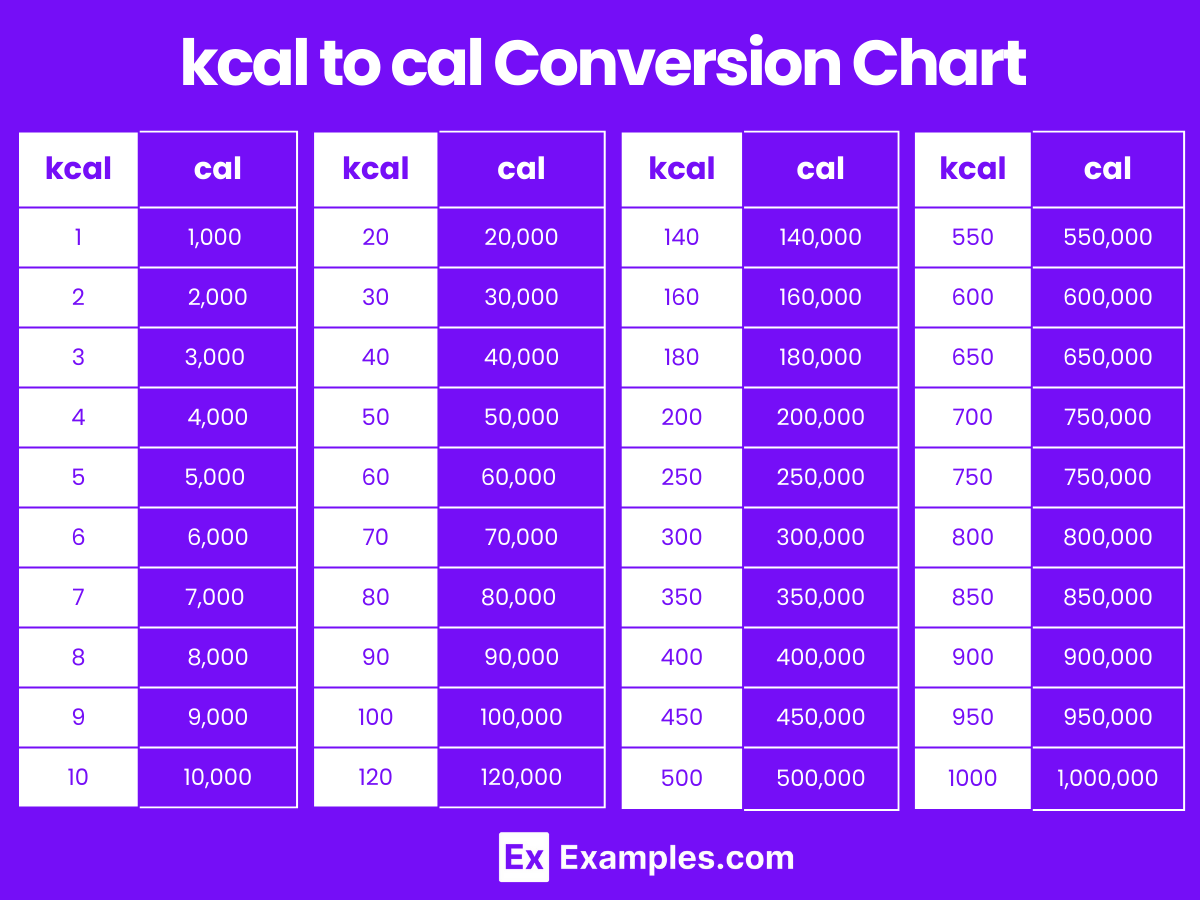
When you look at a food package, you'll often see the words calories and kilocalories used interchangeably. Understanding the difference between kcals vs cals is surprisingly simple, yet it causes endless confusion in diet and fitness circles.
In short, a small calorie is a physics unit, while a large calorie, or kilocalorie (kcal), is what we actually use in human nutrition. When nutritionists and food labels talk about calories, they are almost always referring to kilocalories, even if they drop the prefix. Let's break down why this terminology exists and how it affects the way you track your daily energy intake.
Defining the Terms: What is a Calorie?
To understand food energy, you have to look back at how energy was originally measured. In physics, a calorie with a lowercase "c" is defined as the amount of thermal energy required to raise the temperature of one gram of water by one degree Celsius at standard atmospheric pressure.
That is an extremely tiny amount of energy. If we used small calories to measure food, a single apple would contain tens of thousands of them, making tracking tedious and confusing.
To make numbers manageable, scientists adopted the kilocalorie (kcal), which equals one thousand small calories. This larger unit represents the amount of energy needed to raise the temperature of one kilogram of water by one degree Celsius.
Capital C Versus Lowercase c
Historically, nutrition scientists tried to keep things straight by using capitalization. A Calorie with a capital "C" (sometimes called a food calorie or large calorie) was meant to represent a kilocalorie. A calorie with a lowercase "c" represented the tiny physics unit.
In everyday conversation and modern labeling, this distinction has largely broken down. Food packages in the United States list "Calories," but they actually mean kilocalories (kcals). In countries that use the metric system strictly, you'll often see energy listed directly in kilojoules (kJ) alongside kilocalories.
The Physics Versus Nutrition Disconnect
The confusion between kcals and cals stems entirely from the gap between laboratory physics and human dietary needs.
Early nutrition researchers like Wilbur Olin Atwater needed a standardized way to measure the chemical energy stored in food. They used a device called a bomb calorimeter, which burns food completely and measures the heat released.
Because the heat released by even a small meal is massive in terms of physics calories, scaling up to kilocalories made mathematical sense. When dietetics emerged as a formal science, researchers borrowed the unit. However, marketing and consumer-facing labels needed simplicity. Saying a snack has "200 kilocalories" sounds clinical, whereas "200 calories" feels approachable.
How Food Labels Handle Energy Units
If you travel internationally, you will notice differences in how food energy is displayed on nutrition facts panels.
In the United States, the Food and Drug Administration (FDA) requires nutrition labels to use the term "Calories." These are kilocalories, though the prefix is omitted for simplicity.
In the European Union, the United Kingdom, Australia, and many other regions, food labels list both kilocalories (kcal) and kilojoules (kJ). A kilojoule is the standard International System of Units (SI) measure for energy.
- Conversion factor: One kilocalorie is equal to approximately 4.184 kilojoules.
If you see a snack bar that lists 200 kcal, its energy content in the metric SI system is roughly 837 kJ. You don't need to convert these numbers yourself unless you're following a specialized international meal plan, but knowing the relationship helps clarify why different apps or imported products show different units.
Common Misconceptions About Dietary Energy
Misunderstandings about energy units often lead to frustrating diet myths. Let's clear up a few persistent errors.
"Are burned calories the same as food calories?"
Yes. Whether energy is measured in a laboratory calorimeter or expended by your muscles during a run, the fundamental unit of heat and work is identical. When your fitness tracker says you burned 400 active calories, those are the exact same thermal energy units found on your breakfast cereal box.
"Do different macronutrients provide different types of calories?"
Proteins, fats, carbohydrates, and alcohol all provide energy, but they do so at different rates per gram. These rates are known as Atwater general factors:
- Carbohydrates: Roughly 4 calories per gram.
- Protein: Roughly 4 calories per gram.
- Fats: Roughly 9 calories per gram.
- Alcohol: Roughly 7 calories per gram.
When you see kcals listed on a label, they are calculated by multiplying the grams of each macronutrient by these standard factors.
"Is a calorie just a calorie for weight loss?"
From a pure thermodynamics standpoint, energy balance dictates weight change: consuming more energy than you expend leads to weight gain, while consuming less leads to weight loss. However, from a biological standpoint, the source of those calories matters immensely for satiety, hormone regulation, and muscle retention. Eating 500 calories of lean chicken and vegetables affects your body differently than eating 500 calories of refined sugar, even if the energy unit count is identical.
Practical Tracking Tips for Everyday Eating
You don't need a degree in thermodynamics to manage your nutrition effectively. Keep these straightforward principles in mind:
- Ignore the prefix: When fitness apps, coaches, or food labels mention calories or kcals, treat them as the exact same thing.
- Focus on consistency: If you use a digital tracking app, stick to one database. Different apps might calculate fiber or alcohol slightly differently, but consistency matters more than absolute perfection.
- Read imported labels carefully: If you buy specialty foods imported from Europe, check whether the main prominent number is kcals or kJ so you don't accidentally miscalculate your intake.
For further reading on how international food standards regulate energy labeling, check the guidelines provided by the World Health Organization. You can also review official consumer advice on food labels via the U.S. Food and Drug Administration.
Frequently Asked Questions
Why do some fitness trackers use kilocalories while others say calories?
Most consumer fitness devices and tracking software use the terms interchangeably. Even when a screen displays "kcal," it represents the exact same dietary unit as a standard food "calorie."
Do I need to convert kilojoules to kcals when tracking food from other countries?
Most modern tracking apps handle international barcodes automatically and convert foreign energy units into your preferred display setting. If you're calculating manually, remember to divide kilojoules by 4.184 to find the equivalent kcals.
Why do fat, protein, and carbs have different energy densities?
Different molecules have different chemical bond structures. Fats contain longer chains of carbon and hydrogen atoms that release more energy when broken down by metabolic oxidation compared to the structures found in carbohydrates and proteins.
Does cooking change the number of kcals in food?
Cooking can change how efficiently your body absorbs energy by breaking down tough cell walls and pre-digesting starches or proteins, but the raw thermal energy measured by a calorimeter remains largely stable.


