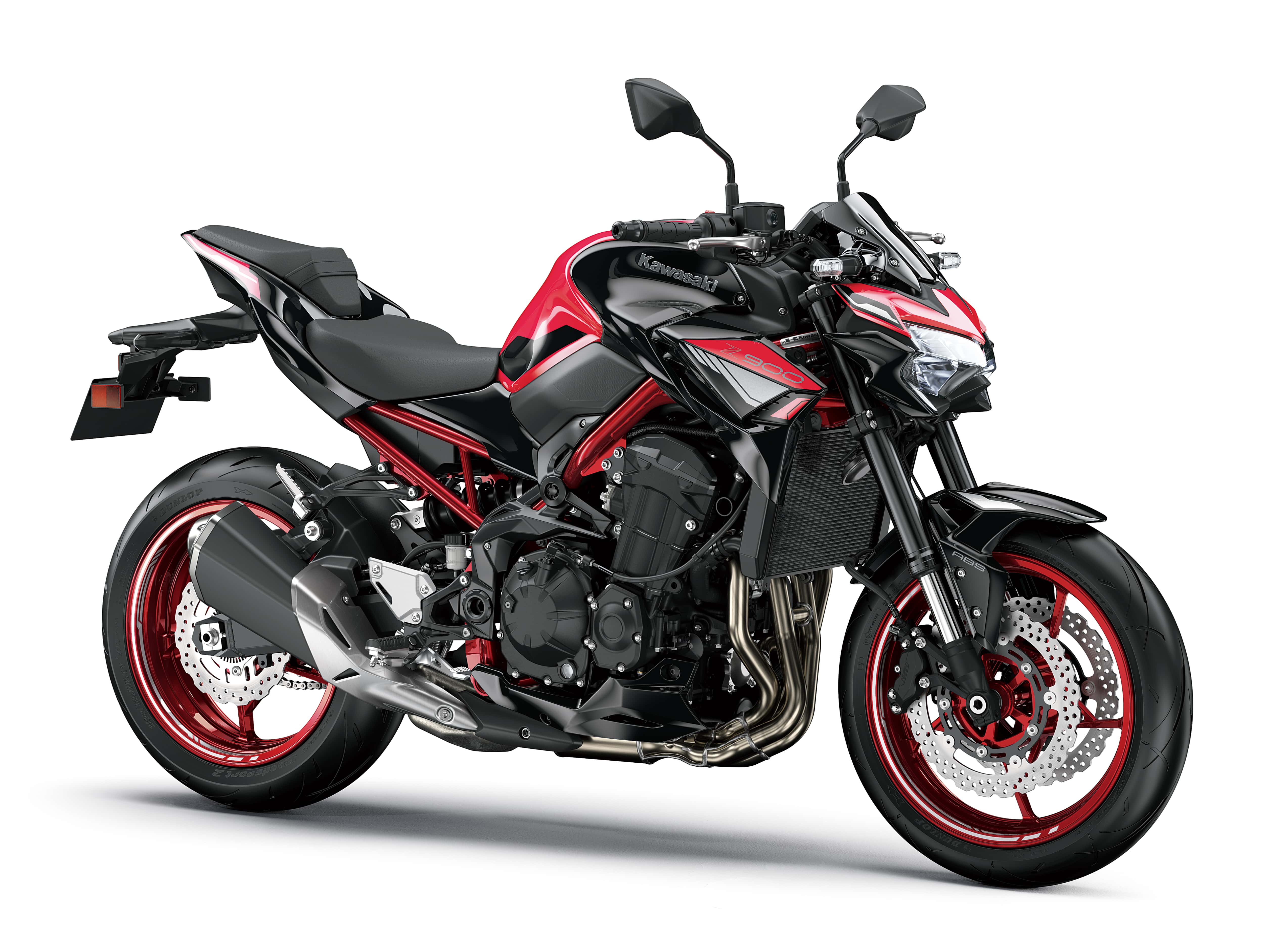
Choosing between the Kawasaki Z900 and the Suzuki GSX-S1000 means picking your favorite flavor of raw, inline-four street performance without the encumbrance of full sportbike fairings. Both machines anchor the middle-to-open displacement naked class, delivering high-revving thrills, upright ergonomics, and aggressive styling. Yet, they approach street riding with entirely different engineering philosophies. One prioritizes smooth, accessible everyday dominance, while the other channels legendary superbike DNA into a sharper, more muscular package.
The Kawasaki Z900 relies on a 948cc inline-four engine tuned for effortless mid-range pull and refined user-friendliness, wrapped in a nimble trellis frame. Meanwhile, the Suzuki GSX-S1000 borrows its heartbeat directly from the iconic GSX-R1000 K5 superbike, punching out more raw horsepower with an intoxicating top-end rush. Deciding which naked bike reigns supreme depends entirely on whether you value balanced, everyday tractability or unadulterated track-derived muscle.
Engine Performance and Power Delivery
The core difference between these two streetfighters lies in how they generate and deliver power. They both use liquid-cooled, inline-four configurations, but their displacement and heritage create distinct riding dynamics.
The Kawasaki Z900 puts out roughly 125 horsepower and 98.6 Nm of torque from its 948cc powerplant. Kawasaki engineered this motor to pull cleanly from the lowest revs, making city commuting and tight canyon carving effortless. You don't need to wring its neck to get satisfying acceleration. The throttle connection is linear and predictable, ensuring that riders stepping up from smaller displacement machines won't find themselves overwhelmed.
In contrast, the Suzuki GSX-S1000 carries a 999cc engine tracing its lineage back to the legendary GSX-R1000 K5. It cranks out around 150 horsepower and 106 Nm of torque. That extra displacement and superbike breeding show up immediately on open stretches of pavement. The Suzuki demands a bit more respect when you twist the grip past the halfway point. It rewards aggressive throttle inputs with a visceral, spine-tingling rush that climbs fiercely all the way to its redline.
- Kawasaki Z900: Smooth, linear power curve designed for flexible street riding and forgiving roll-ons.
- Suzuki GSX-S1000: Punchy, high-output superbike-derived surge with a heavy emphasis on mid-to-high rpm pull.
Handling, Chassis, and Suspension Setup
A powerful engine means little if the chassis can't keep it composed through a sweeping corner. Both manufacturers have spent years refining the bones of these motorcycles to handle real-world tarmac imperfections.
Kawasaki utilizes a high-tensile steel trellis frame paired with an adjustable 41mm inverted front fork and a horizontal back-link rear suspension. The Z900 feels remarkably light and natural on turn-in. It drops into corners with a neutral feel that builds instant rider confidence. The suspension is tuned on the plush side of sport riding, soaking up bumps and broken pavement without bouncing you out of the seat.
Suzuki builds the GSX-S1000 around a twin-spar aluminum frame reminiscent of its track-focused siblings. It features a fully adjustable inverted telescopic fork and a link-type rear shock. The Suzuki feels slightly more planted and rigid at high speeds. When you push hard through sweeping bends, the aluminum chassis communicates front-end grip with exceptional clarity. However, the factory suspension setup leans firmer than the Kawasaki's, which translates to a harsher ride over sharp urban potholes.
Electronics and Rider Aids
Modern naked bikes rely heavily on digital safety nets to harness open-class power, though these two take different approaches to electronic complexity.
Kawasaki equips the Z900 with comprehensive tech, including integrated riding modes, power modes, traction control (KTRC), and IMU-backed cornering management. The display is a clear, glass-bonded 5-inch TFT unit featuring smartphone connectivity via the Rideology the App interface. You also get electronic cruise control on recent iterations, making long highway stints much more comfortable.
Suzuki keeps things simpler, focusing on mechanical performance over dense digital menus. The GSX-S1000 features a multi-mode traction control system, easy-to-use power selectors (Active, Basic, and Comfort modes), and a reliable bi-directional quickshifter. It lacks advanced lean-sensitive IMU features like cornering ABS, keeping its cockpit interface straightforward and free of clutter.
- Kawasaki Z900: Feature-rich package boasting an IMU, cruise control, and smartphone pairing.
- Suzuki GSX-S1000: Streamlined, no-nonsense electronics suite prioritizing core ride modes and a crisp quickshifter.
Ergonomics and Daily Usability
Living with a naked bike means dealing with wind blast, seat comfort, and low-speed manners during your daily commute.
The Z900 offers a comfortable, upright seating triangle with an accessible seat height. Its tank narrows neatly where your knees grip, allowing riders of various heights to plant their feet flat at a red light. Wind protection is minimal, as expected from a naked streetfighter, but the relaxed posture prevents wrist fatigue during longer rides.
The GSX-S1000 places the rider in a slightly more aggressive, forward-leaning stance that weight-shifts over the front wheel. It feels ready to attack apexes the moment you swing your leg over. While the handlebars are wide and offer great leverage for quick flicking, the seat can feel firm during extended highway journeys. Suzuki includes their Low RPM Assist feature, which subtly raises engine speed when pulling away from a dead stop to prevent accidental stalls in heavy traffic.
Maintenance and Common Ownership Realities
Owning an open-class or near-liter naked bike involves predictable wear items and routine upkeep. Both models demand regular chain cleaning and lubrication every 300 to 500 miles, particularly if you exploit their mid-range torque regularly. Valve clearance checks typically fall into the 15,000-to-20,000-mile window, requiring professional mechanic intervention due to the tight clearance of modern inline-four cylinder heads.
A common mistake new owners make with both bikes is neglecting tire pressures. Because these naked machines generate immense rear-wheel drive, running incorrect tire pressures leads to rapid center tread wear and squirmy cornering feedback. Always check your cold tire pressures weekly. Furthermore, don't ignore the importance of practicing emergency braking in a controlled lot; the immense stopping power provided by radial-mounted calipers requires a gentle, progressive squeeze to avoid engaging ABS prematurely.
You can explore official specifications and regional dealer availability directly through Kawasaki and Suzuki Cycles.
Frequently Asked Questions
Which motorcycle is better for daily commuting?
The Kawasaki Z900 edges out the competition for daily commuting due to its slightly softer suspension tuning, forgiving low-end power delivery, and the inclusion of cruise control for transit stretches.
Are these bikes suitable for beginners?
Neither of these motorcycles is recommended for absolute beginners. While their upright seating positions look approachable, their heavy displacement, rapid acceleration, and high power outputs require prior riding experience to handle safely.
Do both models come with a quickshifter?
Modern iterations of both the Z900 and the GSX-S1000 feature smooth, bi-directional quickshifters as standard equipment, allowing clutchless upshifts and downshifts once you're moving.
Which bike holds its resale value better?
Both Kawasaki and Suzuki enjoy strong brand loyalty in the naked bike segment. Resale value typically depends more on regional demand, clean maintenance records, and whether the bike has been modified or dropped.


