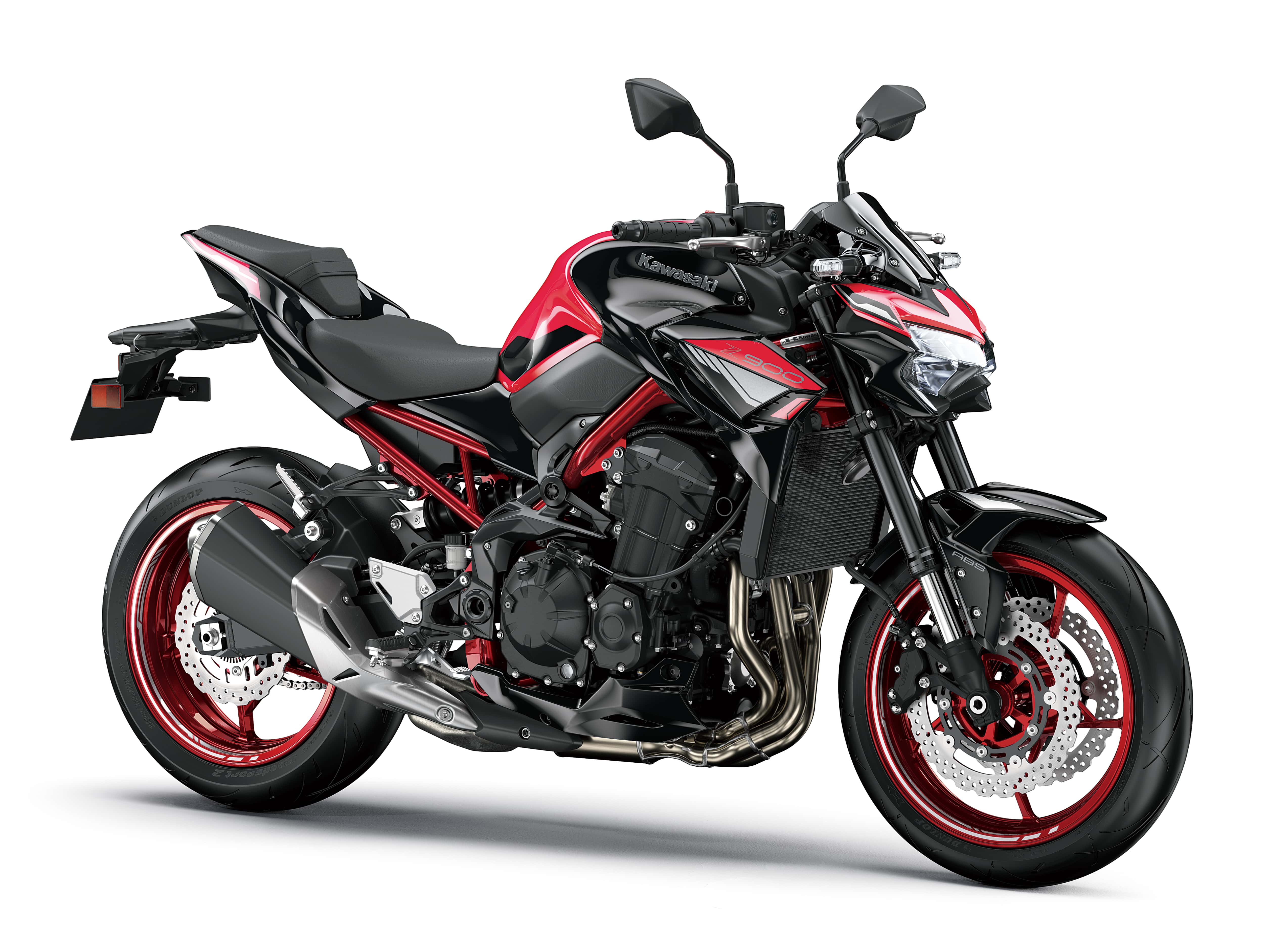
The Kawasaki Ninja H2 and its track-exclusive H2R sibling reach top speeds between 209 mph (336 km/h) for the street-legal variants and up to 249 mph (400 km/h) for the unrestricted H2R. These velocity figures come courtesy of a 998cc inline-four engine paired with a centrifugal supercharger, making it the fastest production-derived motorcycle ever built.
Understanding how this machine achieves such figures requires looking past simple horsepower numbers. The H2 series utilizes forced induction to maintain massive volumetric efficiency at extreme velocities where naturally aspirated engines struggle against heavy aerodynamic drag.
Supercharger Engineering: How Forced Induction Works on Two Wheels
Most high-performance superbikes rely on high-revving, naturally aspirated engines. Kawasaki chose a centrifugal supercharger designed entirely in-house by their motorcycle, aerospace, and gas turbine divisions.
Directly driven by the crankshaft through a planetary gear train, the supercharger spins at up to 140,000 rpm at peak engine output. This design eliminates the throttle lag associated with exhaust-driven turbochargers, providing instant boost response across the entire rev range.
- Displacement: 998cc liquid-cooled inline-four
- Power Output: 228 hp for the street Ninja H2 (ram air active); 310 hp (326 hp with ram air) for the track-only H2R
- Torque: 104.9 lb-ft on the street model, over 121 lb-ft on the H2R
- Boost Pressure: Approximately 20.5 psi on the H2 and 29.4 psi on the H2R
Street-Legal H2 Versus Track-Only H2R Top Speeds
The performance gap between the standard Ninja H2 and the H2R is vast due to emissions regulations, gearing differences, and electronic speed limiters.
The street-legal Ninja H2 is electronically governed to a top speed of 186 mph (300 km/h) to comply with international gentlemen's agreements among major motorcycle manufacturers. Even with this restriction, riders can unlock higher velocities on closed courses by flashing the ECU or removing the speed limiter.
The H2R features no electronic speed restrictions, a more aggressive camshaft profile, different supercharger impeller ratios, and a richer fuel mapping. On a closed runway or salt flat, professional riders have pushed the H2R past 240 mph, with specific specialized builds touching 250 mph.
The Physics of Drag: Why 240 MPH Requires Over 300 Horsepower
Aerodynamic drag increases with the square of velocity, while the power required to overcome that drag increases with the cube of velocity. At speeds exceeding 200 mph, aerodynamic resistance accounts for more than ninety percent of the load on the motorcycle.
Kawasaki wind-tested the H2 and H2R extensively, integrating carbon fiber aerodynamic wings on the H2R. These wings don't just generate downforce to keep the front wheel planted under hard acceleration; they also stabilize the chassis in high-speed crosswinds.
Without aerodynamic stabilization, front-end lift at 220 mph causes catastrophic steering oscillation, known as a tank-slapper. The H2's trellis frame was specifically engineered with deliberate flex characteristics to absorb high-speed chassis feedback rather than fighting it rigidly.
Real-World Limitations and Track Reality
Achieving top speed on a motorcycle isn't just about engine power; it requires specific atmospheric conditions, long straightaways, and specialized equipment.
- Tire Integrity: Standard street tires disintegrate under the centrifugal forces generated at 240 mph. The H2R requires specialized track rubber capable of withstanding extreme heat and high rotational speeds without delaminating.
- Fuel Consumption: At full throttle, the supercharger forces air and fuel into the cylinders at an immense rate, draining the 4.5-gallon fuel tank in just a few minutes of sustained top-speed runs.
- Distance Required: Reaching 186 mph takes less than a mile on the street H2, but pushing past 230 mph on an H2R requires miles of uninterrupted runway or salt flat to allow the engine to pull through its final tall gear ratios.
Frequently Asked Questions
Can you buy a brand-new Kawasaki Ninja H2R today?
Kawasaki produces the Ninja H2R in limited, allocated batches. It remains a non-street-legal track bike with a specialized maintenance schedule that requires supercharger inspections at designated mileage intervals.
What is the 0-60 mph time for the Kawasaki H2?
The street-legal Ninja H2 accelerates from 0 to 60 mph in roughly 2.6 seconds. The limiting factor off the line isn't horsepower, but keeping the front wheel down without engaging the electronic launch control system.
Does the street Ninja H2 have a supercharger?
Yes. The street-legal Ninja H2 and H2 Carbon use the same basic centrifugal supercharger architecture as the track-only H2R, though tuned for lower boost pressure, quieter operation, and pump-gas compatibility.
Why doesn't the H2 use a turbocharger instead?
Superchargers driven directly by the crankshaft provide linear, predictable power delivery immediately upon opening the throttle. Turbochargers suffer from spool lag, which makes handling a high-powered motorcycle mid-corner unpredictable and dangerous.



