Growing up as part of a migrant farming family in California, José Hernández spent his childhood harvesting crops across the San Joaquin Valley. He didn't learn to speak English fluently until he was twelve years old. Yet, in 2009, he launched into orbit aboard Space Shuttle Discovery on mission STS-128, cementing his name in history. His path from fields of cucumbers and sugar beets to the International Space Station stands as a masterclass in long-term goal planning and relentless persistence.
Understanding his trajectory requires looking past the glamorous launch photos to examine the engineering career, the strict five-part recipe for success given by his father, and the dozen NASA applications it took to get accepted.
Early Life and the Spark of Inspiration
José Moreno Hernández was born in French Camp, California, in 1962 to parents who immigrated from Michoacán, Mexico. For much of his childhood, his family's life followed a strict seasonal migration pattern. They picked fruits and vegetables in California through the warmer months and returned to Mexico for the winter. This constant moving meant changing schools constantly, making academic stability difficult.
Everything shifted in December 1972. While watching television with his family, ten-year-old Hernández watched Apollo 17 astronaut Gene Cernan walk on the Moon. Captivated by the broadcast, he turned to his father and declared his ambition to become an astronaut.
His father, Salvador Hernández, didn't dismiss the dream as impossible. Instead, he validated it and laid out a structured, five-step blueprint for life:
- Define your ultimate life goal.
- Determine where you currently stand relative to that goal.
- Map out a concrete roadmap to bridge the gap.
- Commit completely to your education and preparation.
- Work harder than anyone else expects you to work.
Salvador also added a foundational rule: whatever path Hernández chose, whether farming or engineering, he had to aim to be the absolute best at it.
Academic Foundation and Scientific Breakthroughs
Following his father's advice, Hernández focused heavily on math and science at Franklin High School in Stockton. He participated in the federal Upward Bound program, which helps first-generation students transition to higher education. He went on to earn a Bachelor of Science in electrical engineering from the University of the Pacific in 1984, followed by a Master of Science in electrical and computer engineering from the University of California, Santa Barbara, in 1986.
Before joining NASA, Hernández built a distinguished research career at Lawrence Livermore National Laboratory. Working alongside fellow researchers, he helped develop the first full-field digital mammography imaging system. This technology transformed breast cancer detection by replacing traditional photographic film with high-resolution digital X-ray sensors, earning him the laboratory's Outstanding Engineer Award.
The Road to NASA: Twelve Applications and Refusal Recovery
While his scientific credentials were solid, getting into the astronaut corps proved to be an exhausting psychological test. NASA rejected Hernández's application eleven consecutive times.
Many candidates would have quit after two or three rejections. Hernández treated each rejection letter as an operational feedback report. He analyzed what skills he lacked—such as getting a pilot's license, learning Russian, or completing scuba training—and systematically checked those items off his list.
After his sixth rejection, however, frustration momentarily broke his resolve. He crumpled up the rejection letter and tried to throw it in the trash, missing the basket. His wife, Adela, found the paper on the floor and delivered a blunt dose of reality that reframed his perspective. Rather than viewing rejections as permanent dead ends, he realized that NASA's standard polite rejection letters always invited candidates to reapply next year as long as they kept improving their qualifications.
In 2004, on his twelfth try, Hernández received the call he had chased for over thirty years. He was selected as part of NASA Astronaut Group 19, becoming the first professional migrant farmworker to join the agency's astronaut ranks.
Mission STS-128 and Spaceflight Legacy
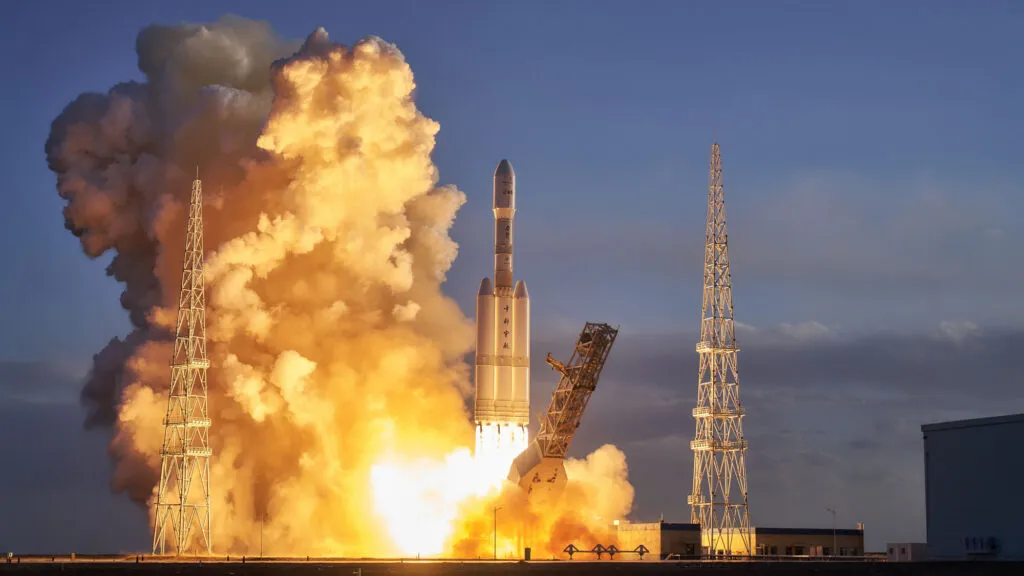
On August 28, 2009, Space Shuttle Discovery lifted off from Kennedy Space Center on mission STS-128. As a mission specialist, Hernández spent nearly fourteen days in orbit, helping transfer thousands of pounds of supplies, equipment, and structural cargo to the International Space Station.
During the flight, Hernández made digital history by sending the first-ever Spanish-language tweet from space, connecting directly with millions of students and Spanish speakers across the Americas.
After retiring from NASA in 2011, Hernández transitioned into private industry and public advocacy. He served as the CEO of Tierra Luna Engineering, became a University of California Regent, and established foundations aimed at inspiring underprivileged youth to pursue careers in science, technology, engineering, and math (STEM) fields. His life story was later adapted into the biographical film A Million Miles Away, starring actor Michael Peña.
For more details on his ongoing educational outreach, visit the UC Regents Official Directory. To explore official historical documentation of his mission, check the NASA Johnson Space Center Archives.
Frequently Asked Questions
Was José Hernández the first Hispanic person in space?
No. That milestone belongs to astronaut Franklin Chang-Díaz, who flew aboard Space Shuttle Columbia on mission STS-61-C in 1986. Hernández's distinct historical milestone is being the first person with a background as a migrant farmworker to fly into space.
How many times did NASA reject José Hernández?
NASA rejected his application eleven times before accepting him on his twelfth attempt in 2004.
What scientific invention is Hernández most famous for outside of spaceflight?
Before joining NASA, while working at Lawrence Livermore National Laboratory, he co-developed the first full-field digital mammography system, which significantly improved the early detection of breast cancer.
What was the name of the space shuttle mission he flew on?
Hernández flew aboard Space Shuttle Discovery on mission STS-128 in August 2009.