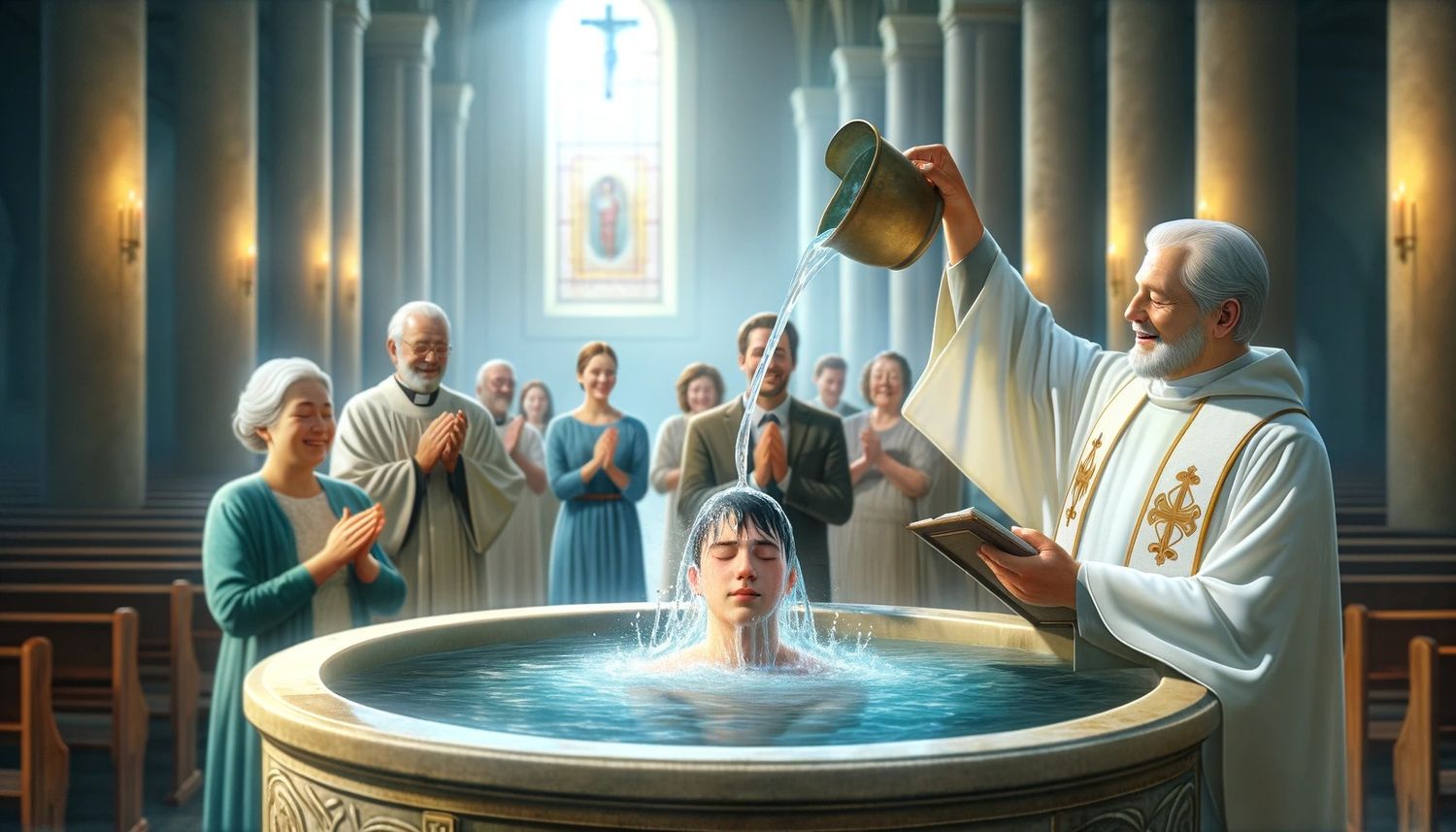
John the Baptist emerged from the Judean wilderness with a stark message that disrupted the religious status quo of ancient Judea. Instead of pointing people toward the institutional machinery of the Jerusalem temple, he stood by the muddy banks of the Jordan River calling for a total spiritual reset. His primary instrument was water immersion, a symbolic act designed to prepare the population for the immediate arrival of the Messiah.
The baptism of repentance wasn't a gentle cultural tradition or a routine ceremonial bath. It was a radical, public declaration that ethnic heritage alone wouldn't save anyone from coming judgment. To understand why this movement shook the ancient world, we have to look past sanitized Sunday school depictions and examine the historical, social, and theological friction John's ministry created.
The Historical Context of First-Century Judea
First-century Judea lived under a tense cocktail of Roman military occupation and religious anxiety. The Jewish population was fractured into various sects—Pharisees, Sadducees, Essenes, and Zealots—each offering a different roadmap to national restoration and divine favor.
The Temple in Jerusalem sat at the center of this world. It functioned as the spiritual and economic engine of the nation, where priests mediated sacrifices to maintain the covenant between God and Israel. Yet, many ordinary people felt alienated by the corruption of the temple elite and the crushing weight of Roman taxation.
Into this volatile environment stepped John, the son of the priest Zechariah. Rejecting the comfort of the priestly establishment, he lived a nomadic life in the desert wilderness, wearing rough camel-hair clothing and eating locusts and wild honey. His setting was deliberate. By preaching in the wilderness, he echoed the historic Exodus, reminding Israel of the time their ancestors spent wandering before entering the promised land, signaling that a new spiritual migration was underway.
Why John's Baptism Shocked the Establishment
In the ancient Jewish world, ritual washings (called mikvaot) were common. Pious Jews regularly immersed themselves to purify ritual uncleanness contracted from touching dead bodies, handling certain foods, or dealing with bodily fluids. However, these ritual baths shared two distinct characteristics that made John's practice revolutionary:
- They were entirely self-administered; individuals walked into the water and dipped themselves.
- They dealt with temporary, ceremonial impurity rather than moral guilt or permanent spiritual standing.
John shattered this framework by introducing an administered baptism. He stood in the water and plunged other people under, acting as an external authority figure. Even more scandalously, he demanded this rite not from pagan outsiders, but from ethnic Israelites.
In the mindset of many first-century Judeans, being a biological descendant of Abraham guaranteed a spot in the coming kingdom. John flatly rejected this pedigree. By calling Jews to undergo a baptism typically reserved for Gentile converts entering the faith, he sent an unmistakable message: religious heritage doesn't exempt anyone from personal moral accountability.
The Core Mechanics of the Movement
John’s ministry operated on urgency and concrete behavioral change. When crowds asked him what they needed to do to demonstrate genuine repentance, he didn't give them abstract theological doctrines. He gave practical, economic directives recorded in the Gospel of Luke:
- People with two tunics should share with those who have none.
- Tax collectors shouldn't collect more money than what was legally required.
- Soldiers shouldn't extort money, accuse people falsely, or be unhappy with their wages.
This framework tied inner spiritual transformation directly to external justice and integrity. Repentance wasn't just feeling sorry for past mistakes; it required a complete pivot in how a person treated their neighbors. Those who accepted this challenge confessed their sins openly on the riverbanks, accepting a humbling public identification with moral failure.
Transition from John to Christian Baptism
John never claimed that his baptism was the final destination. He positioned himself explicitly as a bridge, a herald whose sole purpose was to point past himself to a greater figure. He drew a sharp contrast between his water baptism and the work of the coming Messiah:
"I baptize you with water for repentance, but he who is coming after me is mightier than I... He will baptize you with the Holy Spirit and fire."
Christian baptism later absorbed elements of John's movement—such as public confession, water immersion, and the symbol of cleansing—but expanded its theological weight. While John's baptism looked forward in anticipation and warning, Christian baptism looked backward to the completed death and resurrection of Jesus Christ, incorporating believers into a new global community of faith.
Historical accounts in the Book of Acts note that some early believers who only knew John's baptism later received Christian baptism to fully embrace the indwelling of the Holy Spirit, illustrating how John's movement served as the critical launching pad for early Christian practice.
Frequently Asked Questions
Did John the Baptist consider himself the Messiah?
No. When questioned by religious delegations from Jerusalem, John explicitly denied being the Messiah, Elijah, or the anticipated prophet, instead describing himself merely as "a voice crying out in the wilderness" to clear a path for a greater figure.
Why did Jesus get baptized by John if he was without sin?
Jesus submitted to John's baptism not to confess personal sin, but to identify completely with the sinful people he came to save. According to the Gospel of Matthew, Jesus noted that this act fulfilled all righteousness by validating God's prophetic messenger and formally launching his public ministry.
How does John's baptism differ from modern Christian baptism?
John's baptism was a preparatory, one-time rite focused specifically on repentance in anticipation of the immediate arrival of the kingdom of heaven. Christian baptism, instituted later by Jesus, explicitly incorporates believers into the body of Christ in the name of the Father, Son, and Holy Spirit, sealing them with the Holy Spirit.
What happened to John's disciples after his death?
After King Herod imprisoned and executed John, many of his followers integrated into the early Jesus movement. However, some disciple groups maintained a distinct following for decades across parts of the Mediterranean before gradually merging into mainstream Christianity.
Learn more about the historical backdrop of early Christianity through resources provided by the Metropolitan Museum of Art and historical documentation preserved at the British Museum.



