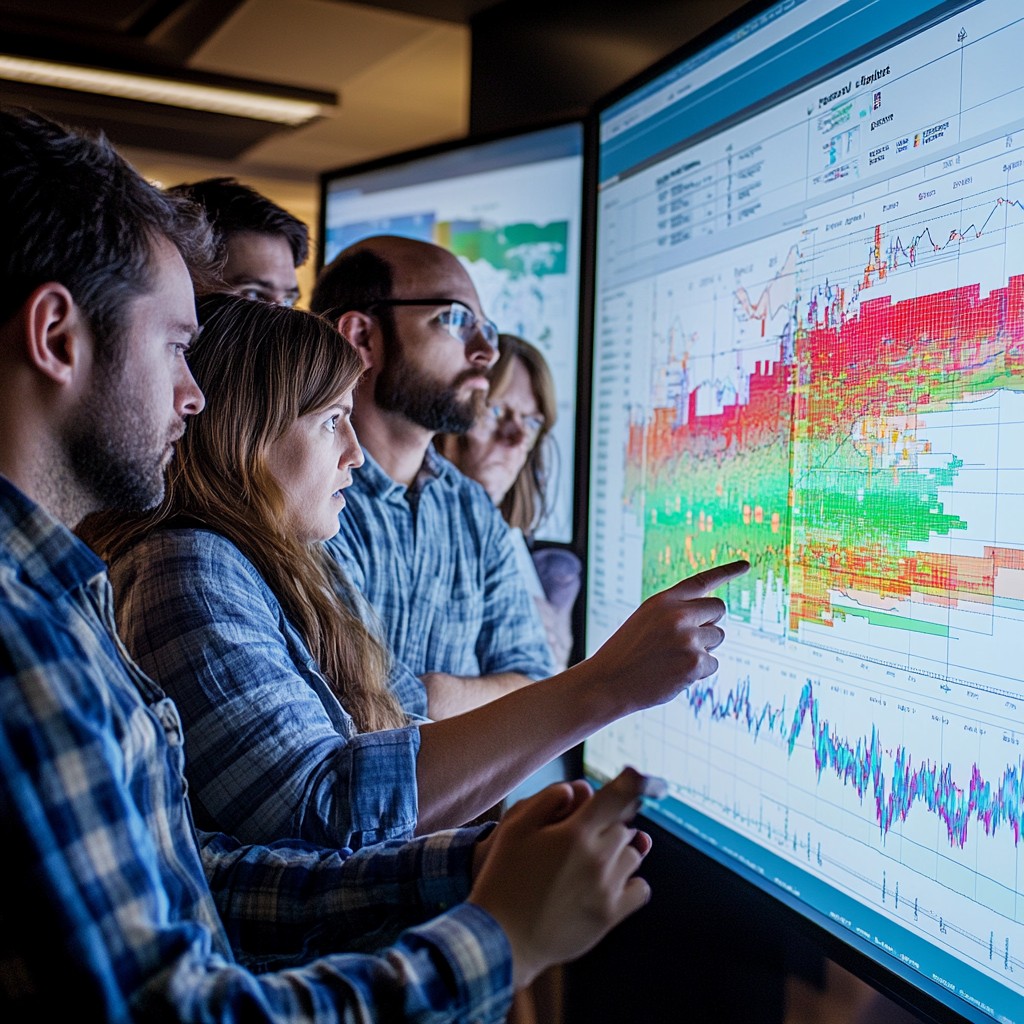
Public discourse on social media often bridges specialized technical fields with broad political and cultural friction. Meteorologist Joe Bastardi's presence on X, formerly known as Twitter, serves as a prime example of how scientific commentary, analog forecasting methods, and contrarian climate perspectives collide in a high-engagement digital space. Understanding how these dynamics unfold requires looking past sensationalized headlines to examine the actual mechanics of weather communication online.
For decades, Bastardi worked within traditional broadcasting and private forecasting environments like AccuWeather before shifting heavily into digital commentary. When he shares meteorological maps, historical analogs, and storm predictions on his feed, the reactions highlight a deep polarization surrounding how weather data is interpreted and presented to the public. This environment turns routine winter storm warnings and long-range seasonal outlooks into flashpoints for larger debates about institutional science, media trust, and independent forecasting models.
The Evolution of Meteorological Discourse Online
Meteorology used to live strictly behind the closed doors of academic institutions, government agencies, and corporate forecasting rooms. Today, platforms like X allow individual meteorologists to bypass traditional gatekeepers and speak directly to millions of followers. This shift changes the cadence of scientific communication. Instead of waiting for peer-reviewed consensus or scheduled evening broadcasts, forecasters can post real-time updates, satellite imagery loops, and raw GFS model runs within seconds.
This direct access creates a unique digital ecosystem. Followers don't just consume a forecast; they participate in a running commentary track. When a prominent forecaster highlights a potential major winter storm or rejects standard computer model projections, the digital community fractures into distinct camps:
- Technical Analysts: Followers who dig into barometric pressures, jet stream configurations, and historical analog years to debate the forecast's validity.
- Skeptics and Contrarians: Users who rally around alternative interpretations of climate data and push back against institutional scientific consensus.
- General Observers: Everyday citizens looking for practical information on whether they need to shovel snow or reschedule a flight.
This mixing bowl often accelerates friction. Technical nuance gets lost in short-form text limits, and complex thermodynamic principles are reduced to viral soundbites.
Contrasting Analog Forecasting with Modern Consensus
A major driver of the discourse surrounding Bastardi's online presence is his reliance on analog forecasting. While modern weather prediction heavily relies on massive computational power and ensemble numerical weather prediction models, analog forecasting looks backward to find historical weather patterns that match current conditions.
In digital spaces, this methodological divide sparks intense debates. Proponents of traditional computer modeling argue that modern physics equations and supercomputers yield superior long-term accuracy. Conversely, defenders of analog approaches point out instances where historical pattern matching successfully anticipated shifts that standard models missed.
On social media, this scientific disagreement rarely remains academic. It intersects directly with broader arguments about climate policy, energy infrastructure, and public trust in institutions. When a forecast for seasonal temperatures or sea ice extent is posted, it frequently triggers an avalanche of replies debating human-induced climate change rather than the immediate atmospheric physics. For more context on how independent forecasting organizations operate, you can review details provided by groups like the Heartland Institute.
Common Misconceptions in Weather Social Media
Navigating meteorological discussions online requires separating data from rhetoric. Several persistent misunderstandings frequently surface during high-profile digital weather debates:
- Confusing Weather with Climate: A single severe winter storm or an unusually cool month does not disprove long-term climate trends, nor does a warm spell confirm every worst-case climate projection. Social media incentives encourage treating every localized weather event as definitive proof of a global trend.
- Treating Models as Oracles: Numerical weather prediction models are simulations based on initial conditions, not crystal balls. When a model shifts its projected snowfall track three days out, it reflects normal atmospheric chaos, not necessarily algorithmic incompetence.
- Ignoring Geographic Scale: Global climate oscillations impact regions differently. A pattern that brings drought to one continent might trigger heavy precipitation in another, a nuance that often disappears in viral post replies.
The Broader Impact on Public Scientific Literacy
The intersection of specialized science and social media creates a complex paradox for public literacy. On one hand, millions of people now look at weather maps, understand what a polar vortex is, and track high-pressure systems with a level of detail that was rare decades ago. Platforms encourage active engagement with scientific data rather than passive consumption.
On the other hand, the adversarial nature of digital battlefields can harden ideological silos. Users tend to follow commentators who reinforce their preexisting views on science, politics, and media credibility. When debates over atmospheric pressure turn into proxy wars for cultural alignment, nuance is the primary casualty.
Ultimately, following weather updates online requires a healthy dose of digital skepticism. Whether evaluating a high-stakes winter storm warning or a long-range seasonal outlook, looking past the digital noise to examine verifiable data remains the most reliable way to stay informed. To explore how professional forecasters present real-time atmospheric data, visit resources like the National Weather Service.
Frequently Asked Questions
What is analog weather forecasting?
Analog forecasting is a method that involves finding historical weather patterns that closely resemble current atmospheric conditions to predict future weather outcomes based on past precedent.
Why do weather posts on social media often become controversial?
Meteorological forecasts frequently intersect with public policy debates, particularly regarding energy use and climate change, leading users to view routine weather updates through a political lens.
Are computer weather models always accurate?
No. While numerical models use advanced physics equations, the atmosphere is a chaotic system. Small initial data errors compound over time, leading to lower accuracy in long-range forecasts.
How can readers verify online weather claims?
Readers should cross-reference social media forecasts with official government meteorological data, such as reports issued by national weather agencies, to ensure accuracy before making travel or safety decisions.



