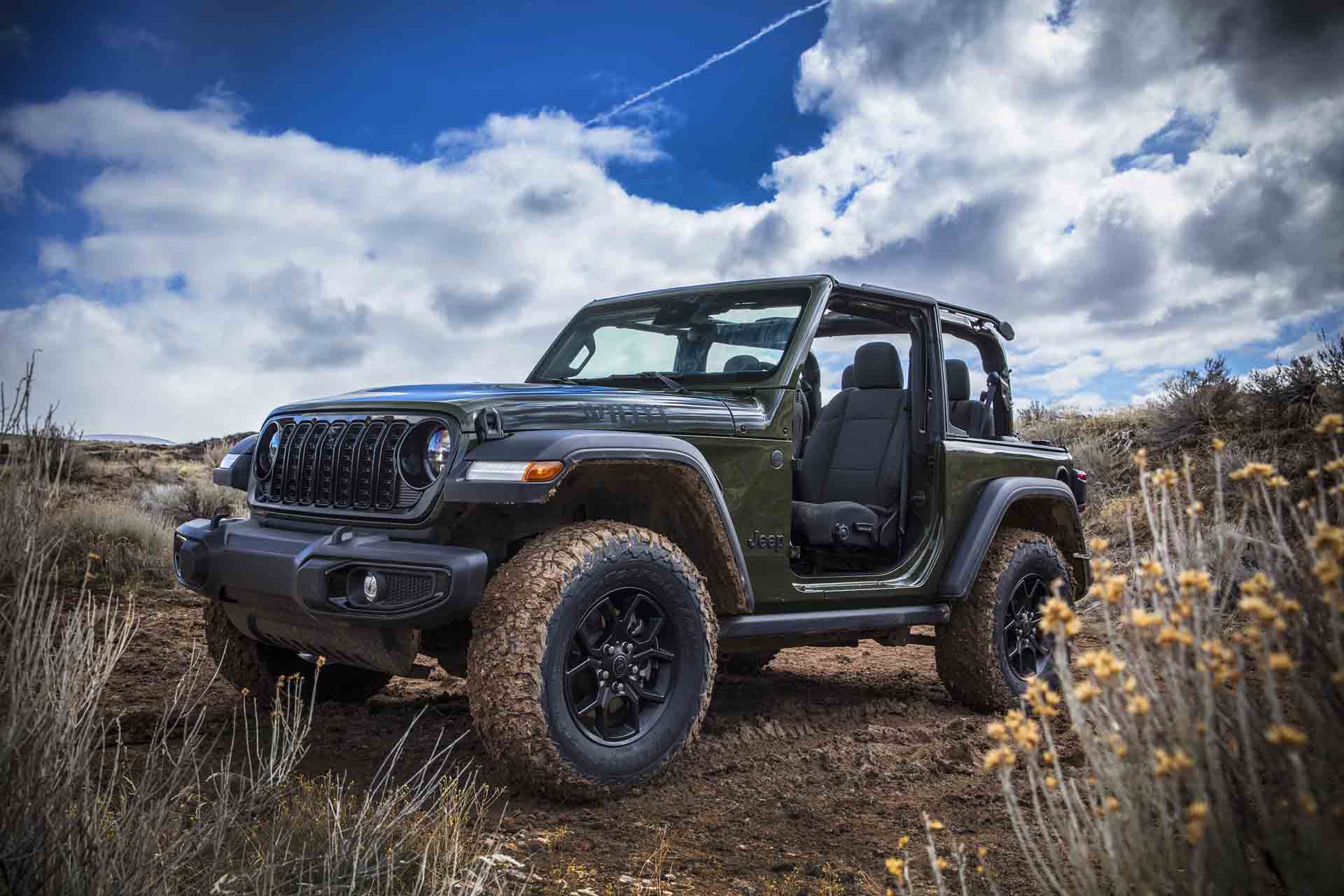
When Jeep dropped a supercharged Hellcat engine into a midsize SUV, the automotive world didn't quite know how to react. The Jeep Grand Cherokee Trackhawk wasn't built for rock crawling or pinching fuel pennies. Instead, it married brutal American muscle with daily utility, creating a straight-line weapon that still wears a Jeep badge.
Underneath the hood sits a 6.2-liter supercharged HEMI V8 engine borrowed straight from Dodge's muscle car lineup. It pumps out 707 horsepower and 645 lb-ft of torque, launching the 5,300-plus-pound vehicle from zero to 60 mph in just 3.5 seconds. While its name hints at off-road grandeur, the Trackhawk is actually an asphalt predator designed for quarter-mile strips and highway dominance.
The Heart of the Beast: Supercharged HEMI V8
The defining characteristic of the Trackhawk is its powerplant. This isn't a mild-mannered utility vehicle engine; it's a supercharged brute featuring forged-steel crankshafts, high-strength forged-alloy pistons, and sodium-cooled exhaust valves built to withstand massive internal pressures.
To keep the engine alive during heavy throttle applications, Jeep engineered a heavy-duty cooling system. Engineers even removed the traditional front fog lights to route specialized air ducts directly to the cold-air intake and engine coolers.
Power is sent to all four wheels through a torque-flite eight-speed automatic transmission. Unlike rear-wheel-drive Hellcat chargers and challengers that struggle for traction, the Trackhawk utilizes an active on-demand all-wheel-drive system. This setup ensures every ounce of that 645 lb-ft of torque grips the pavement without melting the rear tires instantly off the line.
Straight-Line Performance Versus Real-World Handling
People often debate whether a heavy SUV has any business carrying a "track" moniker. On a twisty road course, physics dictates that mass matters. Tipping the scales at over 5,400 pounds, the Trackhawk can't defy the laws of gravity when turning into sharp hairpins.
However, it punches well above its weight class thanks to several key performance integrations:
- Launch Control: Standard launch control manages engine torque and optimizes wheel slip to guarantee repeatable, violent drag strip acceleration.
- Adaptive Damping Suspension: Bilstein competition-tuned adaptive damping adjusts stiffness in milliseconds depending on the selected drive mode.
- Massive Brembo Brakes: Stopping a speeding brick requires serious hardware. The Trackhawk features massive 15.75-inch vented front rotors clamped by six-piston calipers, providing incredible initial bite and fade resistance.
On the street, it behaves like a Jekyll-and-Hyde machine. Switch the drive mode to Auto, and it commutes comfortably with mild shift points and a compliant ride. Drop it into Track mode, and the suspension tightens, shift speeds drop to 160 milliseconds, and the exhaust opens up into a roaring supercharger whine.
Off-Road Reality Check: Trackhawk vs. Trailhawk
A common misconception stems from mixing up Jeep's naming conventions. The Trailhawk trim level is engineered for genuine off-road capability, featuring skid plates, air suspension with lift capability, and all-terrain tires.
The Trackhawk goes the exact opposite direction. It sits lower, rides on sticky 20-inch performance tires wrapped in 295/45 rubber, and lacks low-range gearing. While it maintains an all-wheel-drive system that handles snow or wet pavement brilliantly, taking a Trackhawk down a rocky Jeep badge trail risks destroying expensive bodywork and low-hanging aerodynamic splitters. Think of its all-wheel-drive system as all-weather insurance rather than a rock-crawling pass.
Interior Comfort and Technology
Inside the cabin, the Trackhawk balances utility with luxury appointments. Standard features include Nappa leather and suede-accented seats, flat-bottom steering wheels, and real carbon fiber interior accents.
For infotainment, Jeep integrated its Uconnect system onto an 8.4-inch touchscreen interface with Apple CarPlay and Android Auto capabilities. Drivers can access specialized "Performance Pages" directly from the screen, tracking real-time telemetry like G-force, 0-60 times, dynamometer readouts, and engine vitals. Cargo space remains identical to standard Grand Cherokees, meaning you get over 68 cubic feet of storage with the rear seats folded down, making it genuinely practical for everyday errands.
Common Mistakes Buyers Make
Enthusiasts shopping for a used Trackhawk often overlook key ownership realities. Here are mistakes to avoid:
- Ignoring Maintenance Costs: Supercharged V8 engines demand premium fuel (91 octane minimum) and frequent oil changes using specific high-performance synthetic oils. Brake rotor and pad replacements for the Brembo system cost significantly more than standard SUV components.
- Expecting Good Fuel Economy: EPA ratings hover around 11 mpg city and 17 mpg highway. Heavy right-foot driving easily pushes fuel consumption well into the single digits.
- Assuming Factory Towing is Compromised: Despite its track pretensions, the Trackhawk retains a robust 7,200-pound maximum towing capacity, matching standard V8 Grand Cherokee models.
For official specifications and historical lineups, you can check resources like Jeep's official site or research vehicle reliability trends via Car and Driver.
Frequently Asked Questions
What is the top speed of a Jeep Grand Cherokee Trackhawk?
Manufacturer testing clocks the Trackhawk at a top speed of 180 mph, supported by a 200 mph speedometer nestled in the instrument cluster.
How does the Trackhawk differ from the Grand Cherokee SRT?
The SRT model uses a naturally aspirated 6.4-liter HEMI V8 producing 475 horsepower. The Trackhawk upgrades to the supercharged 6.2-liter Hellcat engine, bumping output to 707 horsepower and dropping the 0-60 mph time by nearly a full second.
Can you tow a trailer with a Trackhawk?
Yes. Despite its focus on straight-line speed, it maintains a 7,200-pound towing capacity equipped with a heavy-duty engine cooling system and hitch receiver.
Is the Jeep Grand Cherokee Trackhawk still in production?
Production for the WK2-generation Grand Cherokee and its high-performance variants ended in 2021, making the Trackhawk a sought-after modern collector vehicle on the pre-owned market.



