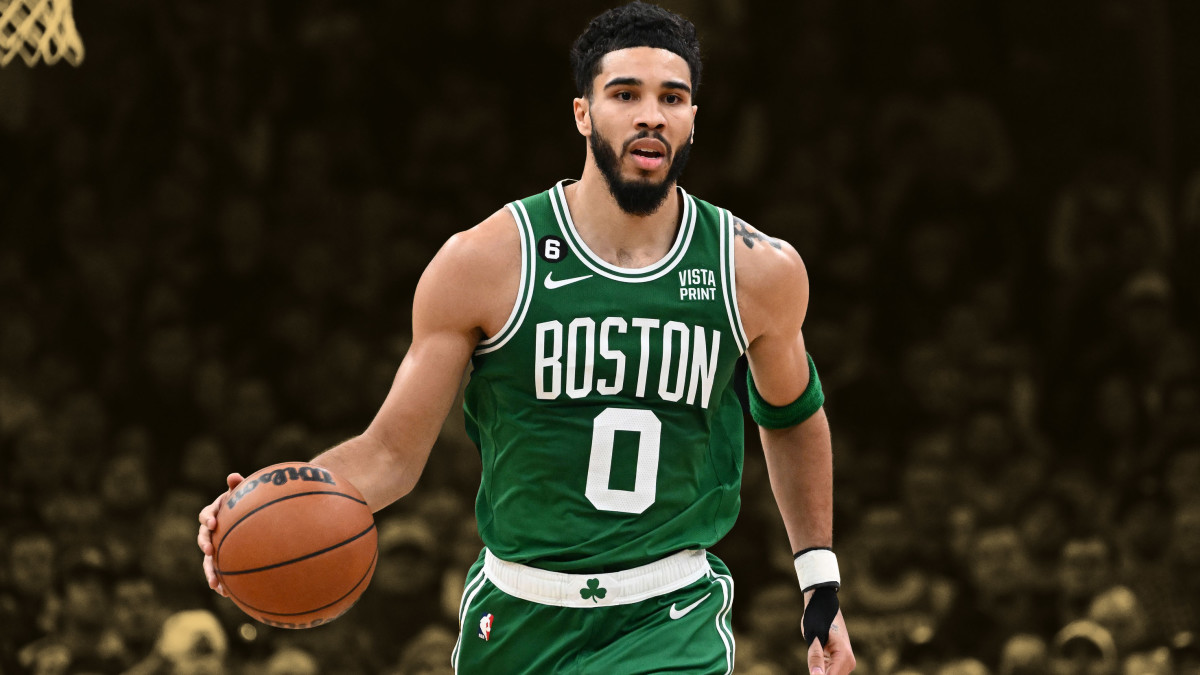
When the Boston Celtics traded down from the first overall pick in the 2017 NBA Draft, they banked their future on a smooth forward out of Duke. That gamble paid off immediately. Jayson Tatum didn't just step onto an NBA floor; he walked straight into a conference finals run as a primary offensive weapon. Fans didn't expect a rookie to shoulder such massive playoff minutes, but Brad Stevens needed every ounce of scoring he could get. Gordon Hayward went down five minutes into opening night, and Kyrie Irving missed the entire postseason. The door cracked open, and Tatum kicked it wide.
His debut campaign stands as one of the most remarkable rookie playoff runs in modern basketball history. Before that postseason explosion, his regular-season numbers proved he wasn't just a flash in the pan. He played all 82 games, started 80 of them, and shot over forty percent from beyond the arc. You don't see teenagers or twenty-year-olds handle that kind of workload with such defensive poise. Let's look at how that extraordinary year unfolded from draft night to the parquet floor of the TD Garden.
Draft Night Context and the Trade
The summer of 2017 changed the Eastern Conference landscape. Danny Ainge held the number one overall selection, secured via the famous Brooklyn Nets trade years prior. Instead of taking Markelle Fultz, Boston traded the pick to the Philadelphia 76ers in exchange for the third selection and a future asset. The Sixers grabbed Fultz. The Los Angeles Lakers took Lonzo Ball at number two. That left Boston free to select Tatum at number three.
Analysts questioned the fit at first. Boston already had Isaiah Thomas, and they were closing in on a trade for Kyrie Irving. They also signed Gordon Hayward in free agency to lock down the small forward spot. Critics wondered where Tatum would find minutes behind established veterans. They didn't account for the brutal nature of NBA injuries or Tatum's advanced skill set. He arrived in training camp already possessing an elite triple-threat game and a polished footwork package that left defenders guessing.
Regular Season Production and Efficiency
Tatum's regular-season statistics reveal a player who understood his role within a strict team system. He averaged 13.9 points, 5.0 rebounds, and 1.6 assists per contest. Those numbers look solid on their own, but his efficiency metrics turned heads across the league. He posted a shooting split of .475/.434/.826. Hitting over forty-three percent of your three-pointers as a rookie forward is rare air.
He didn't force bad shots. He fit cleanly into Brad Stevens' motion offense, cutting hard, moving the ball, and punishing closeouts with an elite side-step jumper. Opponents quickly learned that giving him an inch of space meant an automatic bucket.
- He secured the starting small forward spot during training camp.
- He maintained a high shooting efficiency despite playing massive minutes.
- He earned Eastern Conference Rookie of the Month honors in December.
- He finished fifth in overall three-point percentage across the entire NBA.
While Ben Simmons and Donovan Mitchell dominated the Rookie of the Year conversation with higher usage rates and scoring averages, Tatum quietly built the most efficient offensive season among the rookie class. He didn't dominate the ball. He made winning plays on both ends of the floor.
The Postseason Breakout
Everything changed when the playoffs arrived. Kyrie Irving and Gordon Hayward sat on the bench in suits, leaving Al Horford and a bunch of youngsters to carry the load. Tatum answered the call by elevating his scoring production when the lights shone brightest. He averaged 18.5 points per game in the postseason, setting an NBA rookie record for most total points in a single playoff run with 351, breaking a mark previously held by Kareem Abdul-Jabbar.
In the first round against the Milwaukee Bucks, he went toe-to-toe with Giannis Antetokounmpo and held his own. In the conference finals, the Celtics pushed LeBron James and the Cleveland Cavaliers to a game seven. Tatum scored 24 points in that elimination game, capping off his run with a thunderous dunk right over James that sent shockwaves through the sports world. He wasn't scared of the moment. He ran toward it.
Common Misconceptions About His Rookie Year
People often misremember his rookie campaign as an overnight explosion from day one. In reality, he experienced standard rookie walls and passive stretches during the winter months. Brad Stevens occasionally had to bench him or draw up specific sets to get him engaged.
Another common myth is that he was the primary option all year. He wasn't. Kyrie Irving led the team in scoring until his season ended in March. Tatum benefited from playing alongside high-IQ veterans like Al Horford and Marcus Smart who protected him defensively and put him in spots to succeed. His development wasn't an accident; it was a product of an elite coaching staff putting a talented kid in a structured environment. You can read more about franchise histories on the official NBA site.
Frequently Asked Questions
Did Jayson Tatum win Rookie of the Year in 2018?
No, Ben Simmons won the award for the 2017-18 season, with Donovan Mitchell finishing as the runner-up. Tatum finished third in voting after a stellar regular season and historic playoff run.
Why did Tatum get so many starting opportunities as a rookie?
Gordon Hayward suffered a severe ankle fracture five minutes into the regular season opener. That opened up an immediate starting spot at the forward position, which Tatum seized and refused to relinquish.
How far did the Celtics go in the 2018 playoffs?
The Celtics advanced to the Eastern Conference Finals, where they lost in seven games to the Cleveland Cavaliers led by LeBron James.
What were Tatum's shooting percentages during his rookie year?
He shot 47.5 percent from the field, 43.4 percent from beyond the three-point arc, and 82.6 percent from the free-throw line, showcasing elite shooting efficiency from day one.
How did the Celtics get the draft pick to select Tatum?
Boston acquired the pick through a blockbuster trade with the Brooklyn Nets years prior, eventually swapping the number one overall pick with Philadelphia to select Tatum at number three. For broader basketball history context, check out ESPN.



