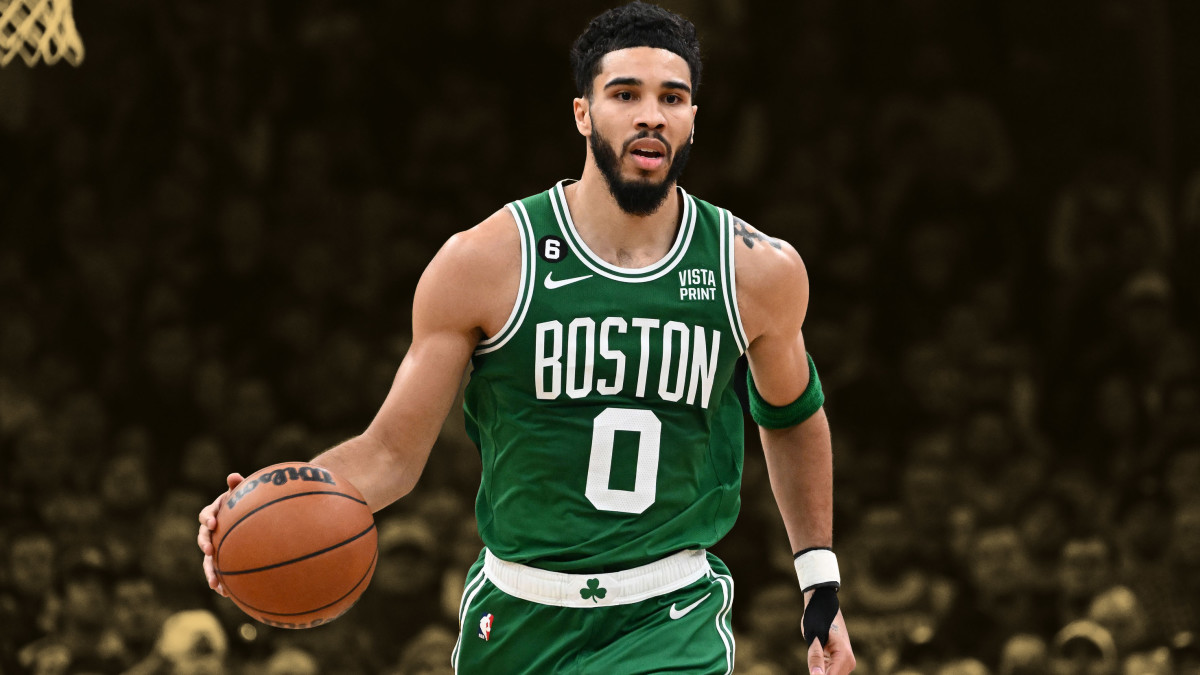
Jayson Tatum occupies a hybrid forward role that defies traditional positional labels, operating primarily as a versatile power forward and elite wing orchestrator for the Boston Celtics. Standing 6 feet 8 inches with a 7-foot wingspan, Tatum bridges the gap between traditional interior size and modern perimeter skill, anchoring the offensive engine of a National Basketball Association franchise built on five-out spacing and defensive multiplicity.
Understanding Tatum's true position requires looking past basic box scores or standard lineup charts. He functions as a primary offensive creator, a mismatch hunter in isolation, and a high-volume rebounder who initiates fast breaks directly off defensive boards. This breakdown examines how his positional fluidity shapes Boston's tactical identity, how modern defensive schemes attempt to neutralize him, and what statistics reveal about his evolution on the floor.
The Evolution of Tatum From Wing to Frontcourt Hub
When Tatum entered the league in 2017 out of Duke University, scouts and analysts projected him strictly as a traditional small forward. His early years under Brad Stevens featured him playing on the wing, utilizing smooth catch-and-shoot mechanics, baseline drives, and mid-range isolations. However, as his frame filled out and his playmaking vision expanded, his positional responsibilities shifted toward the power forward spot.
In modern Boston Celtics lineups, Tatum frequently guards opposing frontcourt players while serving as the nominal four or even small-ball five in specialized offensive sets. This transition unlocked his ability to exploit slower defenders on switches. When opposing teams put a traditional center on him, Tatum attacks from the perimeter with fluid step-back jumpers and lightning-quick drives. When teams put a smaller wing on him, he seals his man down in the mid-post or rolls hard into space as a playmaker.
- Perimeter Shot-Making: Tatum commands heavy defensive attention beyond the arc, forcing big men to step away from the paint.
- Post-Up Efficiency: His high release and excellent vision out of double-teams make him lethal when operating from the elbows and low blocks.
- Rebounding and Transition: Grabbing defensive boards allows him to bypass point guards entirely, pushing the pace directly in the open floor.
Tactical Mechanics Within the Celtics Offense
The Boston coaching staff builds its offensive architecture around constant spatial manipulation, and Tatum acts as the primary fulcrum. In a five-out system, positional definitions blur completely. Tatum regularly sets ball screens for guards like Jaylen Brown or Derrick White, creating an immediate defensive dilemma. If the defense switches, Tatum isolates against a smaller guard. If the defense drops, he pops into open space for perimeter catch-and-shoot opportunities or attacks the downhill lane.
His passing gravity has evolved tremendously. Defenses rarely guard him one-on-one anymore; the moment he turns the corner on a drive, help defenders rotate from the weak side. Tatum responds by mapping the floor, skipping cross-court passes to corner shooters, or dropping pocket passes to rolling big men. This playmaking growth moved his assist numbers up significantly, transforming him from a pure three-level scorer into an all-around offensive engine.
"Jayson doesn't just fit into our spacing; he dictates where every single defender has to look on the floor." — Anonymous NBA Assistant Coach
Defensive Versatility and Positional Guardrails
Defensively, Tatum's size and lateral mobility allow the Celtics to switch almost any pick-and-roll action without getting punished. While nominal power forwards traditionally stay anchored near the restricted area to contest shots, Tatum spends considerable time switching onto shifty perimeter guards or locking down elite opposing wings.
This defensive versatility protects weaker links on the floor and allows Boston to maintain a relentless defensive identity without sacrificing offensive rebounding. His length disrupts passing lanes, and his defensive rebounding eliminates second-chance opportunities for opponents. By handling grueling defensive assignments against top-tier scorers while shouldering a massive offensive workload, he embodies the ultimate modern two-way forward.
Common Misconceptions About Modern NBA Positions
Fans often ask whether Tatum is a small forward or a power forward, but rigid position labels fail to capture modern basketball dynamics. Here are a few common misconceptions regarding his role:
- Misconception: Tatum is strictly a perimeter gunner. While he takes a high volume of three-pointers, his highest-efficiency possessions come from driving downhill, absorbing contact, and generating free throw attempts.
- Misconception: He needs a traditional point guard to run the offense. Tatum frequently initiates half-court sets, acting as a point-forward who dictates the tempo and calls out plays.
- Misconception: Playing the four limits his scoring. Moving to the power forward spot actually maximizes his mismatch potential against slower interior defenders.
Frequently Asked Questions
What position does Jayson Tatum officially play?
Tatum is listed primarily as a small forward and power forward, though modern analytics and lineup data classify him as a combo forward or wing who frequently operates as a power forward.
How does Tatum's playmaking impact the Celtics offense?
By drawing immediate double-teams on drives and post-ups, Tatum creates open perimeter shots and driving lanes for his teammates, elevating his assist numbers into elite territory for a frontcourt player.
Why is Tatum considered a matchup nightmare?
His combination of 6-foot-8 size, elite ball-handling, and deep shooting range allows him to shoot over smaller defenders or blow past slower big men, rendering standard defensive coverages ineffective.
How has his role changed since winning the NBA championship?
He has taken on even heavier orchestrating responsibilities, frequently acting as the primary offensive engine from the opening tip while anchoring defensive rotations.



