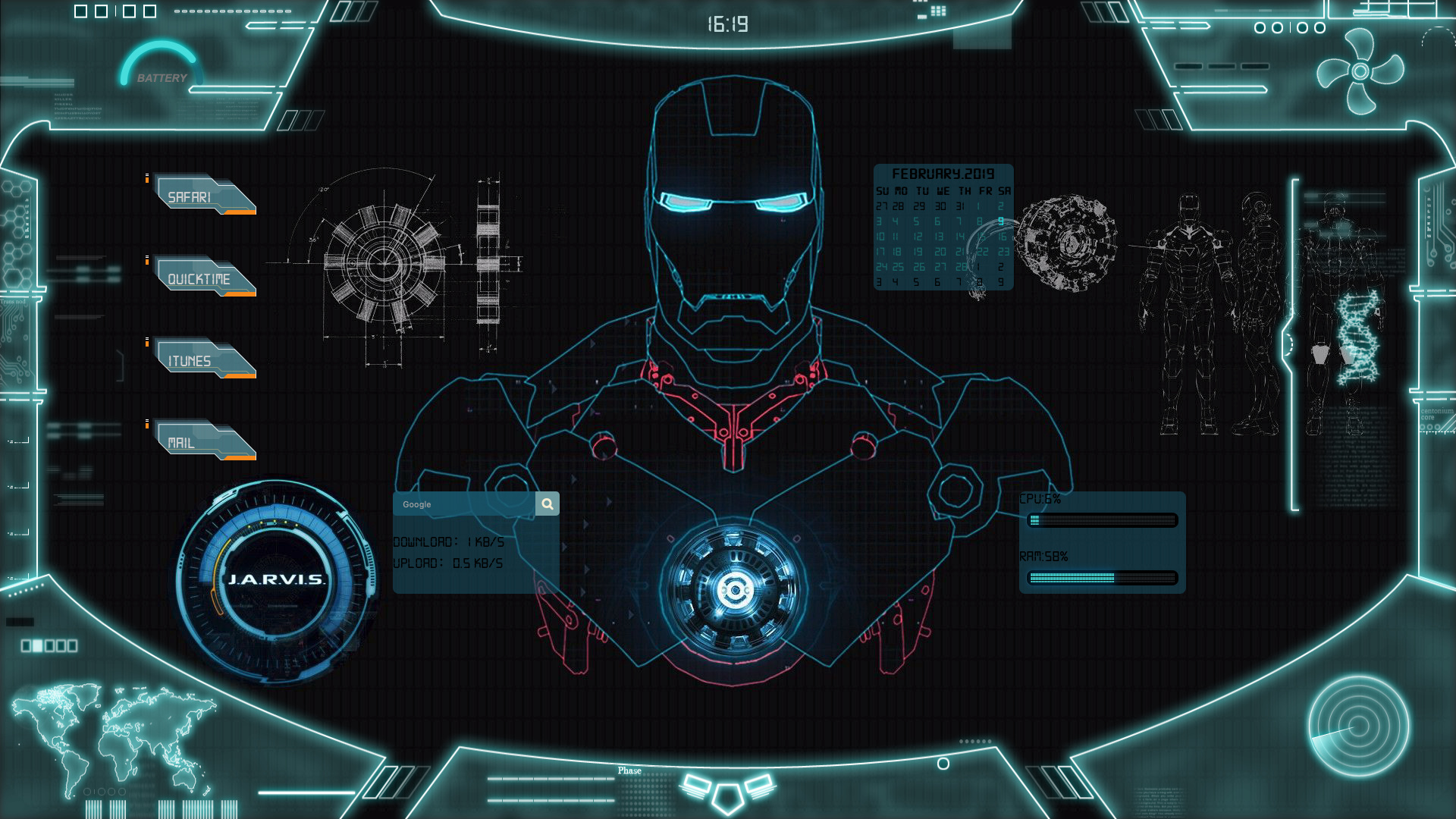
When Paul Bettany first stepped into a recording booth to voice a computer assistant for a 2008 comic book adaptation, he had no idea what he was making. He did it purely as a favor for director Jon Favreau, reading lines into a microphone without ever visiting a set or seeing finished visual effects. By the time Iron Man 3 hit theaters, that invisible performance had evolved into the mechanical heartbeat of Tony Stark's entire world. J.A.R.V.I.S.—Just A Rather Very Intelligent System—was no longer just background noise; it was Stark's most dependable confidant, tactical coordinator, and emotional anchor during his darkest hours.
Understanding how Bettany defined the digital lifespan of Marvel's primary tactician requires looking past the sound design and examining the classical acting roots that grounded a glowing HUD interface. While other cinematic artificial intelligences relied on flat, robotic monotone deliveries, Bettany brought a dry, understated British wit that transformed lines of code into a living, breathing partnership.
The Accidental Casting That Shaped a Franchise
The creation of the iconic voice began with a blank slate. Jon Favreau needed an actor who could project supreme competence mixed with subtle condescension, creating the dynamic of a brilliant employer and a polite digital butler. Bettany fit the brief immediately, though his early involvement was famously detached from the massive machine Marvel Studios was building.
- Zero Visual References: Bettany recorded his lines for the first film without seeing concept art of the suits or the workshop.
- The Favreau Connection: The casting worked because Favreau wanted a foil for Robert Downey Jr.'s erratic, high-energy improvisation.
- Minimal Time Commitment: The initial sessions took only a couple of hours, creating a multi-billion-dollar character almost by accident.
By the time production rolled around for Iron Man 3, the relationship between Stark and his operating system had matured significantly. Stark's reliance on the system shifted from mere convenience to total operational dependency, especially as Tony dealt with severe post-traumatic stress after the events of New York.
Tactical Dynamics in Iron Man 3
In Iron Man 3, the dynamic shifts because Stark is frequently separated from his high-tech labs. When Mandarin's forces destroy Malibu mansion, J.A.R.V.I.S. becomes the caretaker of a stranded, panic-stricken genius in rural Tennessee. Bettany's vocal performance anchors these high-stress sequences by maintaining absolute composure while chaos unfolds around them.
- Remote Suit Operation: During the climactic shipyard battle, J.A.R.V.I.S. manages multiple suits simultaneously, showcasing split-second tactical calculations.
- Emotional Counterweight: When Stark experiences severe anxiety attacks, the calm cadence of Bettany's voice serves as the literal grounding mechanism that pulls him back to reality.
- Autonomous Survival: The AI demonstrates initiative by tracking down the Mandarin's remote broadcast signal, proving that its algorithms had grown far beyond simple command prompts.
Audio engineers layered Bettany's raw vocal tracks with subtle digital frequencies, room reverb, and compression artifacts to ensure the dialogue felt embedded inside helmet speakers and workshop speakers alike. Yet, despite the electronic enhancement, the organic warmth of Bettany's diction remained entirely intact. You can read more about the Marvel Cinematic Universe production history to see how these character foundations were mapped out across multiple phases.
From Software Code to Physical Form
The trajectory of Bettany's voice work took one of the most unique turns in modern blockbuster history. Because his vocal cords had essentially become synonymous with Stark's technology, Marvel executives realized they had an asset already embedded in the universe when they needed to transition the character into a physical body.
When J.A.R.V.I.S. was uploaded into the synthetic body powered by the Mind Stone in Avengers: Age of Ultron, Bettany finally walked onto a physical set as the Vision. This evolution gave retroactive depth to his earlier voice performances. Every deadpan quip he delivered in the trilogy's films was now part of the developmental history of a newborn superhero trying to understand humanity.
To explore the broader technical and historical milestones of cinema audio engineering, resources like the British Film Institute offer deep dives into how vocal performances shape animated and digital characters on screen.
Common Misconceptions About the Role
Fans often misunderstand how the character was handled behind the scenes during the production of the trilogy. Clarifying these points highlights the unique nature of vocal acting in blockbuster filmmaking.
- Misconception: Bettany was always scheduled to play the Vision from day one. Reality: He admitted he didn't even watch the original films for years and had no idea J.A.R.V.I.S. would eventually become a physical hero.
- Misconception: The voice was heavily synthesized by a computer vocoder. Reality: The distinct sound comes primarily from Bettany's natural vocal timber, with audio engineers applying only light EQ filtering and interface cues.
- Misconception: J.A.R.V.I.S. was named directly after the comic book butler without changes. Reality: While inspired by Edwin Jarvis, the cinematic AI was built as an entirely distinct digital entity to distance the narrative from traditional Batman tropes.
Frequently Asked Questions
Did Paul Bettany interact with Robert Downey Jr. on set during Iron Man 3?
No. True to his work on the previous entries, Bettany recorded his vocal tracks separately, often long after filming wrapped, allowing the editing team to slot his dialogue directly into ongoing action beats and quiet workshop scenes.
Why did J.A.R.V.I.S. have a British accent?
The accent was chosen to mirror traditional British butler archetypes, paying homage to Howard Stark's human butler, Edwin Jarvis, while giving Tony's high-tech environment a sense of refined upper-class stability.
Was Paul Bettany ever replaced as the voice of the AI?
In the core live-action films, Bettany remained the exclusive voice of the system. Other actors only stepped in for non-canon video game adaptations or alternate animated universes like What If...?.
How did the role lead to his live-action Marvel career?
Joss Whedon needed an actor to play the Vision in Age of Ultron who already felt intrinsically tied to Stark's technology, making Bettany the natural choice to step out of the recording booth and onto the physical soundstage.



