From an impoverished childhood in Southeast Asia to the highest office in the United States, Barack Obama’s path challenged conventional political trajectories. While superficial narratives reduce his rise to an overnight sensation in 2004, the reality involved decades of navigating cross-cultural identity, community organizing in Chicago, and legislative hurdles in Illinois and Washington.
Understanding how a child who lived in modest conditions in Indonesia became the 44th U.S. president requires looking past standard political biographies. This piece examines the distinct phases of that transformation, highlighting the structural realities, strategic choices, and historical context behind his improbable ascent.
Early Years in Indonesia and Cross-Cultural Roots
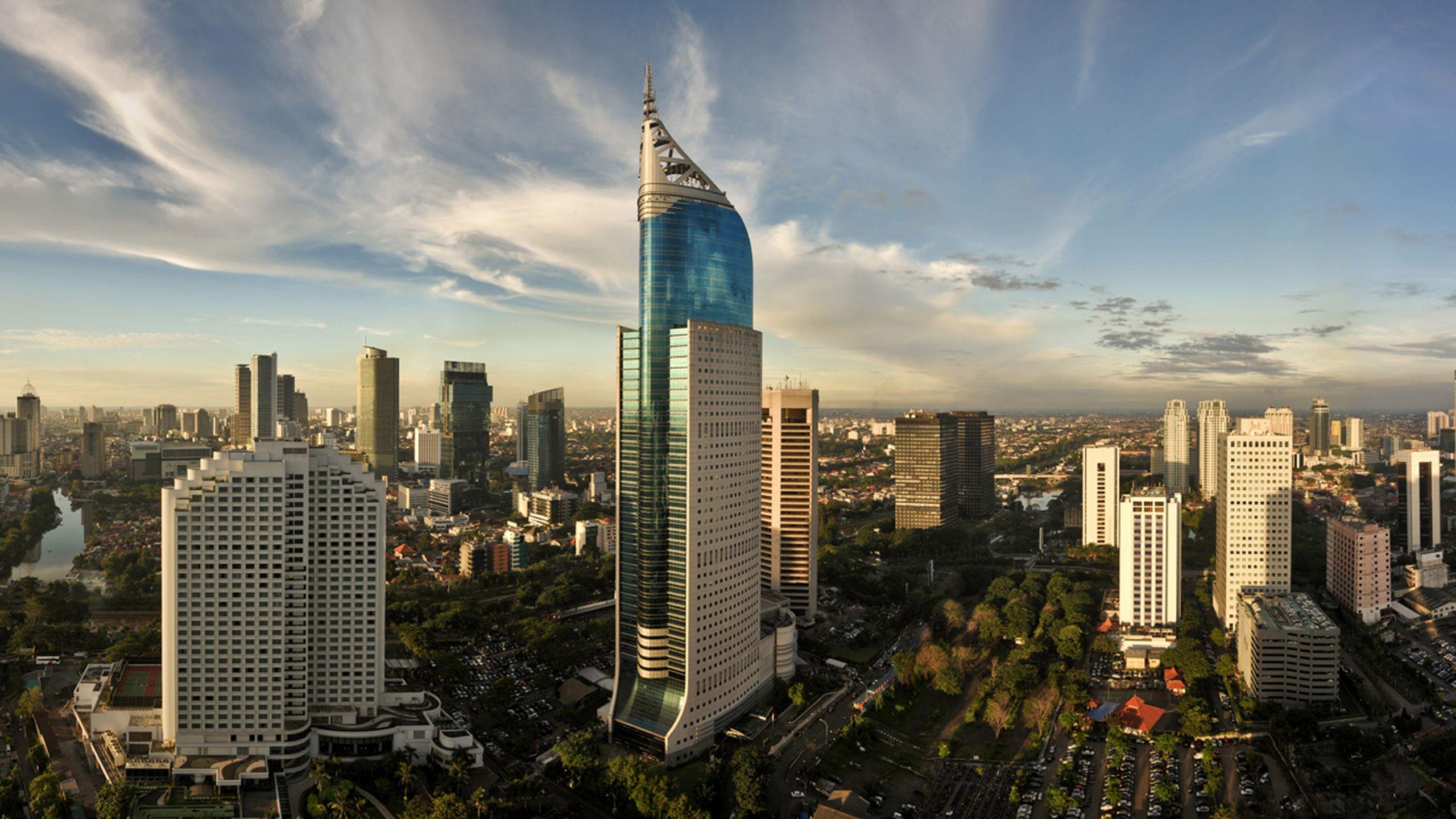
Barack Obama's move to Jakarta in 1967 as a young boy, following his mother Ann Dunham's marriage to Indonesian surveyor Lolo Soetoro, placed him in an environment vastly different from his birthplace of Honolulu. At the time, post-coup Indonesia was grappling with profound economic instability and infrastructural poverty.
The family lived in neighborhoods like Menteng and later in other working-class districts of Jakarta. Paved roads, consistent electricity, and modern sanitation weren't always guaranteed. Obama navigated local public and Catholic schools, learned to speak fluent Bahasa Indonesia, and absorbed a street-level view of developing-world poverty.
This exposure wasn't just a biographical footnote. Living abroad as an outsider instilled an acute awareness of global perspectives early on. When he returned to Hawaii to live with his maternal grandparents, Madelyn and Stanley Dunham, he carried a dual identity. Being a young Black man of mixed heritage raised largely by white relatives in the Pacific created an internal dialogue about race, belonging, and the immigrant experience that would later anchor his political voice.
The Crucible of Community Organizing in Chicago
After graduating from Columbia University, Obama moved to Chicago in 1985 to work as a community organizer on the city's South Side. This choice separated him from peers who headed straight to corporate law firms or Wall Street. Working with the Developing Communities Project (DCP), his task was to organize residents in predominantly Black neighborhoods devastated by the closure of local steel mills.
This period was brutal and humbling. As chronicled in his memoir Dreams from My Father, early meetings drew tiny crowds, local power structures resisted change, and systemic urban decay seemed insurmountable. Yet, this grassroots labor taught him mechanics that traditional academia missed:
- How to listen to working-class grievances without condescension.
- How to build coalitions across fragmented religious and civic groups.
- How to translate broad anger into specific, actionable legislative demands.
Organizing on the South Side grounded his political philosophy. It connected intellectual concepts of civil rights to the daily friction of municipal neglect, joblessness, and housing inequality.
Legal Career, Teaching, and the Jump to Electoral Politics
Recognizing that policy decisions at higher levels constrained grassroots victories, Obama entered Harvard Law School in 1988. He made history there as the first Black president of the Harvard Law Review, a position that opened doors to elite national clerkships and academic offers.
Instead of pursuing federal judgeships or lucrative private partnerships, he returned to Chicago. He practiced civil rights law, joined the faculty at the University of Chicago Law School teaching constitutional law, and engaged with the city's civic networks.
This dual immersion in grassroots activism and constitutional theory prepared him for electoral politics. In 1996, he won election to the Illinois State Senate representing the 13th district, which covered Chicago's South Side neighborhoods.
Navigating the Illinois General Senate
During eight years in the Illinois legislature, Obama operated within a polarized system dominated by entrenched machine politics. To pass legislation, he had to master bipartisan negotiation. Key milestones from this era include:
- Passing legislation requiring the videotaping of interrogations in capital crime cases to curb coerced confessions.
- Expanding healthcare access for working families through the KidCare program.
- Reforming campaign finance laws to increase transparency in state elections.
These state-level achievements proved he could govern within a legislative body, laying the groundwork for a broader legislative bid.
The National Stage and the 2004 DNC Breakthrough
Obama’s pivot to national politics began with his unsuccessful run for the U.S. House of Representatives in 2000 against incumbent Bobby Rush. That defeat provided a tactical lesson in campaign discipline and message framing.
When U.S. Senator Peter Fitzgerald retired in 2004, Obama ran for the open U.S. Senate seat. A crowded Democratic primary required disciplined coalition-building, uniting liberal base voters with moderate suburbanites. He won the primary decisively and went on to secure a landslide victory in the general election, buoyed by a keynote address at the 2004 Democratic National Convention in Boston.
That speech launched him into the national consciousness. By framing American identity through a lens of unity rather than division—famously stating that there is not a liberal America and a conservative America, but the United States of America—he captured the mood of an electorate exhausted by partisan rancor and the Iraq War.
The 2008 Presidential Campaign
Announcing his presidential candidacy in Springfield, Illinois, in February 2007, Obama faced an uphill battle against establishment favorite Hillary Clinton. Conventional wisdom suggested a freshman senator with an unusual name and limited national tenure could not defeat a political dynasty.
Several strategic advantages and external shifts altered that trajectory:
- Digital Organizing: The campaign pioneered decentralized online fundraising and grassroots mobilization via social networks, engaging millions of small-scale donors.
- The 2008 Financial Crisis: As the global economy collapsed in late 2008, the public favored candidates who represented systemic change over continuity with the outgoing administration.
- Anti-War Stance: His early, consistent opposition to the 2003 invasion of Iraq contrasted with primary opponents who had voted to authorize the war.
Securing the Democratic nomination and defeating Republican nominee John McCain in the general election made him the 44th president of the United States, realizing a transition from the margins of poverty to the center of global power.
For additional historical background on presidential transitions, consult the Library of Congress. To review official legislative archives from his time in Washington, visit Congress.gov.
Frequently Asked Questions
How long did Barack Obama live in Indonesia?
He lived in Jakarta from 1967 until approximately 1971, returning to Hawaii at age ten to live with his grandparents while continuing his education at the Punahou School.
What was Barack Obama's role before entering politics?
Before his election to the Illinois State Senate, he worked as a community organizer in Chicago, practiced as a civil rights attorney, and taught constitutional law at the University of Chicago Law School.
Did Barack Obama face significant primary opposition in 2008?
Yes, he contested a primary race against prominent figures including Hillary Clinton and John Edwards, utilizing grassroots fundraising and anti-war positioning to secure the Democratic nomination.
What primary legislative focus defined his early career in Illinois?
His state legislative work focused heavily on criminal justice reform, including mandatory recording of police interrogations, expanding health insurance for children, and ethics reform.



