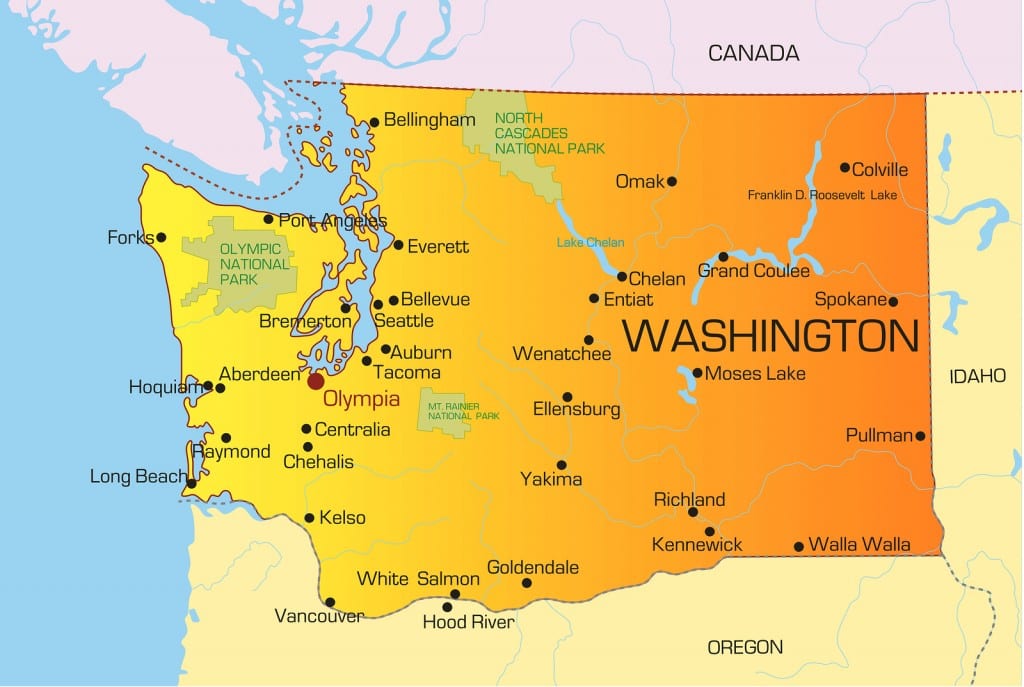
Is Washington state on the West Coast? Geographically and culturally, the answer is a definitive yes, though it maintains a distinct Pacific Northwest identity that sets it apart from California. While some casual observers debate regional boundaries based on climate or local culture, official federal designations and coastal geography place Washington firmly along the western margin of the United States.
Understanding where Washington fits requires looking past casual stereotypes about palm trees and surf culture. This state shares a vast Pacific Ocean coastline, major maritime shipping lanes, and deep economic integration with its southern neighbors. At the same time, its rugged mountains, temperate rainforests, and unique history create a distinct sub-region known as the Pacific Northwest.
Defining the US West Coast
The West Coast of the United States officially encompasses the three contiguous states bordering the North Pacific Ocean: California, Oregon, and Washington. According to the U.S. Census Bureau, these states form the Pacific division of the Western region.
People often confuse the term "West Coast" with a specific Mediterranean climate or lifestyle, picturing Southern California beaches. In reality, coastal geography defines the region. Washington's western edge meets the Pacific Ocean directly, featuring dramatic shorelines like the Olympic Peninsula and major harbors such as Grays Harbor and Willapa Bay.
- Direct Ocean Access: Hundreds of miles of Pacific coastline.
- Federal Classification: Grouped as a primary West Coast maritime hub.
- Time Zone Alignment: Shares the Pacific Time Zone with California and Oregon.
The Pacific Northwest Distinction
While Washington belongs to the West Coast, it is also the anchor of the Pacific Northwest. This broader geographical and cultural region includes Washington, Oregon, Idaho, western Montana, and the Canadian province of British Columbia.
The Pacific Northwest shares specific ecological and atmospheric traits that differ from the desert and Mediterranean zones further south. Heavy winter precipitation, dense evergreen forests dominated by Douglas firs, and massive river systems like the Columbia River define this landscape. According to the National Park Service, these temperate rainforest ecosystems receive some of the highest annual rainfall totals in the continental United States.
This shared environment creates a unified regional identity. Residents across Washington and Oregon experience similar weather patterns, outdoor recreation habits, and environmental priorities.
Economic and Cultural Ties to the Coast
Washington's economy ties it tightly to the broader West Coast corridor. Major ports in Seattle and Tacoma serve as primary gateways for trans-Pacific trade, connecting Asian markets with the entire western seaboard.
Furthermore, trade and corporate partnerships link Washington's tech and aerospace sectors directly with California hubs. Companies like Amazon and Microsoft maintain massive operations that mirror the economic powerhouse status of Silicon Valley.
Culturally, however, Washington diverges from California. Rather than the sprawling car-centric suburbs of Los Angeles, Washington cities developed around maritime trade, logging, and aerospace manufacturing. Indigenous cultures of the Coast Salish peoples have shaped the region for millennia, leaving a distinct heritage visible in local art, governance, and community life.
Common Misconceptions About Washington Geography
Many casual travelers and trivia enthusiasts fall into specific traps when evaluating Washington's place on the map.
- The Climate Fallacy: Some assume that because parts of Washington are cloudy and rainy, it can't share a coastline with sunny California. Weather patterns vary drastically; Washington's eastern half is actually a semi-arid shrub-steppe.
- The Regional Confusion: People often treat "Pacific Northwest" and "West Coast" as mutually exclusive categories, failing to recognize that the former is a subset of the latter.
- Isolation Myths: Visitors sometimes view Washington as culturally isolated from the rest of the coast, ignoring the intense economic and transit corridors running down Interstate 5 from Vancouver, British Columbia, through Seattle and Portland, all the way to San Diego.
Frequently Asked Questions
Is Washington considered part of the West Coast?
Yes. Geographically, politically, and economically, Washington is one of the three core states making up the U.S. West Coast, alongside Oregon and California.
What is the difference between the West Coast and the Pacific Northwest?
The West Coast is a broader geographical designation covering all states bordering the Pacific Ocean. The Pacific Northwest is a sub-region focusing on the northern portion of that coast and inland areas sharing similar temperate rainforest climates and ecosystems.
Does Washington share a time zone with California?
Yes. Washington operates on Pacific Standard Time (PST) in the winter and Pacific Daylight Time (PDT) in the summer, matching California, Oregon, and Nevada.
Why do some people say Washington doesn't feel like the West Coast?
This perception usually stems from cultural stereotypes. Because Washington features evergreen forests, cooler temperatures, and distinct urban cultures in cities like Seattle, it lacks the iconic palm-tree-and-beach imagery commonly associated with Southern California.



