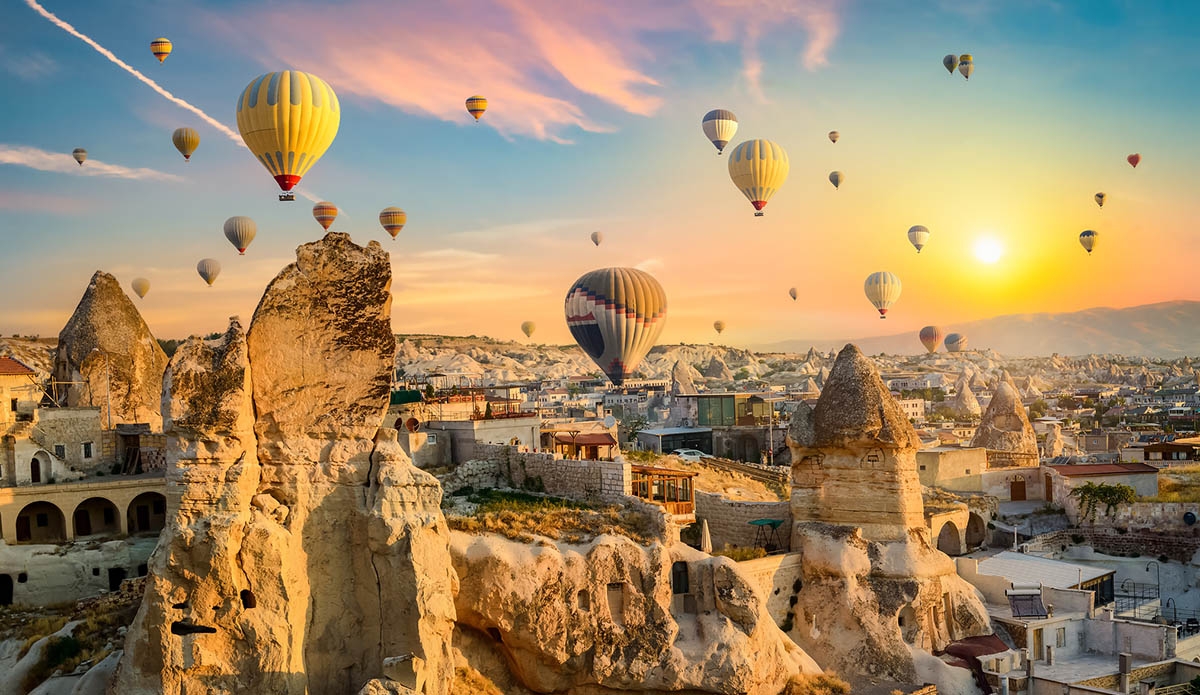
Determining whether Turkey belongs to the Middle East depends on whether you look at a physical map, a history book, or a voting record in international security summits. Geographically, about 97% of Turkey lies in Western Asia, while 3% sits in Southeast Europe. Culturally, it carries the weight of the Ottoman Empire, which ruled vast swathes of the Arab world for centuries. Politically, however, Ankara has spent a century anchoring itself to Western institutions like NATO while navigating deep-seated rivalries in the Levant and Mesopotamia.
Instead of fitting neatly into a single geopolitical box, Turkey operates as a transcontinental pivot state. It bridges Europe, Asia, and the Middle East not just by virtue of its borders, but through active diplomatic balancing acts, economic integrations, and a complex national identity that constantly shifts between its Eastern heritage and Western ambitions.
The Geographic Reality: A Transcontinental Bridge
To understand the physical argument, you have to look at the Bosphorus Strait, the Sea of Marmara, and the Dardanelles. These narrow waterways divide Europe and Asia, and they carve right through Turkey's largest metropolis, Istanbul. Standing on the European side of the Bosphorus puts you in Eastern Thrace, a territory that shares historical and geographic ties with the Balkans. Cross the bridge or take a ferry eastward, and you land in Anatolia—a massive peninsula encompassing roughly 750,000 square kilometers of Western Asia.
Anatolia shares direct land borders with Syria, Iraq, Iran, Armenia, and Georgia. These neighbors anchor Turkey firmly to the Middle Eastern and Caucasian security frameworks. When cross-border conflicts flare up in northern Syria or energy pipelines are negotiated across the Mesopotamian plain, Turkey isn't observing from a distance; it's right in the center of the theater. Its cartographic reality means that ignoring its Middle Eastern geography is impossible.
Historical Context: From Ottoman Capital to Republic
Modern Turkey's relationship with the Middle East is heavily shaped by the collapse of the Ottoman Empire after World War I. For six centuries, Ottoman sultans governed Damascus, Baghdad, Jerusalem, and Mecca. The administrative, religious, and social networks forged during this era left deep cultural imprints across the region.
When Mustafa Kemal Atatürk founded the secular Republic of Turkey in 1923, he deliberately sought to break from this imperial past.
- The new government replaced the Arabic script with a Latin-based alphabet.
- It disestablished Islam as the state religion, enforcing strict constitutional secularism.
- It redirected national aspirations toward Europe, adopting Western legal codes and industrial models.
This forced modernization created a dual personality. While the state apparatus turned its gaze toward Paris, Berlin, and Washington, the social fabric, religious traditions, and family structures in central and eastern Anatolia retained strong bonds with the broader Muslim and Middle Eastern world.
Political Alignment: NATO, the West, and Regional Power
Politically, classifying Turkey requires looking past simple regional tags. During the Cold War, Ankara firmly aligned with the West, joining NATO in 1952 to counter Soviet expansion. It became a foundational member of European security architectures and entered a customs union with the European Community in 1995.
Yet, its foreign policy has rarely been a rubber stamp for Western interests.
- Security Autonomy: Turkey maintains its own independent military doctrine, conducting cross-border operations against Kurdish militant groups in Syria and Iraq regardless of Western hesitation.
- Middle Eastern Interventions: Ankara acts as a primary power broker in regional disputes, managing complex relationships with Iran, mediating between Gulf states, and maintaining a military footprint in the Eastern Mediterranean.
- Transactional Diplomacy: Rather than acting as a permanent proxy for either East or West, modern Turkish leadership leverages its geographic choke points—such as control of the Black Sea straits—to bargain with both European capitals and Middle Eastern neighbors.
Official negotiations for European Union membership, which began in earnest in 2005, have largely stalled due to democratic backsliding concerns and geopolitical deadlocks. As prospects for EU accession dimmed, Ankara expanded its diplomatic footprint across Central Asia, Africa, and the Middle East, emphasizing its unique status as an independent regional heavyweight.
Identity and Culture: A Divided Self-Image
Ask a citizen in downtown Izmir or coastal Antalya whether they feel Middle Eastern or European, and they'll likely point to their cosmopolitan, secular lifestyles, which mirror Southern Europe. They enjoy vibrant café cultures, contemporary art scenes, and westernized social norms.
Move inland to conservative strongholds in Central Anatolia, such as Konya or Kayseri, and the cultural landscape shifts noticeably. Traditional values, religious conservatism, and community-centric routines dominate daily life, aligning closely with traditional Middle Eastern societies.
Despite these regional internal differences, the vast majority of citizens identify first and foremost as Turkish. National pride centers on the country's unique heritage, its distinct language (which is Turkic, not Arabic or Indo-European), and its ability to stand apart from its neighbors. They don't view themselves as merely a bridge for others to cross; they see themselves as an independent civilization with its own gravitational pull.
Frequently Asked Questions
Is Turkey considered part of the Middle East by international organizations?
Organizations and international bodies use different classifications depending on their focus. The United Nations often groups Turkey within Western Asia or Eastern Europe depending on the specific agency, while economic and media outlets frequently lump it into the Middle East and North Africa (MENA) reporting bracket due to its security and economic alignments.
Does Turkey share ethnic ties with Middle Eastern populations?
While Turkey shares religious and historical ties with Arab nations, ethnic Turks are distinct. The majority of the population descends from indigenous Anatolian populations mixed with historical Turkic tribes that migrated from Central Asia centuries ago, making their language and ethnic roots different from their Arab neighbors to the south.
Why is Turkey's geographical position so strategically vital?
Turkey controls the Turkish Straits (the Bosphorus and Dardanelles), which represent the only maritime passage connecting the Black Sea to the Mediterranean. This gives Ankara immense control over naval and commercial traffic for countries like Russia, Ukraine, and Eastern Europe, making it indispensable to global trade and military defense.
Can Turkey still join the European Union?
While Turkey remains an official candidate country, formal accession talks have been frozen for years. Disagreements over human rights, rule of law, and geopolitical disputes involving Cyprus make full membership unlikely in the near future, prompting Turkey to pursue a more independent foreign policy course.



