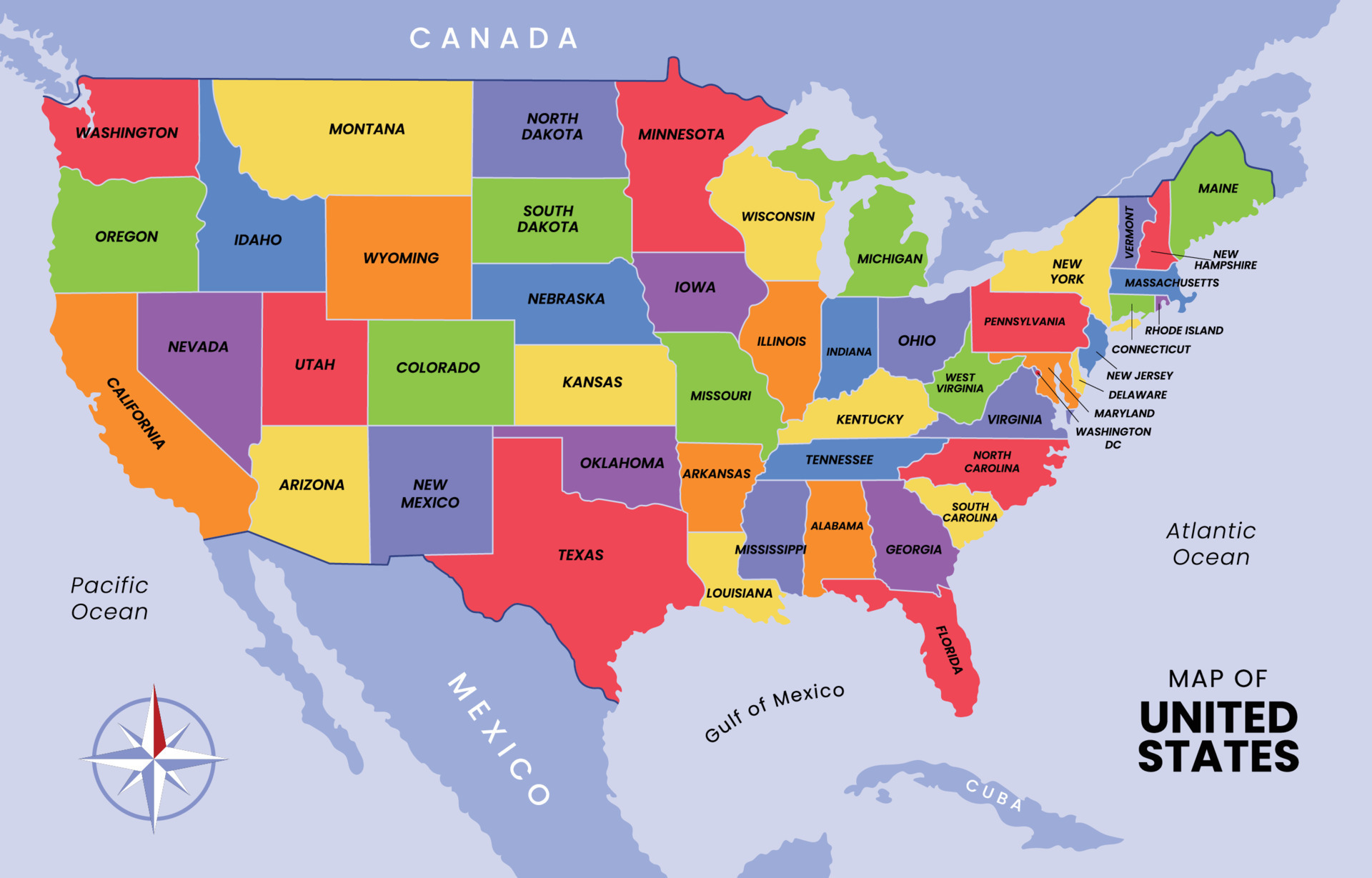
Yes, the United States of America is unequivocally a sovereign country. It possesses a defined territory, a permanent population, a centralized government, and the capacity to enter into relations with other sovereign states. Yet, confusion often arises because of its internal structure. Because the nation comprises fifty individual states—each with its own government, laws, and constitution—some question whether the U.S. functions as a single country or a loose alliance.
Understanding the legal and political reality of the United States requires looking past common misconceptions about federalism. While the states hold significant local authority, ultimate sovereignty rests with the federal government under international and domestic law.
Historical Evolution of American Sovereignty
The political status of the United States didn't happen overnight. It was forged through a deliberate transition from a loose confederation of independent states into a centralized national entity.
Following the American Revolutionary War, the thirteen original states ratified the Articles of Confederation in 1781. This early framework created a "league of friendship" where individual states retained nearly all their sovereignty. The central government lacked the power to tax, regulate commerce, or enforce laws, which quickly led to economic instability and political chaos.
Recognizing these fatal flaws, delegates gathered in Philadelphia in 1787 to draft the U.S. Constitution. Ratified in 1789, the Constitution fundamentally transformed the nation's legal standing. It established a supreme federal authority capable of acting directly on citizens rather than merely coordinating through state governments. The Preamble itself signaled this shift, opening with the phrase "We the People of the United States," rather than listing the individual states.
The Dual Nature: Federalism vs. State Autonomy
To grasp why people sometimes question America's status as a unified country, you have to examine federalism. American federalism divides power between a central national government and individual state governments.
Each state operates as a semi-autonomous entity with its own constitution, governor, legislature, and court system. States manage internal matters like public education, police forces, driver licensing, and intrastate commerce. This decentralization often leads international observers to view the U.S. more like the European Union than a traditional unitary nation-state.
However, state autonomy has strict legal limits defined by the Supremacy Clause of the U.S. Constitution (Article VI, Clause 2). This clause establishes that federal law and the U.S. Constitution take precedence over state constitutions and laws. If a state passes a statute that conflicts with federal law, the federal law wins.
Furthermore, individual states do not possess international sovereignty. They cannot:
- Form treaties or alliances with foreign governments.
- Maintain independent military forces (aside from regulated National Guard units subject to federal oversight).
- Issue their own currency or conduct independent foreign diplomacy.
- Secede from the Union, as the U.S. Supreme Court affirmed in the landmark 1869 case Texas v. White.
International Recognition and Legal Status
Under international law, sovereignty is the ultimate test of whether a territory qualifies as a country. The Montevideo Convention on the Rights and Duties of States outlines the standard criteria for statehood: a permanent population, a defined territory, government, and the capacity to enter relations with other states. The United States checks every box definitively.
The U.S. is a charter member of the United Nations, holds a permanent seat on the UN Security Council, and maintains diplomatic relations with nearly every recognized nation globally. Foreign governments don't negotiate treaties with Texas, California, or New York; they negotiate with the federal government in Washington, D.C.
For a deeper look into international standards of statehood, you can review the United Nations Member States directory, which outlines official sovereign nations.
Constitutional Republic vs. Democracy
Another source of confusion regarding the political status of the U.S. involves terminology. People frequently label the U.S. a "democracy," while others insist it is a "constitutional republic". Both terms are correct, but they describe different layers of the system.
The United States is a constitutional republic in terms of its structural design. A republic means supreme power rests with the people, who elect representatives to govern, rather than a monarch holding absolute power. The "constitutional" modifier means that the government's power is strictly limited by supreme law, protecting minority rights from the immediate whims of a shifting majority.
At the same time, the nation functions as a representative democracy. Citizens exercise their power by voting in free and fair elections to choose local, state, and federal officials. Recognizing these mechanics is core to understanding how U.S. Citizenship and Immigration Services defines civic structures for naturalization.
Common Misconceptions About U.S. Status
Several persistent myths cloud the legal reality of the United States. Clearing them up highlights why the country functions as a single sovereign entity.
One major myth is that states entered the union as permanent volunteers who can leave whenever they choose. As noted earlier, the Civil War and subsequent legal rulings established that the Union is indissoluble. States are legally bound to the federal framework permanently.
Another misconception is that the federal government only handles matters that states explicitly delegate to it. While the Tenth Amendment reserves powers not delegated to the federal government to the states or the people, the federal government's implied powers—backed by the Commerce Clause and the Supremacy Clause—give it sweeping authority over national economic, social, and legal landscapes.
Frequently Asked Questions
Can individual U.S. states act as independent countries?
No. While states maintain control over local police, education, and intrastate commerce, they lack international sovereignty. They cannot conduct foreign policy, mint money, or enter into treaties with foreign nations.
Why do people say the United States is a corporation?
This is a widespread internet conspiracy theory with no basis in constitutional or international law. The United States is a constitutional federal republic and a recognized sovereign nation-state, not a private business entity.
Is Puerto Rico or Washington, D.C. a country?
No. Washington, D.C. is a federal district under the ultimate authority of the U.S. Congress. Puerto Rico is an unincorporated U.S. territory whose residents are U.S. citizens, but it lacks sovereign statehood status in international law.
Does the U.S. federal government hold supreme legal authority over the states?
Yes. Under the Supremacy Clause of the U.S. Constitution, federal law overrides conflicting state laws. The national government holds ultimate legal and political authority within its constitutional boundaries.



