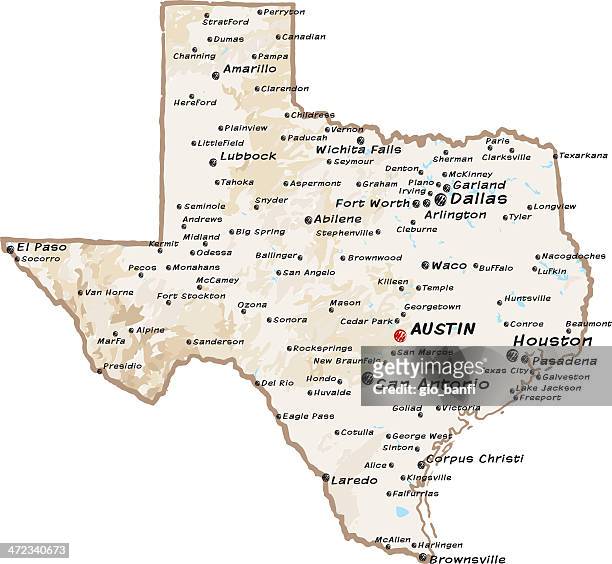
When people talk about Texas, they rarely treat it like they treat Ohio or Nebraska. Texans speak of their home with a distinct pride, and outsiders view it through a lens of outsized stereotypes. This raises a recurring question in American political and cultural discourse: Is Texas legally, economically, and culturally a state like any other, or does it occupy a singular category within the Union?
Legally speaking, Texas is bound by the United States Constitution just like every other state, despite persistent myths regarding secession rights. Yet, its unique path to statehood as an independent republic, its massive economy, and its distinct political identity set it apart from most of its sister states. Understanding what makes Texas different requires looking past the cowboy lore to examine the constitutional facts, historical anomalies, and economic realities that shape the Lone Star State.
The Constitutional Reality: Equal Footing and the Union
Many casual observers misunderstand how Texas entered the Union, fueling the myth that Texas retains special legal privileges, such as the unilateral right to secede or divide itself into five separate states.
Under the U.S. Constitution's equal footing doctrine, all states admitted to the Union enter with the same political rights and sovereignty as the original thirteen states. When Texas was annexed in 1845 through a joint resolution of Congress rather than a traditional treaty, it did not negotiate special exemptions from federal law.
The question of secession was settled decisively on the battlefield during the Civil War and reaffirmed legally by the Supreme Court in the 1869 landmark case Texas v. White. Chief Justice Salmon P. Chase wrote that the Constitution does not permit states to secede, describing the Union as "an indestructible union, composed of indestructible states."
While a joint resolution allowed Texas to retain vacant public lands and its state public debt upon entry—unlike other incoming territories—these provisions didn't grant Texas a superior constitutional status. Federal supremacy applies in Texas just as it does in California, New York, or Wyoming.
A Republic's Legacy: The Historical Distinction
Even if the constitutional framework is uniform, the psychological and historical framework of Texas is entirely unique. Most American states were territories governed by federal authorities before achieving statehood. Texas spent nearly a decade as a recognized sovereign nation—the Republic of Texas—from 1836 to 1845.
During its time as an independent republic, Texas:
- Maintained its own military forces and navy.
- Conducted foreign diplomacy and exchanged ambassadors with European powers like France and Great Britain.
- Issued its own currency, known as "redbacks."
- Managed public lands and international borders independently.
This history forged a self-reliant civic identity that persists today. When Texans refer to their heritage, they aren't just remembering pioneer settlement; they are recalling a time when their government negotiated treaties and fought wars as a sovereign entity. This legacy influences modern Texas political rhetoric, where skepticism of federal overreach runs deeper than in states with different foundational histories.
Economic Scale and Independence
Economically, Texas operates on a scale that dwarfs the vast majority of sovereign nations, let alone individual U.S. states. According to the U.S. Bureau of Economic Analysis, the Texas gross domestic product routinely exceeds 2.4 trillion dollars, making it the eighth-largest economy in the world if it were an independent country—ranking ahead of nations like Canada, Russia, and South Korea.
Several structural factors drive this economic heft:
- Energy Dominance: Texas leads the nation in crude oil and natural gas production, while simultaneously generating more wind energy than any other state.
- Corporate Relocation: Favorable tax structures, a lack of personal income tax, and predictable regulatory frameworks have drawn hundreds of Fortune 500 company headquarters to cities like Dallas, Houston, and Austin.
- Global Trade Hubs: The Port of Houston handles massive international shipping volumes, acting as a vital gateway for U.S. exports and imports.
This economic self-sufficiency gives Texas leverage in federal debates. While states like Vermont or Montana rely heavily on federal funding relative to taxes paid, Texas functions more as a net contributor to the national economy, reinforcing its cultural ethos of independence.
Cultural Diversity and Shifting Demographics
The cultural image of Texas is often reduced to oil barons, cowboys, and rural conservatism. In reality, modern Texas is an urbanized, highly diverse mosaic that mirrors the broader demographic shifts of the United States.
Major metropolitan areas like Houston, Dallas-Fort Worth, San Antonio, and Austin are economic and cultural engines characterized by substantial Latino, Black, Asian, and white populations. Houston, in particular, is frequently cited by sociologists as one of the most ethnically diverse cities in North America.
This demographic evolution means Texas politics and culture are constantly renegotiated. The interplay between traditional rural conservatism and booming urban diversity creates a dynamic political laboratory that doesn't fit neatly into red-state or blue-state caricatures.
Common Misconceptions About Texas Statehood
Discussions about Texas frequently attract urban legends and historical myths. Clearing up these misconceptions clarifies how the state actually functions within the federal system.
- Can Texas legally leave the Union? No. While Texans often joke about secession, the Supreme Court ruled in Texas v. White that unilateral secession is unconstitutional.
- Did Texas negotiate a right to divide into five states? The 1845 annexation resolution stated that new states of convenient size not exceeding four in number in addition to the state of Texas might be formed out of its territory. However, this required consent from both the U.S. Congress and the Texas legislature, making it a procedural option rather than an automatic right.
- Does Texas have its own electrical grid because of sovereignty? No. The Texas Interconnection, managed by the Electric Reliability Council of Texas (ERCOT), was established historically to avoid federal interstate commerce regulations, not out of a demand for political independence.
Frequently Asked Questions
Why does Texas fly its flag at the same height as the U.S. flag?
A persistent urban legend claims that Texas is the only state permitted to fly its flag at the same height as the American flag because it was once an independent nation. In reality, any state flag can be flown at the same height as the U.S. flag according to the U.S. Flag Code, provided the American flag is positioned at the center and at the highest point of the group. The Texas tradition stems primarily from local pride rather than a unique federal exemption.
Does Texas pay no federal income tax?
No. Texans pay federal income taxes just like residents of any other state. The misconception arises because Texas has no state-level personal income tax, relying instead on high sales and property taxes to fund state and local government operations.
How did Texas acquire its public land ownership?
When Texas entered the Union, it kept its vacant and unappropriated public lands to pay off the debts it accumulated as an independent republic. This is why the federal government owns a much smaller percentage of land in Texas compared to western states like Nevada or Utah, where the federal government retained vast territorial lands.
Is Texas legally allowed to maintain a military?
Texas maintains the Texas Military Department, which includes the Texas Army National Guard, the Texas Air National Guard, and the Texas State Guard. However, like all state military forces, they are subject to federal oversight and can be federalized by the President of the United States. The Texas State Guard remains strictly under state control but is a defense force, not an independent standing army.


