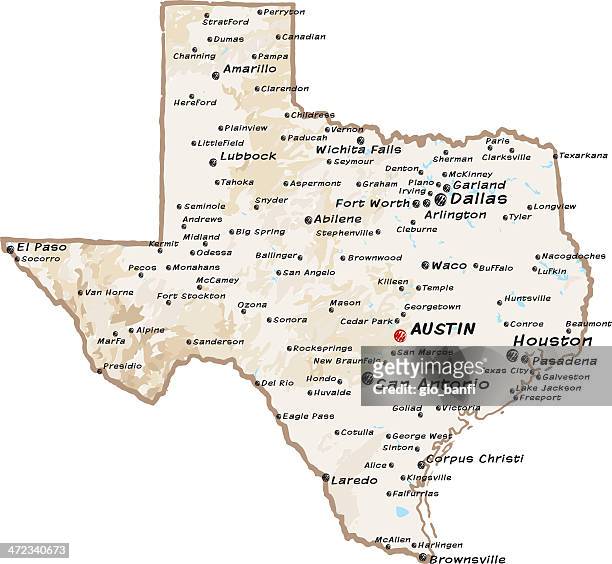
Yes, Texas is officially the 28th state of the United States, having joined the union on December 29, 1845. Despite internet rumors, pop-culture jokes, and its colorful history as an independent republic, Texas holds no special legal sovereignty that separates its status from any other U.S. state. It operates fully under the United States Constitution, elects federal representatives, and participates in national elections just like California, New York, or Florida.
People often ask this question because of the region's distinct cultural identity and unique past. Texans love to lean into the "Lone Star" persona, and historical quirks like its brief stint as a sovereign nation fuel misconceptions. Sorting out the reality requires looking at how Texas evolved from Spanish and Mexican territory into a sovereign republic, and finally into an economic powerhouse of the United States.
The Republic Years: Why People Think Texas Is Separate
Before Texas became a U.S. state, it fought for and won its independence from Mexico during the Texas Revolution in 1836. For nearly a decade, from 1836 to 1845, the Republic of Texas operated as a recognized sovereign nation. It had its own president, currency, postal service, and military.
During these years, leaders of the republic negotiated treaties with European powers like France and Great Britain. Because it functioned independently for nine years, modern folklore sometimes exaggerates its legal standing. Some myths claim Texas retained a secret legal right to secede from the union at will. Constitutional scholars and the U.S. Supreme Court settled that debate long ago. In the 1869 ruling Texas v. White, the Supreme Court established that the U.S. Constitution does not permit states to secede unilaterally.
The Path to Statehood in 1845
The annexation of Texas didn't happen overnight. When Texas first voted overwhelmingly in favor of joining the United States in 1836, Washington politicians pumped the brakes. Annexing Texas meant admitting a massive new slave-holding territory, which threatened to upend the delicate political balance between northern and southern states. Furthermore, U.S. leaders wanted to avoid an outright war with Mexico, which still considered Texas a breakaway province.
By 1845, political momentum shifted under the banner of Manifest Destiny—the belief that the United States was destined to expand across the North American continent. President John Tyler pushed through a joint resolution of Congress, and his successor, President James K. Polk, signed the final legislation.
- December 29, 1845: President Polk signed the bill accepting Texas as the 28th U.S. state.
- February 19, 1846: The formal transfer of power took place. President Anson Jones handed control over to the newly elected state governor, James Pinckney Henderson.
For deeper documentation on this era, check out the historical archives at the Texas State Library and Archives Commission.
The Six Flags Over Texas Myth
Another reason people question the status of Texas stems from its famous "six flags" heritage. Amusement parks and historical markers love to point out that six different national flags have flown over the territory throughout its history.
- Spain (1519–1685, 1690–1821)
- France (1685–1690)
- Mexico (1821–1836)
- Republic of Texas (1836–1845)
- United States (1845–1861, 1865–present)
- Confederate States of America (1861–1865)
While this history is fascinating, it doesn't make Texas any less of a standard U.S. state today. Many states flew multiple flags before achieving statehood—especially across the American West and Southwest, where Spanish and Mexican rule preceded U.S. acquisition.
Geographic and Economic Realities
Today, Texas is a foundational pillar of the American economy and landscape. Spanning roughly 268,596 square miles, it ranks as the second-largest state by total area, sitting just behind Alaska. Its population exceeds 29 million residents, making it the second most populous state in the country.
The state's economy is massive, driven by energy production, technology hubs in Austin and Dallas, international trade, and agriculture. You can explore current economic data and geographic profiles directly through the U.S. Census Bureau.
Common Misconceptions About Texas Law
Because of its independent past, people often repeat several myths regarding what Texas is legally allowed to do compared to other states.
- The Division Myth: People often claim Texas has the legal right to split into five separate states whenever it wants. While the 1845 annexation resolution did contain a clause allowing Texas to divide itself into up to five states, doing so would still require approval from both the U.S. Congress and the Texas state legislature. It's not a button the governor can push unilaterally.
- The Currency Myth: Some urban legends suggest Texans can legally pay taxes or debts in gold or foreign currency. Federal law applies equally in Texas; U.S. legal tender is the only mandatory currency for debts.
- The Passport Myth: Passports aren't required to cross into Texas from Oklahoma or Louisiana, because Texas is a domestic state, not a foreign country.
Frequently Asked Questions
Did Texas ever fight a war after joining the United States?
Yes. Shortly after annexation, the boundary dispute over where Texas ended and Mexico began triggered the Mexican-American War in 1846. The American victory resulted in the Treaty of Guadalupe Hidalgo, which solidified the Rio Grande as the official southern border.
Does Texas have its own power grid?
Yes. The Electric Reliability Council of Texas operates an independent electrical grid that covers most of the state. This setup keeps the grid mostly isolated from eastern and western U.S. interconnections to avoid federal regulatory oversight, though it remains legally subject to federal and state laws.
Can Texas legally leave the United States today?
No. While political rhetoric occasionally features talk of secession, federal law and Supreme Court precedent make it clear that no state can legally exit the union by unilateral action.
Why is it called the Lone Star State?
The nickname references the single star on the flag of the Republic of Texas, which symbolized its struggle for independence from Mexico and its status as a formerly sovereign nation.



