Is sulfur a metal? No, sulfur is a reactive nonmetallic element found in group 16 of the periodic table. It forms brittle, bright yellow crystals at room temperature and lacks metallic luster, malleability, and thermal or electrical conductivity.
Despite its occasional confusion with metals due to historical uses in metallurgy, its electronic configuration proves otherwise. Sulfur atoms readily gain or share electrons to form covalent bonds and acidic oxides, which firmly classifies the yellow element among nonmetals.
Periodic Table Position and Electronic Structure
Sulfur sits directly below oxygen and above selenium in group 16, also known as the chalcogens. Its atomic number is 16, meaning a neutral sulfur atom possesses 16 protons and 16 electrons. The electron configuration is written as $1s^2 2s^2 2p^6 3s^2 3p^4$.
With six valence electrons in its outer shell, sulfur requires two additional electrons to achieve a stable noble gas configuration. This electron deficiency dictates its nonmetallic nature. Instead of parting with electrons easily—a hallmark of metallic bonding—sulfur tends to accept or share electrons.
Key structural characteristics include:
- Valence shell: Six outer electrons drive chemical bonding behavior.
- Covalent bonding: Forms strong covalent bonds with carbon, hydrogen, and other nonmetals.
- Oxidation states: Exhibits a wide range of stable oxidation states from -2 to +6.
- Allotropy: Readily forms multiple allotropes, with cyclooctasulfur ($S_8$) being the most stable form at room temperature.
Physical Properties of Elemental Sulfur
At standard temperature and pressure, solid sulfur exists as an array of crown-shaped $S_8$ rings bound by weak van der Waals forces. This molecular crystal lattice explains why the substance shatters easily under physical stress rather than bending or stretching.
- Density: Roughly $2.07\text{ g/cm}^3$, making it denser than water but lighter than most transition metals.
- Melting point: Melts into a clear, mobile amber liquid at $115.21^\circ\text{C}$.
- Boiling point: Boils at $444.6^\circ\text{C}$ to produce a deep orange vapor.
- Electrical conductivity: Acts as an electrical insulator in both solid and liquid states.
- Thermal conductivity: Conducts heat poorly, transferring thermal energy at a fraction of the rate seen in iron or copper.
Why Sulfur Was Historically Mistaken for a Metal
Ancient metallurgists frequently encountered native sulfur deposits near volcanic fumaroles and hot springs. Because sulfur crystals caught fire easily and burned with a bright blue flame, early miners associated the substance with subterranean metals like copper and iron.
Alchemists later grouped sulfur alongside mercury and salt as one of the three foundational principles of matter, often referred to as the tria prima. In early metallurgy, elemental sulfur served as a fluxing agent. Miners threw powdered sulfur into metal ores to lower melting points and separate impurities.
This functional interaction with metal ores blurred the lines between reactants and metallurgical products. Modern chemistry eventually corrected these classifications by mapping atomic structures, confirming that sulfur lacks the free electron sea characteristic of metallic bonding.
Industrial Uses and Chemical Applications
Sulfur plays a critical role in modern global manufacturing, primarily as a precursor to industrial acids and agricultural inputs. The vast majority of mined and recovered sulfur is converted directly into sulfuric acid ($H_2{SO}_4$).
Agricultural Fertilizers
Crop yields depend heavily on sulfur availability. Plants utilize sulfur to synthesize essential amino acids such as methionine and cysteine, which form proteins. Agricultural lime and ammonium sulfate supply this nutrient to depleted soils, preventing stunted growth and yellowing leaves in crops like canola, alfalfa, and wheat.
Rubber Vulcanization
Natural rubber on its own becomes sticky when warm and brittle when cold. Charles Goodyear discovered that heating raw rubber with elemental sulfur creates cross-links between polymer chains. This vulcanization process locks the rubber molecules in place, yielding durable, elastic materials vital for automotive tires and industrial seals.
Petrochemical Refining
Refineries use sulfur compounds to remove impurities from crude oil fractions through hydrotreating. Conversely, the Claus process recovers elemental sulfur from hydrogen sulfide gas generated during natural gas processing, preventing toxic emissions while generating a high-volume chemical commodity.
Environmental Impact and Safety
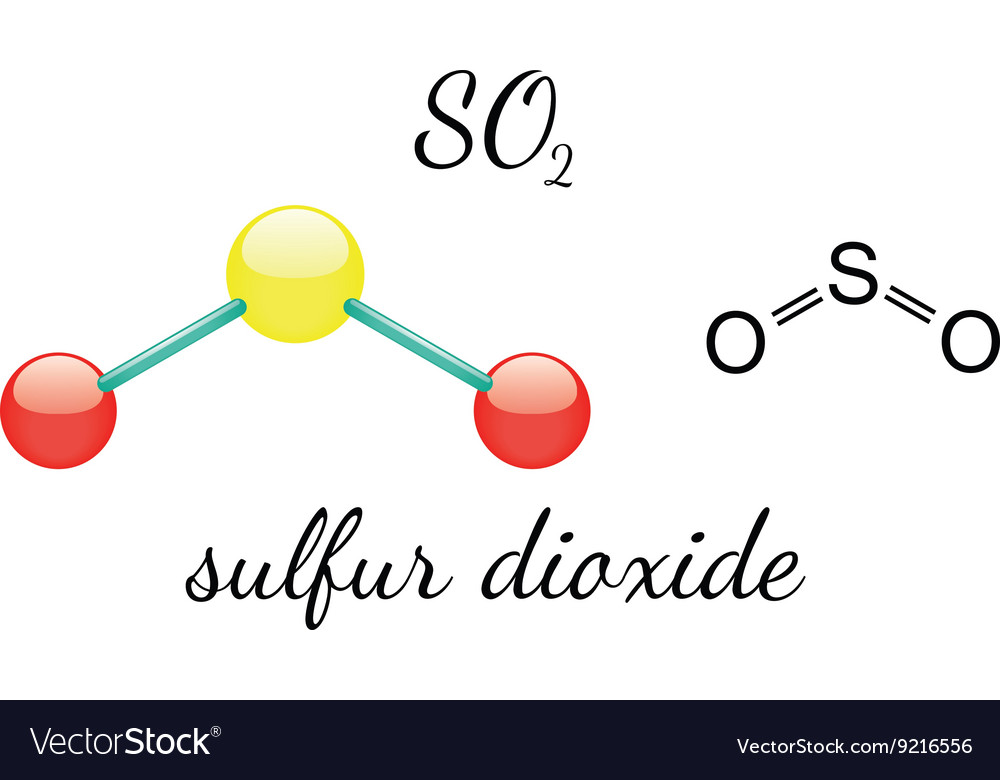
While essential for industry, unmanaged sulfur compounds present serious environmental challenges. Burning fossil fuels containing sulfur releases sulfur dioxide ($SO_2$) into the atmosphere. In the presence of atmospheric moisture, sulfur dioxide converts into sulfuric acid, falling back to earth as acid rain.
Strict environmental regulations mandated by agencies like the U.S. Environmental Protection Agency limit sulfur limits in diesel fuels and industrial flue gases. Industrial facilities now employ flue gas desulfurization scrubbers to capture sulfur emissions before they escape into the atmosphere.
Frequently Asked Questions
Is sulfur magnetic?
No, sulfur is diamagnetic. It does not attract magnets and experiences a very weak repulsion when placed within a strong magnetic field.
What does pure sulfur smell like?
Pure elemental sulfur is completely odorless and tasteless at room temperature. The pungent, rotten-egg odor commonly associated with sulfur actually belongs to hydrogen sulfide gas ($H_2S$), not elemental sulfur.
Can sulfur conduct electricity?
Solid sulfur is an excellent electrical insulator. However, under extreme pressures exceeding 90 gigapascals, sulfur transforms into a metallic state and exhibits superconductivity.
Why is sulfur yellow?
The bright yellow color stems from electronic transitions within its crown-shaped $S_8$ molecular rings. These molecules absorb violet and blue wavelengths of visible light, reflecting the remaining yellow wavelengths to the human eye.


