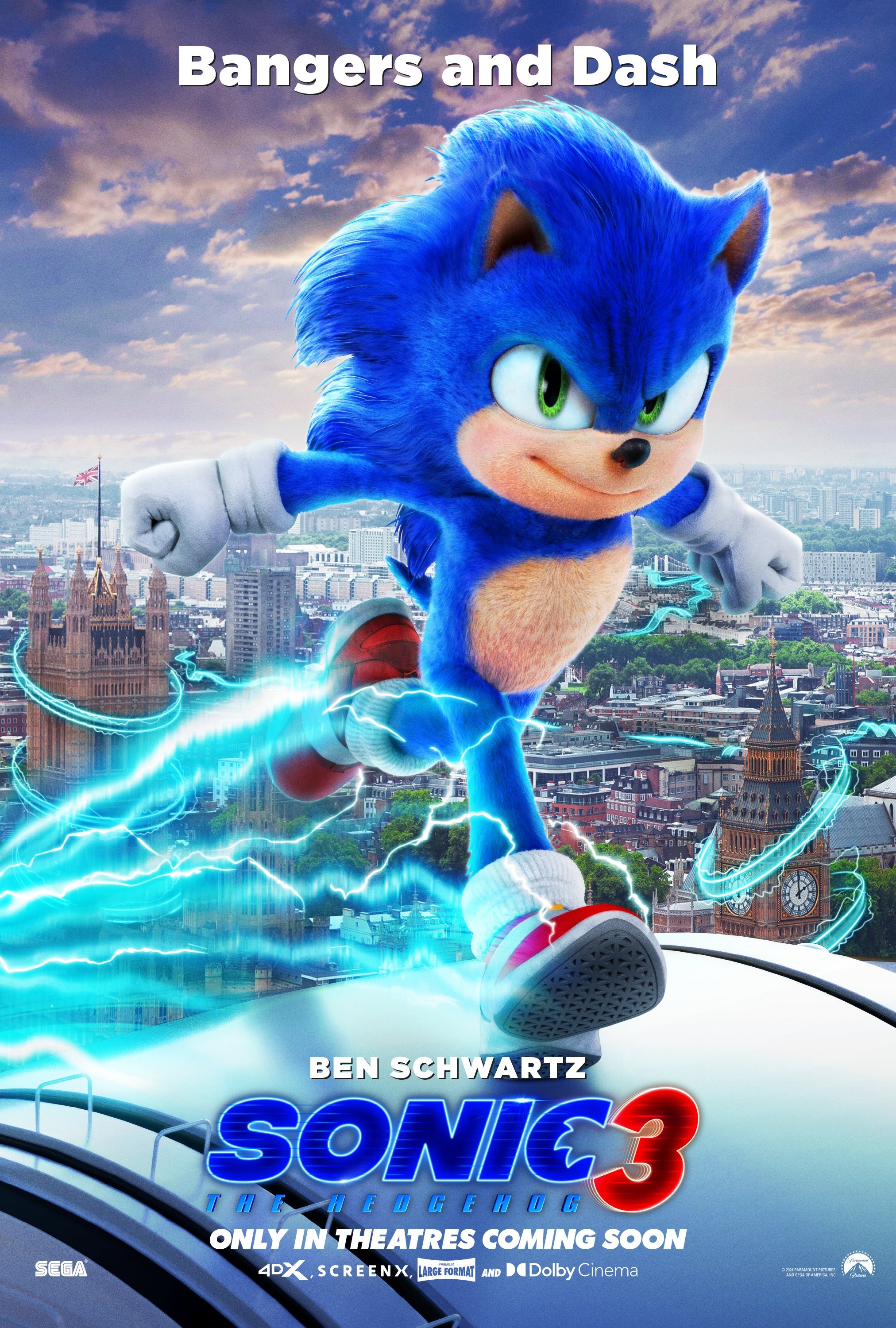
When pop culture fans debate cross-universe matchups, few questions generate as much heat as whether Sonic the Hedgehog can outrun DC Comics' The Flash. At a glance, both icons share a core defining trait: absurd, reality-bending speed. Yet, when you stack their canonical feats against real-world and fictional physics, the answer changes depending on which versions you compare. The short answer upfront is that mainstream comic book versions of The Flash operate on a cosmological tier of speed that standard video game iterations of Sonic simply cannot touch. However, looking past a simple winner-take-all verdict reveals a fascinating study in how different media handle momentum, kinetic energy, and narrative power scaling.
Decoding the Baseline Speed Metrics
To understand how these two speedsters measure up, we have to look at where their baseline capabilities start. Sonic’s identity is built right into his name: he breaks the sound barrier. In standard game canon, normal running speeds hover in the supersonic to hypersonic ranges, usually tracking between Mach 1 and Mach 5 depending on the specific title. Even when scaling up to high-end interpretations like modern or promotional media, base Sonic generally operates well within planetary bounds.
The Flash—whether referencing Barry Allen or Wally West—begins his career already operating past the sound barrier, quickly escalating into relativistic and faster-than-light territories. While Sonic needs specialized items like the Chaos Emeralds to achieve Super or Hyper states that push him into light-speed or time-warping dimensions, the Flash taps into an omnipresent cosmic energy field natively.
- Sonic's Core Engine: Relies on biological propulsion, kinetic acceleration, and external MacGuffins like Chaos Emeralds for ultimate power tiers.
- The Flash's Core Engine: Draws directly from the Speed Force, an extra-dimensional energy source granting infinite acceleration potential without biological burnout.
- The Scaling Gap: Standard game Sonic operates at thousands of miles per hour, whereas mainstream comic versions of the Flash routinely break light speed by millions or trillions of multiples.
Pop Culture Physics: Momentum and Kinetic Reality
Real-world physics dictates that as an object approaches the speed of light, its relativistic mass increases toward infinity, requiring infinite energy to maintain acceleration. Both franchises completely ignore this constraint, but they do so in contrasting ways. Sonic's world treats speed as an environmental interaction. He utilizes loops, springs, and rolling momentum to preserve energy, mirroring a stylized platforming physics engine. When Sonic runs, he kicks up dust, interacts with terrain friction, and occasionally leaves sonic booms in his wake.
The Flash operates under comic book metaphysics where standard friction and thermal dynamics are completely bypassed by the Speed Force. Because the energy field protects the runner and their immediate environment, the Flash doesn't incinerate the atmosphere or create catastrophic shockwaves every time he jogs to get coffee. This dimensional cushion allows DC's scarlet speedster to achieve absurd mechanical feats, such as outrunning death itself or racing across planetary distances in fractions of an attosecond.
Examining the Outliers: Archie Comics and Cosmic Feats
It's unfair to evaluate Sonic solely through his mainstream video game appearances. If we look at extended universes like the historical Archie Comics run, Sonic's power scaling shifts dramatically. Archie Sonic demonstrated reality-warping speed feats, running across entire galaxies and neutralizing threats that manipulated space-time fabric. In these specific, hyper-inflated comic runs, Sonic approaches the kind of abstract, boundless velocity typically reserved for cosmic entities.
Even with these extreme outliers factored in, DC writers have pushed Wally West into territory that defies standard comparison. In iconic comic arcs, Wally once outran instantaneous teleportation across a collapsing universe simply by absorbing the kinetic energy of an entire planet's population. Against baseline comic book scaling at that magnitude, even peak alternate-universe versions of Sonic struggle to maintain parity.
Common Misconceptions in Speedster Debates
When fans argue about these characters, several recurring misunderstandings tend to skew the comparison. Clearing these up helps establish a clearer picture of how their respective universes function.
- Assuming all versions are identical: Saying "Sonic is fast" or "The Flash is fast" ignores decades of revisions. Jay Garrick (the Golden Age Flash) is much slower than modern Wally West, just as classic 16-bit Sonic differs vastly from his modern or animated counterparts.
- Confusing teleportation with running: Both characters possess abilities that look like teleportation, but Sonic usually achieves this via Chaos Control (time-space manipulation), while the Flash achieves it through sheer raw velocity moving through dimensions.
- Ignoring narrative context: Video game mechanics require balanced design so levels remain playable, whereas comic books operate on a sliding scale of dramatic escalation where characters scale directly to the cosmic threat of the week.
Frequently Asked Questions
Can Sonic run faster than light without power-ups?
In standard game canon, no. Sonic requires external catalysts like the Chaos Emeralds or specific narrative artifacts to cross the light-speed threshold consistently. Most of his standard gameplay feats remain deeply rooted in supersonic and hypersonic brackets.
Which version of the Flash is the fastest?
Wally West is widely recognized as the fastest primary iteration of the Flash. His complete integration with and mastery over the Speed Force has allowed him to outrun concepts like death and travel faster than instantaneous teleportation.
How does the Speed Force give the Flash an unfair advantage?
The Speed Force acts as a localized physics shield. It eliminates air resistance, sonic booms, g-force trauma, and infinite mass accumulation at relativistic speeds, letting the Flash break every known law of physics without destroying his own body or the planet he runs on.
Are there any official crossovers where they race?
No official, canonical crossover comic or game has ever pitted Sonic directly against the Flash in a definitive race. Any outcome currently debated by fans relies on theoretical cross-universe scaling, fan calculations, and comparative analysis of their published media feats.



