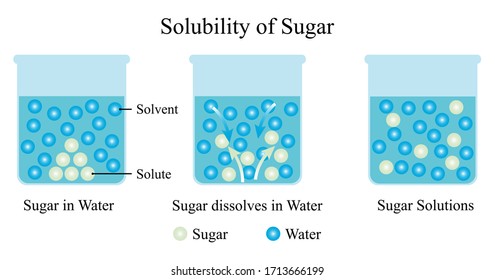
Is solubility a physical or chemical property? In standard chemistry classification, solubility is fundamentally categorized as a physical property. When a substance dissolves in a liquid, it can typically be recovered in its original chemical form through physical means like evaporation or distillation, meaning no permanent chemical bonds are broken or created to form a new substance.
However, the reality in the laboratory is more nuanced. While the capacity of a solute to dissolve in a solvent under specific conditions describes a physical characteristic, the actual process of dissolution frequently involves chemical phenomena—such as ionic dissociation, hydrogen bonding, or acid-base reactions. Understanding why solubility sits at this intersection requires looking closely at what happens to molecules and ions when they mix.
Defining Physical Properties vs. Chemical Properties
To classify solubility accurately, it helps to review the core definitions in chemistry. A physical property is a characteristic that can be observed or measured without changing the chemical identity of the substance. Examples include melting point, boiling point, density, color, and electrical conductivity.
A chemical property, by contrast, describes how a substance reacts or changes into an entirely new substance with a different chemical composition. Examples include flammability, toxicity, acidity, and oxidation states.
When table sugar dissolves in water, the solid sucrose crystals disperse into individual molecules surrounded by water hydration shells. If you boil away the water, solid sugar remains. Because the molecules didn't undergo a permanent chemical transformation into a different compound, solubility behaves as a physical property.
The Molecular Mechanics of Dissolution
Solubility describes the maximum amount of a solute that can dissolve in a specified amount of solvent at equilibrium and a given temperature. This process relies on intermolecular forces rather than chemical reactions.
Three primary energy interactions govern whether a substance dissolves:
- Solute-solute interactions between particles of the solute.
- Solvent-solvent interactions between molecules of the liquid.
- Solute-solvent interactions formed when the solute and solvent mix.
For dissolution to occur spontaneously, the attractive forces between the solute and solvent molecules must be strong enough to overcome the individual cohesive forces holding the solute together and the solvent apart. This is why polar solvents like water readily dissolve polar and ionic substances ("like dissolves like"), while nonpolar solvents like hexane dissolve nonpolar fats and oils.
When Dissolution Involves Chemical Change
The boundary between physical and chemical behavior blurs when ionic or reactive solutes enter a solution. Consider table salt (sodium chloride). When it dissolves in water, the polar water molecules pull the sodium and chloride ions apart from their crystal lattice.
While the ions are hydrated and separated, this process involves the breaking of ionic bonds. In more complex scenarios, chemical reactions happen simultaneously with dissolution. For instance, when carbon dioxide gas dissolves in water, a portion of it reacts chemically to form carbonic acid. Similarly, sparingly soluble salts like calcium carbonate dissolve much more readily in acidic solutions because hydrogen ions react chemically with carbonate ions, shifting the equilibrium forward.
According to guidelines from the IUPAC Gold Book, solubility measurements are treated as physical data regarding phase equilibria, even when chemical species undergo speciation in solution.
Key Factors That Alter Solubility
If you're testing or manipulating solubility in an experiment or industrial process, several physical variables dictate how much solute will dissolve:
- Temperature: For most solid solutes in liquid solvents, solubility increases as temperature rises because higher thermal energy helps overcome lattice forces. For gases, solubility decreases as temperature increases because kinetic energy allows gas molecules to escape the liquid phase.
- Pressure: Pressure has a negligible effect on the solubility of solids and liquids. For gases, however, solubility increases in direct proportion to pressure, a principle quantified by Henry's Law.
- Particle Size: While particle size doesn't change the maximum solubility limit at equilibrium, smaller particles dissolve much faster because their surface area exposed to the solvent is significantly larger.
Common Misconceptions About Solubility
Students and researchers often trip over a few persistent myths regarding how solubility works:
- "Dissolving means melting." Melting is a phase change caused strictly by heating a pure substance past its melting point. Dissolving requires two distinct substances—a solute and a solvent—interacting via intermolecular forces.
- "Insoluble means zero substance dissolves." In chemistry, absolutely insoluble substances do not exist. Even compounds labeled "insoluble," like silver chloride, have a tiny solubility product constant ($K_{sp}$) representing trace amounts that dissolve into solution.
- "Solubility and rate of dissolution are the same thing." Solubility defines the limit of how much can dissolve. Dissolution rate measures how fast it dissolves. Stirring a solution or heating it increases the rate, but it doesn't change the ultimate saturation limit at a fixed temperature.
Frequently Asked Questions
Is solubility an intensive or extensive property?
Solubility is an intensive property, meaning it does not depend on the total amount of material present. The solubility of sodium chloride in water at 25 degrees Celsius is roughly 36 grams per 100 milliliters, whether you are mixing a tiny cup or a massive industrial vat.
Why does sugar dissolve faster in hot water than in cold water?
Hot water molecules possess greater kinetic energy. This rapid molecular motion allows water to collide with sucrose crystals more forcefully and frequently, breaking intermolecular bonds and dispersing the molecules into the solution at a much faster rate.
Does dissolving salt in water change its chemical formula?
No. While the sodium and chloride ions dissociate and separate in the aqueous environment, they remain sodium and chloride ions. Evaporating the water recombines them into solid sodium chloride ($NaCl$).
Can nonpolar substances dissolve in water?
Generally no. Water molecules form strong hydrogen bonds with one another. Nonpolar molecules like oil cannot form favorable dipole-dipole interactions with water, so water molecules exclude them, leading to phase separation.



