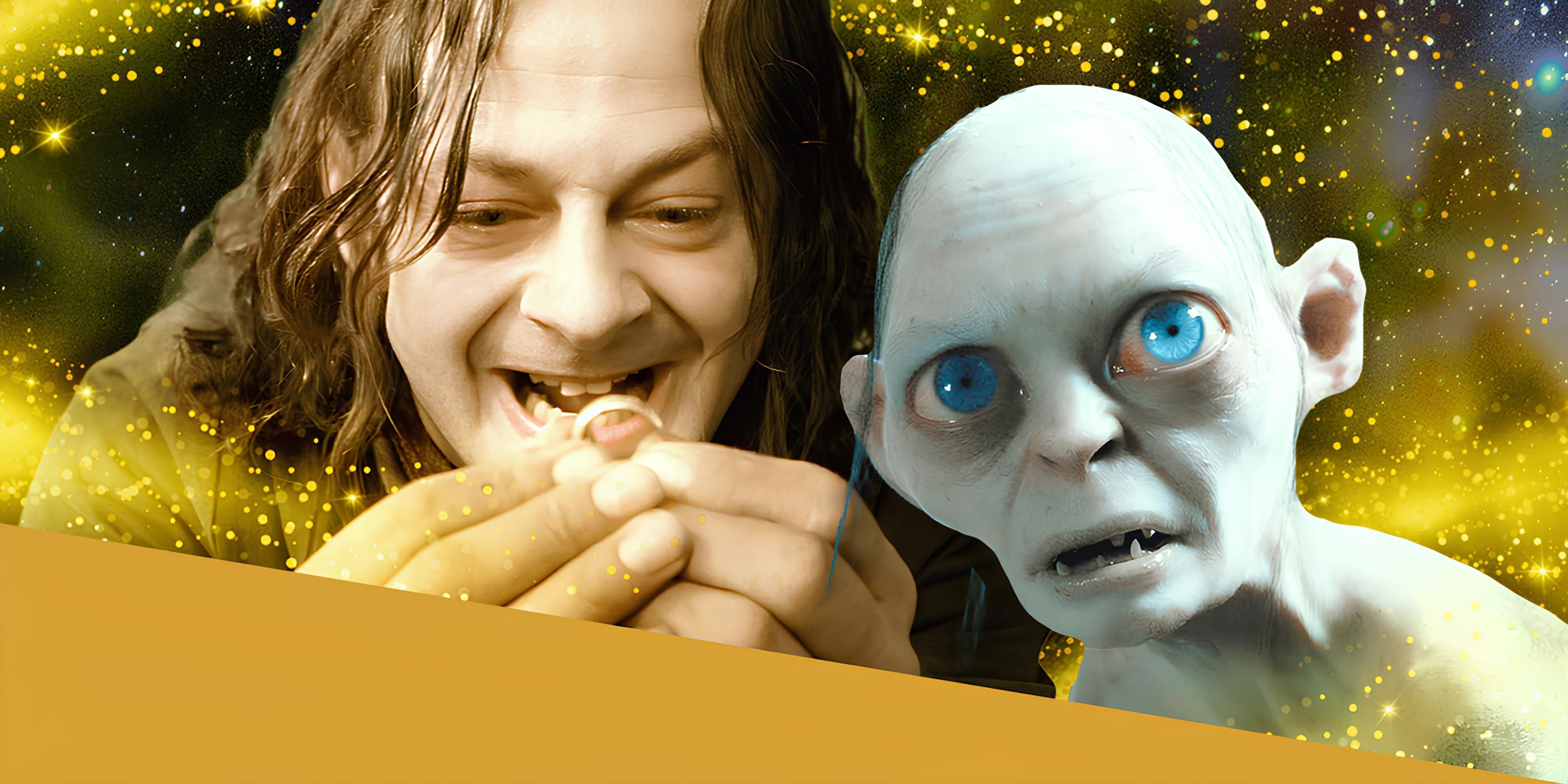
Sméagol is technically not a Hobbit in the modern sense of the word, but he belongs to an ancient, river-dwelling branch of the same ancestral stock that eventually evolved into the Shire-folk we know today. In The Lord of the Rings, J.R.R. Tolkien clarifies that Gollum's people were related to the forefathers of the Hobbits, yet centuries of isolated living down by the Great River mutated their habits, culture, and physical form long before Bilbo Baggins ever found the One Ring.
Understanding this biological and cultural distinction requires looking past the cinematic monster and examining Tolkien's extensive appendices, The Hobbit, and The Fellowship of the Ring. While movie adaptations often treat Gollum as a bizarre creature entirely separate from ordinary Hobbits, Tolkien's text paints a picture of a tragic evolutionary cousin. This deep dive explores Sméagol's true classification, his life before the Ring, and why calling him a Hobbit is both technically correct and deeply misleading.
The Evolutionary Roots: River-Folk and Stoors
To answer whether Sméagol is a Hobbit, we have to look at the three early breeds of Hobbits outlined in the Prologue of The Lord of the Rings: the Harfoots, the Fallohides, and the Stoors.
Sméagol's people belonged specifically to the Stoors. Of the three groups, the Stoors were broader and heavier in build, favored flat lands and rivers, and were notably more inclined to use boats, swim, and fish. While the Harfoots wandered the foothills of the mountains and the Fallohides loved trees and highlands, the Stoors lived along the banks of the Anduin River.
Tolkien explicitly notes in the prologue that the Stoors "had much sympathy with dwarves," and that they lingered long by the Gladden Fields—the very area where Sméagol grew up with his extended family under the matriarchal rule of his grandmother. Because modern Hobbits of the Shire descended from a mix of these three strains—with Stoors making up a significant portion of the population in regions like the Buckland and the Marish—Sméagol shares a common ancestry with characters like Frodo and Bilbo.
Yet, calling Sméagol a Hobbit from the Shire would be like calling a modern human a chimpanzee; they share a common branch on the evolutionary tree, but thousands of years of separate development shaped them differently. Sméagol's community did not live in comfortable underground Snomes or Sûls with round doors. They lived in burrows dug into riverbanks, fished from wooden coracles, and possessed a culture shaped by water rather than agriculture and pipe-weed.
Life Before the Ring: Sméagol's Early Society
Before the One Ring corrupted his mind and twisted his body, Sméagol was a curious, clever member of a close-knit river community. He was naturally inquisitive, with sharp eyes and agile fingers. His clan was governed by an elder grandmother who held absolute authority within their extended family group.
His daily life revolved around the water. He learned to dive deep beneath the surface of the Anduin, catching fish with his bare hands and exploring dark river reeds. This amphibious lifestyle already set him apart from the agrarian Shire-hobbits who would later emerge centuries down the road.
When his cousin Déagol found the One Ring in the mud of the riverbed during a birthday fishing trip, Sméagol's life fractured instantly. The Ring's malevolent will seized him within seconds. Because Sméagol already harbored a secretive, probing nature—he loved to pry into roots and holes, seeking out secrets—he was uniquely vulnerable to its corruption. He demanded the Ring as a "birthday present," and when Déagol refused, Sméagol strangled him to death.
This murder severed his ties to his family and his community. Cast out by his grandmother for his crime, Sméagol fled into the dark roots of the Misty Mountains, beginning his long, miserable transformation into Gollum.
Physical Transformation: How Sméagol Became Gollum
The physical changes that turned Sméagol into the wretched creature known as Gollum are often misunderstood as a sign of a non-Hobbit species. In reality, they are the result of centuries or decades of extreme isolation, malnutrition, sunless living, and the unnatural preservation power of the One Ring.
When Sméagol entered the caves of the Misty Mountains, he did not die or morph into a supernatural beast overnight. Over nearly five hundred years, his body adapted to the subterranean environment:
- Loss of Sight and Hearing: The perpetual darkness of the deep caves sharpened his ears and eyes for the gloom, but blinded him to harsh sunlight, which later caused him intense pain.
- Emaciation: A diet consisting entirely of raw blind fish, raw goblins when he could catch them, and occasional small cave-dwellers stripped the meat from his bones, leaving him skeletal and sinewy.
- Flexibility and Reach: Constantly clambering over wet stones, hanging from cave ceilings, and paddling small underground lakes lengthened his limbs and gave him an eerie, spider-like agility.
- The Voice: His wretched throat-clearing habit—"goll, goll"—gave him his new moniker, entirely replacing his birth name in common memory.
Despite these terrifying deformities, his core physiology remained fundamentally Hobbit-like. He retained his quick wits, his bipedal stance when he chose to use it, his resistance to total wraith-dom (thanks to his small, stubborn Hobbit spirit), and his fundamental vulnerability to things like elven rope and lembas bread.
Cultural Distinctions Between Shire-Hobbits and River-Folk
The cultural gap between Sméagol's people and the Hobbits of the Shire helps explain why characters like Frodo and Gandalf view him with a mix of horror and pity rather than immediate recognition.
By the time of the War of the Ring, Shire-hobbits had developed a sophisticated, peaceful civilization characterized by farming, beer-brewing, poetry, and a deep aversion to the wild world outside their borders. They viewed the outside world with comfortable detachment.
Sméagol's people, on the other hand, lived on the frontier of civilization, right on the edge of Wilderland where Orcs and shadow creatures roamed. They were tougher, more primitive, and more desperate. When Tolkien describes Sméagol's clan, he paints a picture of a small, insular family group that relied on basic survival skills rather than trade or community festivals.
For further reading on Tolkien's complex lineages and the evolution of Middle-earth races, you can explore the Tolkien Gateway wiki or read the comprehensive background materials provided by the Official Tolkien Estate.
Common Misconceptions About Gollum's Origins
Pop culture adaptations, especially Peter Jackson's film trilogy, have introduced several myths about Sméagol that contradict the original books.
First, many casual fans assume Gollum is an ancient human or a goblin. Neither is true. Tolkien is explicit that Gollum is of Hobbit-stock. The confusion usually stems from the massive physical differences between Gollum and Frodo or Sam, leading viewers to forget the passage of five centuries in pitch-black caves.
Second, people often assume Sméagol found the Ring by pure chance. While finding it in the river mud was accidental, his immediate, violent willingness to murder his best friend for it highlights an innate darkness that the Ring amplified.
Finally, some readers wonder if Sméagol's longevity proves he stopped being a Hobbit. The Ring extended his natural life far beyond normal Hobbit limits—stretching a normal lifespan into an agonizing half-millennium of misery. Bilbo Baggins experienced similar, though far less severe, arrested aging while holding the Ring in the Shire.
Frequently Asked Questions
Is Gollum technically a Hobbit?
Yes, he belongs to an ancient branch of Stoors, which are the ancestral stock from which modern Hobbits evolved. He is not a modern Shire-hobbit, but he shares a common genetic and evolutionary origin.
Why did Sméagol change so much physically?
His transformation into Gollum was caused by centuries of living in absolute darkness underground, eating raw meat, suffering from extreme malnutrition, and the corrupting physical influence of the One Ring.
How long did Sméagol live with the Ring?
Sméagol possessed and was corrupted by the One Ring for nearly five hundred years, hiding deep within the Misty Mountains until Bilbo Baggins found it in The Hobbit.
Did Sméagol have a family before he found the Ring?
Yes. He lived with an extended family group by the River Anduin, ruled by a formidable grandmother. After he murdered Déagol and was cast out, he abandoned all human ties.



