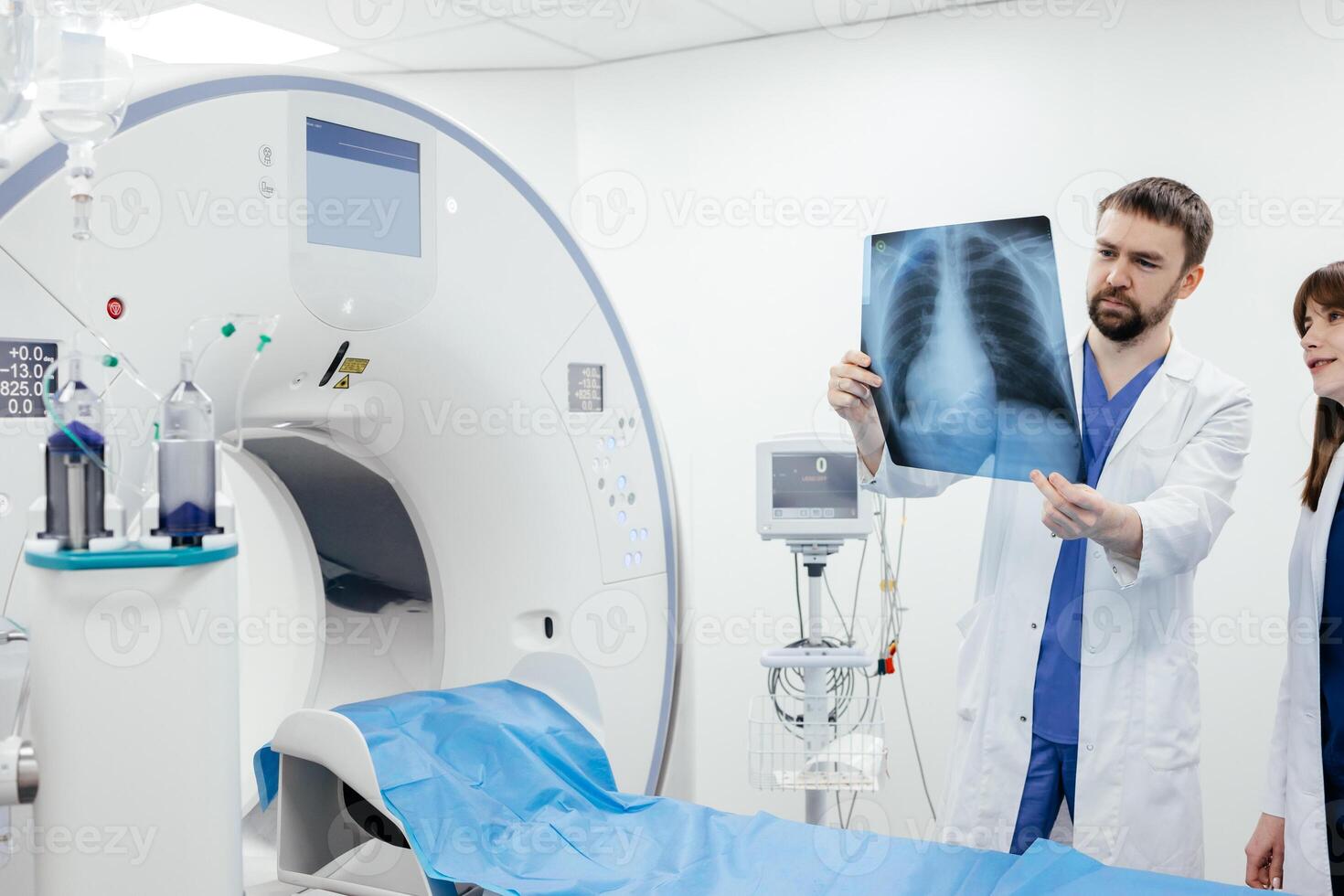
Wondering if you can handle the academic and clinical demands of medical imaging? Radiology tech school is demanding, but it's entirely manageable if you know what to expect before stepping into the classroom.
Unlike general studies programs, training to become a radiologic technologist blends rigorous physical science with intense patient-facing clinical hours. Let's break down the actual workload, the hurdles that trip students up, and how to survive the program without burning out.
What Makes Radiology Tech School Difficult?
The core challenge isn't just one single hard class; it's the sheer combination of technical physics, detailed anatomy, and clinical stress. Programs typically span two years (as an associate degree or certificate), packing a massive amount of specialized knowledge into a compressed timeline.
The Heavy Science and Math Load
You aren't just memorizing bone names. Programs require a firm grasp of radiation physics, equipment circuitry, and image production principles. While you don't need calculus, you must calculate technical factors like kVp (kilovoltage peak) and mAs (milliampere-seconds) to produce diagnostic images while keeping radiation doses safe.
Rigorous Anatomical Memorization
You'll need to memorize all 206 bones, their specific landmarks, and how internal organs project onto a two-dimensional image. If you can't visualize three-dimensional human anatomy from a flat X-ray or cross-section, positioning patients accurately becomes an uphill battle.
The Pressure of Clinical Rotations
Classroom exams are only half the battle. Clinical rotations drop you straight into real hospitals and imaging centers. You'll spend long hours on your feet, dealing with trauma patients, immobile individuals, and strict hospital protocols. Clinical instructors grade your competency live, which tests your nerves just as much as your knowledge.
The Reality of Clinical Rotations
Clinical hours often catch students off guard because they mimic real healthcare shifts. You might start rotations at 6:00 AM, assist with mobile trauma X-rays, and spend hours pushing heavy equipment down sterile hospital corridors.
Balancing these early mornings with evening study sessions requires strict personal discipline. You are being evaluated not just on technical accuracy, but on your bedside manner, communication skills, and ability to follow safety regulations under pressure.
Radiology Tech vs. Nursing School: Which Is Harder?
People often compare radiology tech programs to nursing programs. Both are tough allied health tracks, but they test different strengths.
- Nursing school leans heavily into broad pharmacology, extensive disease pathology, patient care planning, and continuous bedside care.
- Radiology tech school is narrower in scope but goes much deeper into physics, precise spatial positioning, radiation safety, and specialized machine operation.
If you prefer physics, technology, and discrete technical problem-solving over long narrative care plans, radiology tech might feel more intuitive—even if the workload remains intense.
Smart Strategies to Survive and Thrive
Passing your classes and clearing the ARRT (American Registry of Radiologic Technologists) certification exam requires more than just pulling all-night study sessions.
- Build physical flashcard decks early: Flashcards are your best friend for mastering positioning angles, exposure formulas, and anatomical landmarks.
- Treat clinicals like a rolling job interview: Many departments hire students straight out of their clinical rotations. Show up early, stay off your phone, and volunteer for every procedure.
- Form active study groups: Explaining a complex physics concept to a classmate is the fastest way to find out if you actually understand it yourself.
- Master time blocking: Treat your study schedule like an immovable appointment. Falling behind on weekly reading makes cramming impossible.
For official details on certification standards and ethical requirements, check the ARRT Official Website. To explore general allied health educational data, you can visit the Bureau of Labor Statistics.
Frequently Asked Questions
Is the math in radiology tech school hard?
It's mostly algebra-based and practical. You'll use basic formulas to adjust exposure factors, but you won't encounter advanced calculus or complex theoretical equations.
Can I work a full-time job while in the program?
Most programs strongly discourage working full-time. Between heavy classroom lectures, labs, and mandatory 20-to-40-hour clinical weeks, finding time to study becomes extremely difficult.
What is the hardest class in the program?
Most students point to radiographic positioning combined with imaging physics as the toughest hurdles. Mastering how to position a patient with a painful injury while setting the correct technical factors takes months of trial and error.
What happens if I fail a clinical competency?
Programs typically allow you to practice and re-test on specific clinical competencies. However, failing to meet overall clinical hour requirements or repeatedly failing competencies can delay your graduation.
--- Is Radiology Tech Hard? Separating Myth From Reality In Medical Imaging
This video provides a helpful, real-world perspective from an imaging professional on what daily life looks like inside radiology programs and clinical rotations.



