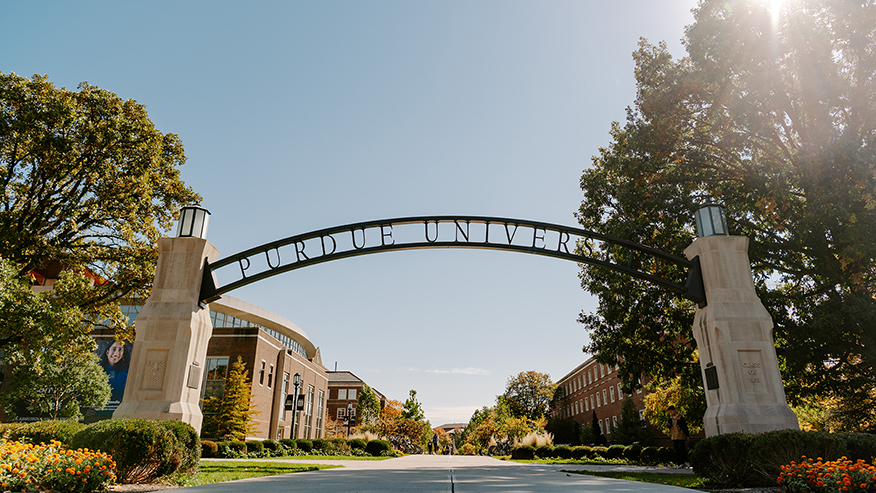
Is Purdue a private school? No, Purdue University is a prominent public research institution governed by the state of Indiana. Despite this clear designation, many applicants and families confuse its status. This confusion often stems from its elite academic reputation, massive global research footprint, and unique financial strategies that distinguish it from standard state universities.
Understanding how Purdue operates requires looking past its name. It functions as a public land-grant university, receiving state appropriations, serving local and international students, and balancing state oversight with independent administrative leadership.
The Public Roots of Purdue University
Established in 1869, the institution traces its origins to a generous founding gift from Indiana businessman and philanthropist John Purdue. Along with land grants provided by the federal government under the Morrill Act, this foundational backing established the school as Indiana's designated provider of agricultural and mechanical education.
Because it was built on public land grants and relies partly on state funding, Purdue operates as a state entity. The board of trustees includes members appointed by the Governor of Indiana. Its primary campus in West Lafayette and its urban extension in Indianapolis function under state statutes designed to serve the public good, drive regional economic growth, and maintain accessible education for Indiana residents.
Why People Think Purdue Is Private
Several distinct factors fuel the misconception that Purdue operates as a private university. Misunderstandings about its funding models, name recognition, and selective admissions often lead prospective students to miscategorize it.
- The Name: Unlike schools featuring explicit state identifiers like the "University of Michigan" or "Ohio State University," Purdue bears a family surname. This mirrors naming conventions common among elite private institutions like Cornell, Duke, or Stanford.
- Intense Global Prestige: Purdue routinely ranks among the top public universities in the United States and holds world-class status in engineering, computer science, and aviation. High academic rigor and selective acceptance rates cause observers to incorrectly associate elite status with private backing.
- Tuition Freezes and Financial Independence: Under recent leadership, Purdue kept its base undergraduate tuition frozen for over a decade. This aggressive independence from annual state-mandated tuition hikes mimics corporate or private financial planning, tricking observers into thinking it operates without public accountability.
Public vs. Private: How Purdue Compares
Public and private universities differ across several structural areas. Examining how Purdue measures up against these benchmarks clarifies its true operational category.
Governance and Funding
Private universities rely primarily on private endowments, alumni donations, and high tuition costs, operating independently of state legislature control. Purdue relies on a mixed model. While it generates substantial revenue through research grants, auxiliary services, and tuition, it still receives direct appropriations from the state of Indiana and answers to state-level governance standards.
Tuition and Affordability
State institutions typically offer subsidized tuition rates for local residents. Purdue maintains this structure, charging significantly lower base tuition for in-state students compared to out-of-state or international applicants. Private schools charge identical tuition rates regardless of where a student lives.
Admissions Standards
Private universities often set internal admissions policies completely insulated from state residency quotas. Purdue, as a public land-grant asset, balances a commitment to admitting qualified local applicants while actively recruiting a massive global and out-of-state student body.
Examining the Purdue System and Campuses
The university is not just a single campus in West Lafayette. It operates as an expansive multi-campus system serving tens of thousands of students.
The system includes regional campuses and specialized instructional extensions. Each division operates under the umbrella of the public Purdue University system. State guidelines ensure that academic credits transfer smoothly between these campuses, a hallmark of public state higher education networks.
You can learn more about its official structure and governance framework directly on the Purdue University Newsroom. Additional institutional data is managed via the Indiana Commission for Higher Education.
Frequently Asked Questions
Is Purdue an Ivy League school?
No, Purdue is not an Ivy League institution. The Ivy League consists of eight private athletic conference schools located in the Northeastern United States. Purdue is a public land-grant research powerhouse located in the Midwest.
Does Purdue charge out-of-state students higher tuition?
Yes. Because it is a public university, Indiana residents pay a subsidized base tuition rate, while out-of-state and international students pay a higher tier that reflects the lack of state tax contributions from their families.
Does Purdue receive government funding?
Yes. It receives operational appropriations from the state of Indiana and secures millions of dollars in federal research grants from agencies like NASA, the National Science Foundation, and the Department of Defense.
Why is it named Purdue if it is a public school?
The school was named in honor of John Purdue, who donated $150,000—a massive sum in 1869—along with land to help establish the institution. State legislation mandated naming the school after him as a condition of his foundational endowment.



