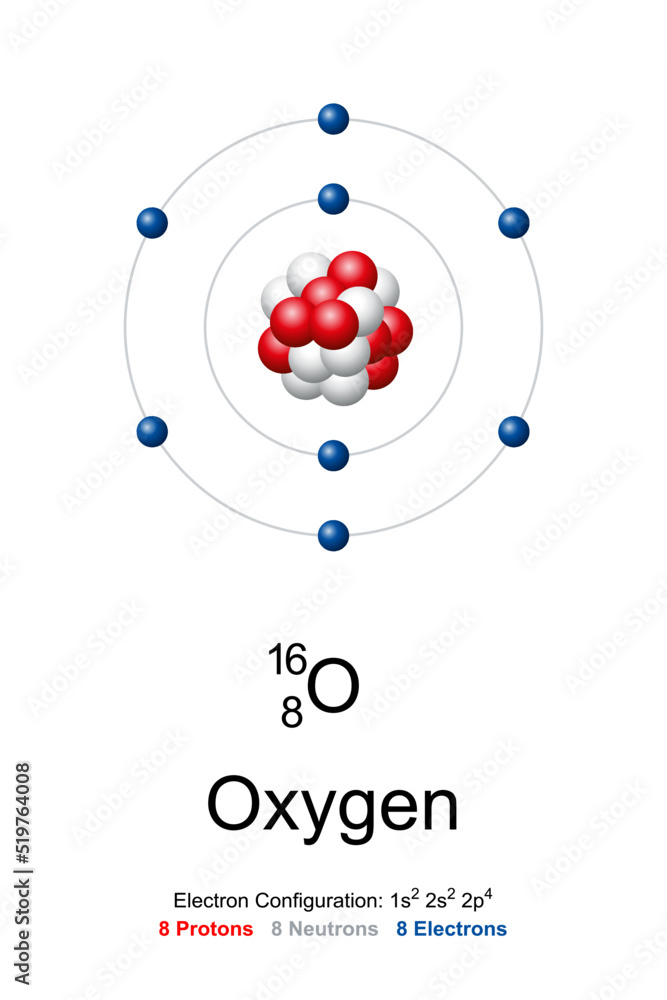
Oxygen is a nonmetal. It sits in Group 16 of the periodic table, right in the p-block, far away from the conductive, malleable elements that make up the metallic blocks. If you look at its properties in standard conditions—it's a gas, it has a high electronegativity value of 3.44 on the Pauling scale, and it tends to gain or share electrons rather than lose them—you see classic nonmetallic behavior.
People often get confused because oxygen is reactive and forms compounds with metals, like iron oxide or magnesium oxide. Those ionic bonds involve a metal giving up electrons to oxygen, which acts as the electron-grabber. That oxidizer role is typical for nonmetals. Let's break down why oxygen earns its spot among the nonmetals and how it behaves across different states of matter.
The Periodic Table Placement
The easiest way to classify any element is by checking its address on the periodic table. Scientists draw a heavy stair-step line dividing metals from nonmetals. Everything to the right of that line, except for the metalloids hugging it, is a nonmetal.
Oxygen has an atomic number of 8. It sits in the second period and Group 16, sharing space with sulfur, selenium, tellurium, and polonium. While polonium leans toward metallic behavior due to its heavy nucleus and relativistic effects, the rest of the group are nonmetals or metalloids. Oxygen sits right at the top of that column, as nonmetallic as they come.
Atomic Structure and Electron Configuration
An element's classification comes down to its electrons. Oxygen's electron configuration is $1s^2 2s^2 2p^4$.
It has six valence electrons in its outer shell. To achieve a stable octet—matching the noble gas configuration of neon—oxygen needs two more electrons. That drives its chemistry.
- High Electronegativity: At 3.44, oxygen pulls shared electrons tightly toward itself in a covalent bond.
- High Ionization Energy: It takes roughly 1313.9 kJ/mol to pull an electron away from a neutral oxygen atom.
- Electron Affinity: Oxygen readily accepts extra electrons to form oxide ions ($O^{2-}$).
Metals do the exact opposite. They have low ionization energies and low electronegativities, gladly giving up electrons to form a sea of charge. Oxygen hoards them.
Physical States and Allotropes
Most metals are shiny solids at room temperature that conduct heat and electricity efficiently. Mercury is the lone liquid exception at standard conditions. Nonmetals are all over the map physically, which often confuses students.
At standard temperature and pressure, oxygen is a colorless, odorless diatomic gas ($O_2$). Gases are almost exclusively nonmetallic. When you cool oxygen down to $-183^\circ\text{C}$, it condenses into a pale blue liquid. Drop it further to $-218.79^\circ\text{C}$, and it freezes into a light blue solid.
Even in its liquid and solid phases, oxygen doesn't gain metallic lustre or electrical conductivity. It remains an electrical insulator.
Ozone and Other Forms
Oxygen also exists as ozone ($O_3$), an allotrope with three atoms bound together instead of two. Ozone is a pale blue gas with a sharp scent, often noticed after thunderstorms. Both $O_2$ and $O_3$ are nonmetals. The molecular structure changes, but the core elemental classification stays the same.
Chemical Reactivity: How Oxygen Behaves
You can't talk about oxygen without talking about combustion and oxidation. Because it's such an aggressive electron receiver, it reacts with almost every element on the table.
When oxygen reacts with a metal like sodium or iron, it pulls electrons away from the metal atoms. The metal gets oxidized, and oxygen gets reduced. For example, when iron reacts with moisture and oxygen over time, it forms hydrated iron(III) oxide—commonly known as rust.
When oxygen reacts with other nonmetals, it forms covalent compounds like water ($H_2O$) or carbon dioxide ($CO_2$). In these molecules, oxygen shares pairs of electrons rather than forming ionic lattices.
Common Misconceptions
Chemistry learners run into a few specific trip-ups when studying oxygen and its compounds.
- Confusing Oxides with Pure Elements: People see metal oxides like aluminum oxide or copper oxide and assume oxygen must share properties with metals. But the oxide ion is just a nonmetal atom that has picked up extra electrons from a metal. The compound's overall properties don't redefine the elemental status of oxygen itself.
- Liquid Oxygen Magnetism: Liquid oxygen is paramagnetic, meaning it's weakly attracted to magnetic fields due to unpaired electrons in its molecular orbitals. Some people mistake this physical quirk for metallic behavior. Magnetism alone doesn't make an element a metal; liquid oxygen remains a non-conductive insulator.
Frequently Asked Questions
Is oxygen ever a metal?
No. Under normal planetary conditions, oxygen is strictly a nonmetal. While extreme laboratory pressures can force many elements into metallic phases, standard chemistry classifies oxygen as a nonmetal.
Why is oxygen classified in Group 16?
It shares similar valence electron counts with sulfur, selenium, and tellurium. All of them have six valence electrons and display nonmetallic or metalloid traits.
Does oxygen conduct electricity?
In its standard gaseous or liquid state, no. Oxygen is a poor electrical conductor. Metals are defined by their ability to conduct heat and electricity easily through free-moving valence electrons.
How does oxygen bond with other elements?
Oxygen usually forms covalent bonds by sharing electrons with other nonmetals, or ionic bonds by pulling electrons away from reactive metals. You can explore more about chemical bonding rules through resources like the Royal Society of Chemistry.



