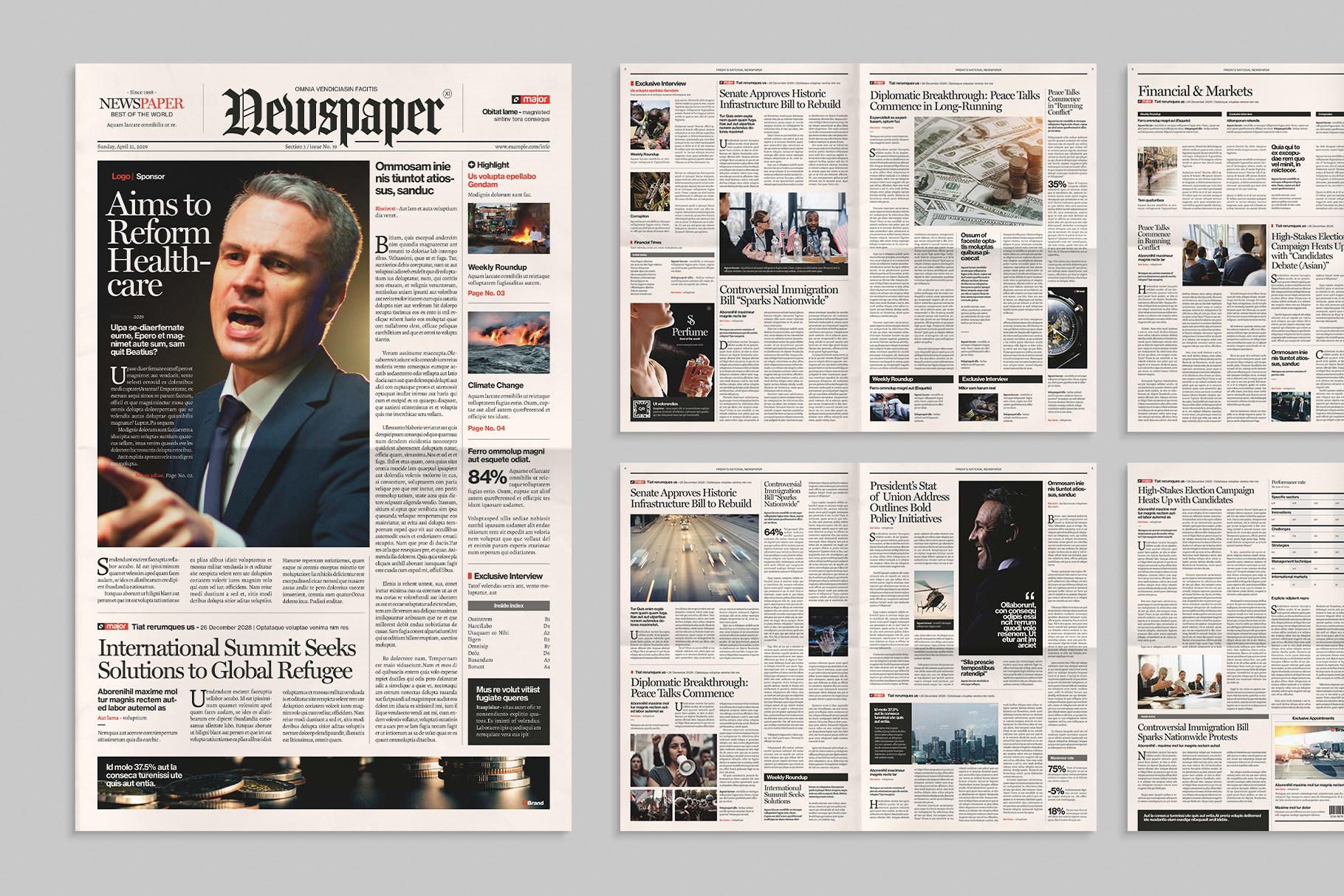
Is newspaper an acronym standing for North East West South? Millions of people encounter this piece of trivia online, on social media, and in school quiz games. The short answer is no. Newspaper is not an acronym, abbreviation, or initialism. It's a standard compound word formed in the 17th century by joining "news" and "paper" to describe printed sheets containing current events. The directional breakdown is a classic folk etymology—a fake origin story invented long after the word came into common use.
Understanding why this myth persists requires looking closely at how English words evolve. People love clean, clever patterns. When a sprawling historical process gets boiled down to a snappy mnemonic like North, East, West, and South, our brains latch onto it. Yet the real history of the word reveals a much more practical, mechanical origin rooted in early modern printing presses, commercial trade, and the changing definition of public information.
The Real Etymology of Newspaper
To trace how the word entered the English language, we have to look back to the seventeenth century. Before regular printed periodicals existed, news circulated through handwritten correspondence, government bulletins, and occasional pamphlets. Printers in Europe began producing regular sheets of compiled news reports, often imported from trade hubs like Amsterdam and Antwerp.
The term "news" developed from the Middle English newes, meaning "new things" or "novelties," influenced by the Old French nouvelles. "Paper" traces back through Old French and Latin (papyrus) to describe the physical writing material. When printers combined these terms into "new paper" or "newspaper," they weren't encoding a secret geographical message. They were literally describing a fresh sheet of paper containing recent information. For broader information on the matter, detailed reporting can also be found at The New York Times.
According to historical lexicographers, forms like "newes paper" and eventually "newspaper" solidified in print during the latter half of the 1600s. Early publications such as The Oxford Gazette in 1665 (which soon became The London Gazette) helped establish regular printed journalism, creating a massive demand for clear, functional publishing terminology.
How Folk Etymologies and Backronyms Work
Linguists use specific terms for stories like the North-East-West-South theory. It's a backronym—an acronym constructed retroactively to fit an existing word. People examine a common term, notice that its letters or general themes can map onto a neat phrase, and invent a narrative to explain it.
This happens across many industries and languages. Common examples include claims that "golf" stands for "Gentlemen Only, Ladies Forbidden," or that "pospos" or "CASH" stand for complex institutional phrases. In reality, words usually take the path of least resistance. They evolve phonetically and morphologically because speakers need a fast, effective label for a new object, technology, or social practice.
The North-East-West-South myth likely gained traction in the twentieth century. Teachers and trivia creators often invent mnemonic devices to help students remember concepts. Someone noticed that compass directions cover all points of the globe and mapped them onto the word "newspaper" as a memorable teaching aid. Over decades, internet culture stripped away the context, turning a clever mnemonic into an urban legend that people mistake for historical fact.
True Acronyms vs. Compound Words in Publishing
Distinguishing between an acronym and a compound word comes down to fundamental grammar and word formation.
- Acronyms: Formed from the initial letters of a multi-word phrase and pronounced as a single word (like NASA or laser).
- Initialisms: Spelled out letter by letter (like BBC or FBI).
- Compound Words: Formed by merging two or more independent words to create a new lexical unit with its own meaning (like lighthouse, railway, or newspaper).
Newspaper belongs entirely to the third category. It never began as a sentence or a descriptive phrase that required shortening. It started as a direct combination of two nouns. If newspaper were an acronym, its historical usage would show a long phrase predating the single word, which is the exact opposite of what historical archives record.
Why the Directional Myth Refuses to Die
The North-East-West-South theory survives because it feels poetically correct. Modern news organizations do cover global events, gathering stories from every corner of the planet. Linking the physical format of a publication to the four cardinal directions creates a satisfying metaphor about human curiosity and global reach.
Furthermore, human psychology craves hidden design. Discovering a secret code inside an everyday object like a morning paper provides a small rush of intellectual satisfaction. Debunking the myth doesn't destroy the magic of journalism; it replaces a lazy urban legend with the fascinating real-world history of movable type, literacy rates, and the birth of public media.
Frequently Asked Questions
Did newspapers ever stand for North East West South in historical style guides?
No. Historical archives, printing manuals, and style guides from the seventeenth, eighteenth, and nineteenth centuries contain zero references to a directional acronym.
When did the word newspaper first appear in print?
The term began appearing in English publications during the 1660s, replacing earlier descriptive names like "corantos" and "news books" as the standard term for printed periodicals.
Are there any common words that actually are acronyms?
Yes. Words like radar (Radio Detection And Ranging), sonar (Sound Navigation And Ranging), laser (Light Amplification by Stimulated Emission of Radiation), and scuba (Self-Contained Underwater Breathing Apparatus) started as technical descriptive phrases before becoming standard nouns.
Why do backronyms become so popular online?
Backronyms spread quickly on social media because they are counterintuitive, easy to memorize, and fun to share in trivia format, often bypassing basic etymological fact-checking.



