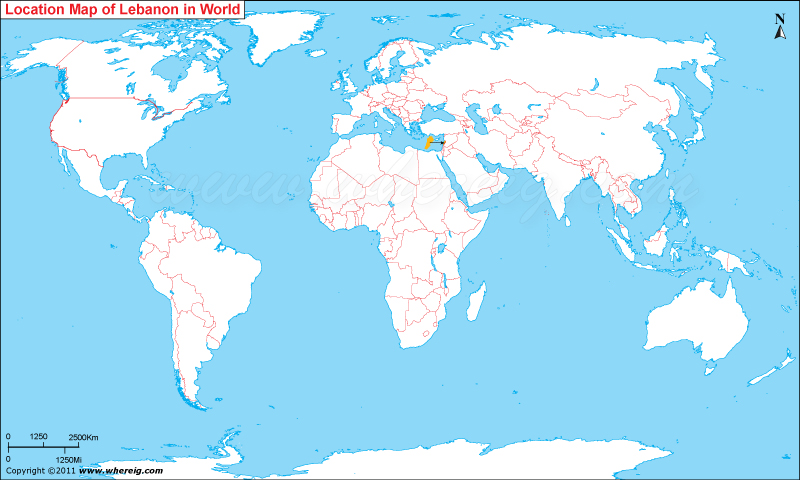
Geographically speaking, Lebanon sits squarely in Western Asia, occupying a narrow strip of land along the eastern edge of the Mediterranean Sea. Yet when people ask about the country's identity, the answer rarely stops at a simple continental label. Lebanon operates at a cultural and geopolitical crossroads, bridging the Middle East, the Mediterranean basin, and historical European influences. If you look at a standard school map, you'll find it bordered by Syria to the north and east, Israel to the south, and the Mediterranean to the west. However, understanding what makes Lebanon unique requires looking past continental borders into centuries of trade, migration, and distinct societal shifts.
People often confuse regional terminology with continental geography, especially because the term "Middle East" spans parts of both Africa and Asia. Lebanon's physical location is undeniably Asian, but its cultural footprint draws heavily from Mediterranean traditions and Arab heritage. This duality sparks ongoing discussions about how Lebanese people define themselves on the world stage. To grasp the full picture, we have to break down how geography dictates its boundaries, how history shaped its diverse populace, and how modern identity bridges multiple worlds.
Geographic Realities of Lebanon
Lebanon covers a compact area of roughly 4,036 square miles, making it one of the smallest sovereign states on the mainland of Asia. Despite its small size, the terrain packs an incredible amount of diversity into a short distance. Two parallel mountain ranges run the length of the country: the Lebanon Mountains to the west and the Anti-Lebanon range along the eastern border with Syria. Between these rugged ranges lies the fertile Bekaa Valley, an agricultural powerhouse that has sustained local civilizations for millennia.
The western flank drops sharply into the Mediterranean Sea, giving the country a classic maritime climate with hot, dry summers and mild, rainy winters. This coastal orientation turned ancient Phoenician cities like Tyre, Sidon, and Byblos into legendary maritime trading hubs. Because the sea was often easier to navigate than the steep mountain peaks, early Lebanese populations looked outward toward Europe and North Africa just as much as they looked inland toward the rest of Asia.
The Middle Eastern Context and Regional Ties
Geopolitically, Lebanon belongs to the Middle East and plays an active role in regional affairs. It is a founding member of the Arab League and uses Arabic as its official language, specifically the distinct Levantine dialect spoken across the northern Levant. Trade routes, political alliances, and regional migrations bind Lebanon tightly to its Asian neighbors.
At the same time, the country's physical position on the Mediterranean rim creates a natural affinity with Southern Europe and North Africa. You can see this shared climate and lifestyle reflected in local agriculture, architecture, and daily habits. Olive groves, vineyards, and citrus orchards thrive across the coastal foothills, mirroring landscapes found in Greece, Italy, and Spain.
Cultural Identity and Diversity
Few nations match the complex internal mosaic found within Lebanon's borders. The population is religiously and ethnically diverse, hosting a mix of Christian denominations—such as Maronite, Greek Orthodox, and Melkite—alongside Muslim communities including Shia, Sunni, and Druze. This multi-confessional framework is baked into the nation's political system, which distributes power proportionally among recognized religious groups.
This diversity shapes a cultural identity that resists rigid definitions. While the baseline of daily life is deeply rooted in Arab and Levantine norms, Western influences run deep through education, literature, and the arts. French and English are widely spoken alongside Arabic, especially in urban centers like Beirut.
Language and Daily Expression
Arabic remains the official tongue, but the Lebanese dialect incorporates unique phonetic shifts and loanwords from French, English, and historical Aramaic roots. Code-switching is entirely normal in casual conversation, where speakers might transition between Arabic, French, and English within a single sentence. This linguistic agility underscores an outward-facing culture comfortable navigating multiple global spheres.
Culinary Traditions as a Cultural Bridge
Lebanese cuisine offers a clear window into the country's hybrid identity. Staples like hummus, tabbouleh, kibbeh, and flatbreads seasoned with za'atar link the country directly to traditional Middle Eastern and Levantine culinary heritage. Simultaneously, the heavy use of fresh vegetables, olive oil, citrus, and seafood aligns closely with broader Mediterranean dietary patterns.
Historical Roots Shaping Modern Perspectives
To understand why identity in Lebanon feels multifaceted, you have to look back at the waves of empires that controlled the coast. From the ancient Phoenicians and Assyrians to the Persians, Greeks, Romans, Byzantines, Umayyads, Ottomans, and later French mandate rule, each era left distinct traces on local architecture, law, and social structures.
The Phoenicians established city-states that prioritized trade across the entire Mediterranean, laying an early precedent for international commerce and diaspora communities. Centuries later, the Ottoman Empire governed the region for four hundred years, embedding administrative patterns and culinary habits that persist today. Following World War I, the League of Nations placed Greater Lebanon under French administration, which cemented strong institutional and educational ties with France that remain visible in modern Lebanese universities and legal frameworks.
Frequently Asked Questions
Is Lebanon considered part of the West or the East?
Geographically, Lebanon is entirely in the East (Western Asia). Culturally, it occupies a unique middle ground. Many Lebanese people view their country as a cultural bridge connecting Eastern traditions with Western influences, largely due to its Mediterranean outlook and historical ties with Europe.
What is the primary ethnic makeup of Lebanon?
The vast majority of the population—roughly 95 percent—identifies as Arab, encompassing both the local Lebanese population and Palestinian refugees residing within the country. Armenian communities and other smaller ethnic groups make up the remaining percentage.
Do people in Lebanon speak Asian languages?
The official language is Arabic, which belongs to the Afroasiatic language family. While Arabic originated in the Arabian Peninsula (geographically part of Asia), European languages like French and English are also spoken fluently by a large portion of the population.
How does Lebanon's geography affect its economy?
The rugged terrain limits large-scale industrial farming, but narrow coastal plains and the fertile Bekaa Valley support robust agriculture, producing wine, citrus fruits, and olives. Historically, geography turned Lebanon toward trade, banking, and services rather than heavy manufacturing. You can explore more regional data through World Bank Lebanon Overview and official tourism insights via the Ministry of Tourism Lebanon.



