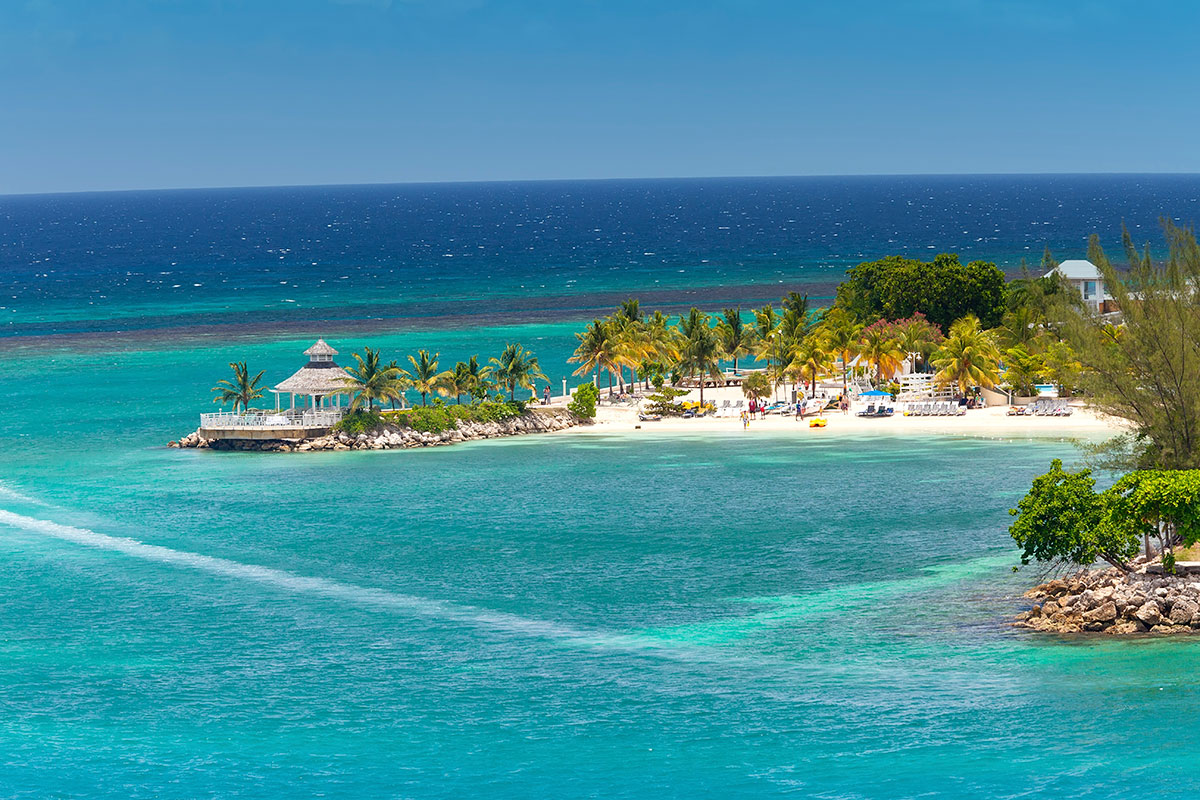
Is Jamaica part of the US? No, Jamaica is an independent sovereign nation located in the Caribbean Sea, and it has never been a territory, commonwealth, or state of the United States. Despite this clear political reality, confusion frequently arises because of Jamaica's geographic proximity to North America, its heavy cultural footprint in American media, and widespread misconceptions regarding Caribbean islands.
This article cuts through the confusion. We'll look at Jamaica's true political status, its colonial history under Spanish and British rule, its relationship with the United States, and why so many people mix up independent islands with nearby American territories.
Geographic Proximity vs Political Boundaries
People often confuse physical location with political jurisdiction. Jamaica sits in the Caribbean Sea, roughly 90 miles south of Cuba and about 600 miles south of Miami, Florida. Because it rests within the Western Hemisphere and is frequently lumped into maps of the broader Americas, casual observers sometimes assume it falls under Washington's umbrella.
Geographically, the island is part of the Greater Antilles and sits on the North American tectonic plate. However, sharing a continental region does not mean sharing a government. Canada shares a massive land border with the United States and remains completely independent. Similarly, Jamaica operates entirely outside U.S. laws, taxes, and federal governance.
Colonial Heritage and Independence History
To understand why Jamaica is not part of the United States, you have to look at European expansion. Christopher Columbus claimed the island for Spain in 1494, displacing the indigenous Taino population. Spain controlled Jamaica for over a century until British forces captured it in 1655.
- Spanish Rule (1494–1655): Focused primarily as a supply base, leaving very little architectural or structural remnants today.
- British Colonization (1655–1962): Britain transformed the island into a massive sugar-producing colony powered by enslaved Africans, whose descendants make up the vast majority of modern Jamaica's population.
- Independence (1962): Jamaica broke free from British colonial rule on August 6, 1962, establishing its own parliament, constitution, and legal system.
When Jamaica gained its independence, the United States officially recognized the new nation on August 16, 1962, establishing an embassy in Kingston. Since then, Jamaica has maintained its status as a sovereign parliamentary democracy and a realm within the Commonwealth.
Why Do People Get Confused?
Several factors fuel the persistent myth that Jamaica belongs to the United States. Understanding these points helps clarify why the confusion exists in the first place.
Confusion with U.S. Territories in the Caribbean
The United States does possess territories in the Caribbean region, which leads to general confusion about neighboring islands. Puerto Rico and the U.S. Virgin Islands (including St. Thomas, St. Croix, and St. John) are under U.S. jurisdiction. People travel to Puerto Rico without a passport from the U.S. mainland, use U.S. currency, and are subject to federal statutes. Because Jamaica is also a warm, English-speaking island in the Caribbean, travelers sometimes mistakenly file it under the same administrative umbrella.
Heavy Cultural and Economic Integration
You can watch Jamaican dancehall music dominate Billboard charts, eat Jamaican jerk chicken in major U.S. cities, and see millions of American tourists visit resort towns like Montego Bay and Negril every year. This deep cultural exchange creates a psychological closeness. Furthermore, the Jamaican diaspora in the United States is massive—cities like New York, Miami, and Atlanta boast thriving Jamaican communities. This high level of integration makes the island feel familiar to Americans, occasionally blurring the lines of national sovereignty.
U.S. and Jamaican Relations Today
While Jamaica isn't part of the U.S., the two countries share a close, cooperative partnership. They work together on security initiatives, trade agreements, and anti-narcotics efforts.
The U.S. remains Jamaica's largest trading partner. Millions of dollars in goods flow between the two nations annually, ranging from American machinery and agricultural products to Jamaican bauxite, alumina, and apparel. Tourism also plays a massive role; over a million American tourists visit the island every year, injecting vital revenue into the local economy.
Citizens moving between the two countries must follow standard international immigration procedures. Jamaicans traveling to the United States need a valid visa and passport, just like visitors from any other foreign nation.
Frequently Asked Questions
Do I need a passport to travel to Jamaica from the U.S.?
Yes. Because Jamaica is an independent foreign country, all U.S. citizens must present a valid U.S. passport when entering and leaving the island. You can review official travel advisories directly through the U.S. Department of State.
Does Jamaica use U.S. dollars?
No. Jamaica uses its own official currency, the Jamaican Dollar (JMD). While some tourist areas or resorts might accept U.S. dollars at varying exchange rates, you'll need local currency for everyday purchases, transportation, and local markets.
Was Jamaica ever owned by the United States?
No. Jamaica was never a U.S. colony, territory, or commonwealth. Its colonial history is strictly tied to Spain and Great Britain before it achieved full independence in 1962.
Is Jamaica part of the British Commonwealth?
Yes. Jamaica is an independent constitutional monarchy and a member of the Commonwealth of Nations. While King Charles III serves as the symbolic head of state, the country is governed locally by its own elected prime minister and parliament. For deeper insights into international governance structures, you can check resources provided by the British Monarchy.



