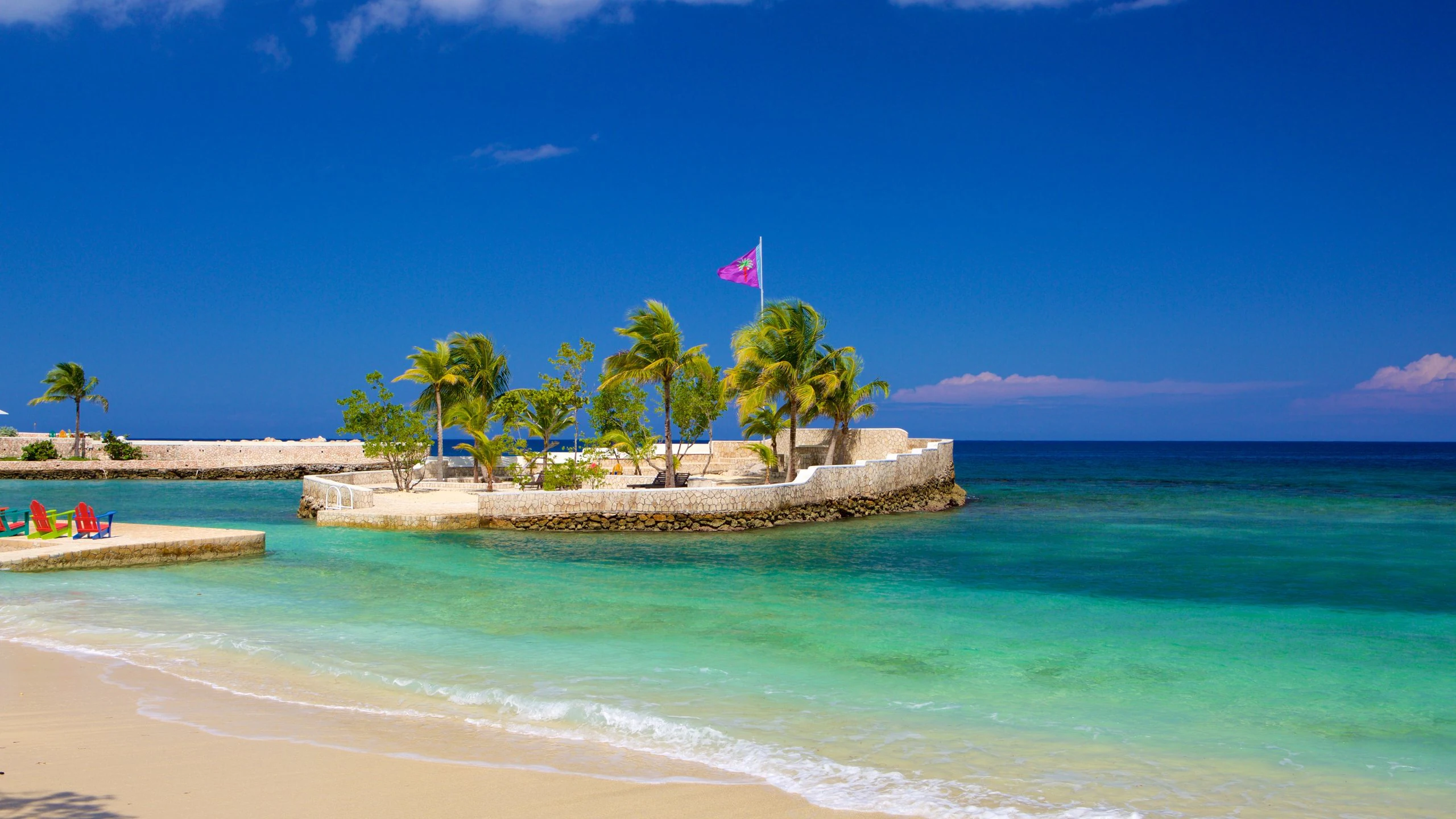
Jamaica is not part of the United States, nor has it ever been a U.S. territory, commonwealth, or state. It is an entirely independent, sovereign nation. Confusion often arises due to Jamaica's geographical proximity to the U.S. mainland, heavy cultural exchanges, and popular misconceptions about Caribbean islands. In reality, Jamaica operates under its own government, legal framework, and international treaties, distinct from any American political control.
Understanding why Jamaica remains separate requires looking at its colonial history, its path to independence, and how it fits into global organizations like the United Nations. Travelers and students often mix up geographical region categories with political ownership, leading to widespread search queries about whether the island belongs to America.
Historical Background and British Colonial Rule
Before achieving independence, Jamaica was a colony of the British Empire. Spanish explorers, led by Christopher Columbus, claimed the island in 1494, and Spain controlled it for over a century. The British captured Jamaica in 1655, transforming it into a major hub for sugar production fueled by enslaved labor.
For centuries, Great Britain held absolute administrative control over the island. The United States never possessed or governed Jamaica during this colonial period. While the U.S. maintained trade relationships and consular posts in Caribbean ports during the 19th century, these offices were strictly for monitoring commerce, not for exercising political sovereignty.
Independence and Political Structure
On August 6, 1962, Jamaica officially gained its independence from the United Kingdom, ending centuries of British colonial rule. Rather than becoming a republic immediately, Jamaica chose to transition into a constitutional monarchy within the Commonwealth.
This means that the British monarch—currently King Charles III—serves as the symbolic Head of State, represented locally by a Jamaican-appointed Governor-General. However, this connection is entirely ceremonial. The actual governance of the country rests in the hands of the Jamaican Parliament, a democratically elected Prime Minister, and a homegrown cabinet. The United States holds no legislative, judicial, or executive authority over Jamaican laws or policies.
Geographic Misconceptions: North America vs. The United States
Much of the confusion regarding Jamaica's status stems from geography. Geographers often group Caribbean islands into the broader North American continent. Because the United States and Canada dominate the landmass of North America, casual observers sometimes assume that all islands in the region belong politically to one of those continental superpowers.
Geographic classification does not equal political ownership. For example, independent nations like Mexico and Canada share the North American continent with the United States, yet they remain entirely separate sovereign countries. Jamaica sits in the Caribbean Sea—roughly 90 miles south of Cuba and about 600 miles south of Florida—making it a close neighbor to the U.S., but a separate entity altogether.
U.S. Territories in the Caribbean
To understand why Jamaica is foreign soil to the United States, it helps to look at islands that are actually part of the U.S. The United States does possess territories in the Caribbean region, specifically:
- Puerto Rico: An unincorporated U.S. territory where residents are U.S. citizens, though they do not vote in federal presidential elections unless they move to a U.S. state.
- U.S. Virgin Islands: Consisting of St. Croix, St. John, and St. Thomas, these islands were purchased from Denmark in 1917 and operate as an organized, unincorporated U.S. territory.
Traveling to Puerto Rico or the U.S. Virgin Islands from the mainland U.S. does not legally require a foreign passport because you remain within U.S. jurisdiction. In contrast, traveling to Jamaica requires a valid passport, customs declarations, and adherence to international immigration laws, exactly as it would when visiting any other foreign nation.
Jamaica and the United Nations
Jamaica operates on the global stage as an independent voice. Shortly after gaining independence in 1962, Jamaica applied for and received membership in the United Nations. As a member state of the UN, Jamaica holds its own seat, casts its own votes on international resolutions, and contributes to global peacekeeping and policy discussions independently of the United States.
Furthermore, Jamaica maintains membership in major international bodies such as the Organization of American States (OAS), the Commonwealth of Nations, and CARICOM (the Caribbean Community). These alliances underscore its distinct diplomatic identity. While Jamaica shares strong economic, tourism, and migration ties with the United States, its foreign policy is self-determined.
Frequently Asked Questions
Do U.S. citizens need a visa to visit Jamaica?
U.S. citizens traveling to Jamaica for tourism or business stays of under 90 days do not need a visa, but they must present a valid U.S. passport, a return airline ticket, and proof of sufficient funds.
Does Jamaica use the U.S. dollar?
No. Jamaica uses its own official currency, the Jamaican dollar (JMD). While some tourist-heavy areas or resorts might informally accept U.S. cash, everyday transactions, businesses, and banks rely exclusively on the Jamaican dollar.
Is Jamaica a U.S. commonwealth?
No. Jamaica is not a U.S. commonwealth. It is an independent constitutional monarchy that retains historical ties to the British Commonwealth of Nations, which is an entirely different organization.
Can Jamaican citizens move freely to the United States?
No. Jamaicans must go through standard international visa and immigration procedures to visit, work, or live in the United States. They do not possess automatic U.S. citizenship rights.



