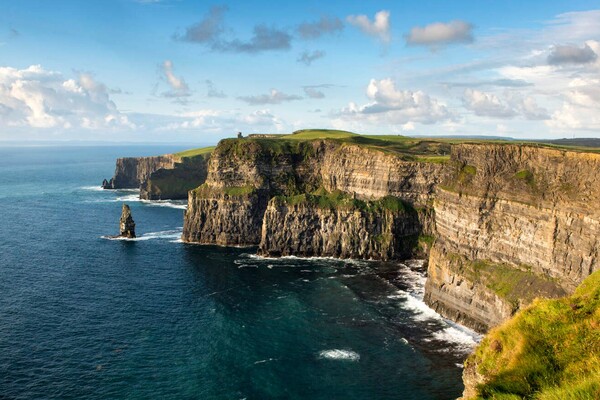
Ireland is both geographically and politically part of Europe. The independent Republic of Ireland is a sovereign member state of the European Union, while sharing the island of Ireland with Northern Ireland, which is part of the United Kingdom. This distinction creates unique questions regarding continental borders, political membership, and everyday governance across the island.
Understanding Ireland's European status requires separating physical geography from political bodies like the European Union. While map boundaries are clear, trade rules, currency differences, and the historical partition of the island shape how Ireland fits into the broader European continent.
Geographical Reality: The Island of Ireland
The island of Ireland sits in the North Atlantic Ocean, positioned directly west of Great Britain. On a physical map, it rests entirely on the European continental shelf.
The island is divided into two separate jurisdictions:
- The Republic of Ireland: An independent, sovereign nation covering roughly five-sixths of the island.
- Northern Ireland: A constituent country of the United Kingdom, covering the remaining northeastern portion.
This split dates back to the Government of Ireland Act 1920 and the subsequent Anglo-Irish Treaty. While the border between the two jurisdictions is open and invisible today due to the Good Friday Agreement, they operate under completely different legal and governmental systems. When people ask if Ireland is in Europe, they are usually referring to the sovereign Republic, though the entire island is part of the European continent.
Political and Legal Status in the European Union
The Republic of Ireland operates as a full member state of the European Union. It joined the bloc—then known as the European Economic Community—in 1973, alongside the United Kingdom and Denmark.
As an EU member state, Ireland integrates deeply with European institutions:
- Citizenship: Irish citizens automatically hold EU citizenship, granting them the right to live, work, and retire anywhere in the member states without restrictions.
- Currency: Ireland uses the Euro (€) and belongs to the Eurozone, managed by the European Central Bank.
- Institutions: Ireland elects Members of the European Parliament (MEPs) and holds a seat on the Council of the European Union.
Unlike mainland nations within the Schengen Area, Ireland maintains a Common Travel Area agreement with the United Kingdom, allowing free movement of citizens between Ireland and the UK independently of Schengen border policies.
The Northern Ireland Exception
Northern Ireland's political alignment presents a unique case following the United Kingdom's departure from the European Union in 2020. Because Northern Ireland is part of the UK, it left the EU alongside England, Scotland, and Wales.
However, to prevent a hard land border on the island of Ireland, special regulatory frameworks were negotiated. Under the Windsor Framework, Northern Ireland remains aligned with certain EU single market rules for goods. This avoids customs checkpoints on the Irish border while creating regulatory checks on specific goods moving between Great Britain and Northern Ireland across the Irish Sea. Despite this regulatory alignment with EU trade rules, Northern Ireland remains legally and politically part of the UK, not an independent EU member.
Economic and Cultural Integration
Ireland's economy is closely tied to the rest of Europe. Multinational corporations use Ireland as an English-speaking gateway to the European single market. Major sectors like technology, pharmaceuticals, and agriculture rely heavily on frictionless trade with continental Europe.
Culturally, Ireland has shaped European identity for centuries. From early medieval monastic scholarship that preserved European literature to modern contributions in literature, music, and science, the nation participates actively in pan-European organizations. Ireland is a founding member of the Council of Europe, an international human rights organization distinct from the European Union.
Frequently Asked Questions
Is Ireland part of the United Kingdom?
No. The Republic of Ireland is an independent, sovereign nation that gained independence from the UK in the early 20th century. Only Northern Ireland remains part of the United Kingdom.
Does Ireland use the Euro?
Yes. The Republic of Ireland adopted the Euro in 2002, replacing the Irish Pound. Northern Ireland, as part of the UK, continues to use the British Pound Sterling.
Can EU citizens move freely to Ireland?
Yes. Because Ireland is an EU member state, citizens from other EU and EEA countries can move to Ireland to live, study, and work without needing a visa or work permit.
Is Ireland part of the Schengen Area?
No. While Ireland is in the European Union, it chose not to join the Schengen passport-free travel zone, largely to maintain the Common Travel Area with the UK. Passport checks occur when traveling between Ireland and most continental European countries.



