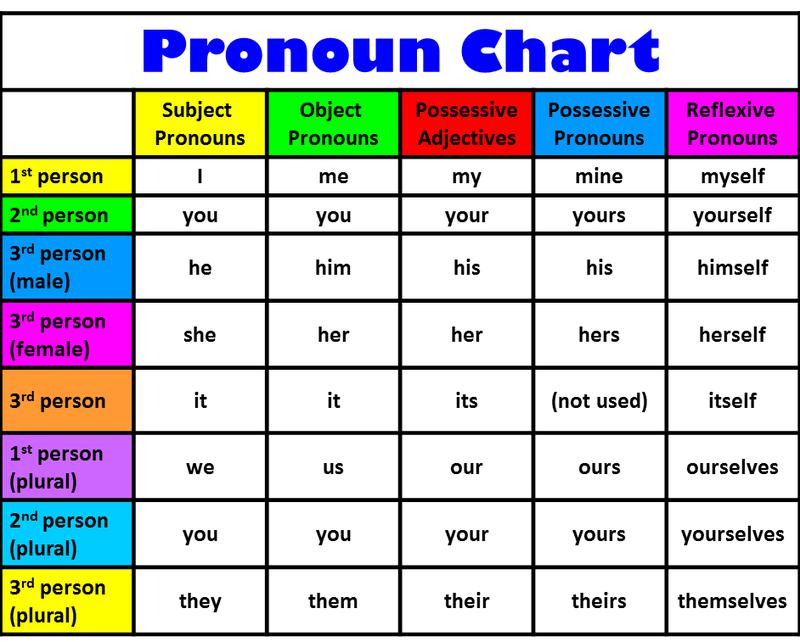
When you write a sentence, every word has a job. The word i functions as a personal pronoun, specifically a first-person singular subject pronoun. It replaces a person's name when they talk or write about themselves. Without it, English sentences would become repetitive and awkward.
Grammar rules classify words by how they behave in a clause. Understanding why this single-letter word carries so much weight helps you avoid common mistakes in professional and academic writing. Let's break down its grammatical classification, case rules, and historical evolution.
The Grammatical Role of Personal Pronouns
Pronouns act as stand-ins for nouns. They prevent us from constantly repeating proper names. Instead of writing, "Alex went to the store because Alex needed milk," we use pronouns to write, "Alex went to the store because i need—or rather, because he needed milk."
In English, personal pronouns change form based on three main features: person, number, and case.
- First person: Refers to the speaker or writer (I, we, me, us).
- Second person: Refers to the person being addressed (you).
- Third person: Refers to someone or something else (he, she, it, they).
Case determines whether the pronoun is performing an action, receiving an action, or showing ownership. The word i belongs exclusively to the subject case.
Why I Is Unambiguously a Subject Pronoun
Every clause needs a subject to perform an action. In the sentence "I read books," i is the subject. It occupies the agent role in syntax. You cannot substitute an object pronoun like me in this position without breaking standard English grammar. Saying "Me read books" sounds incorrect because me is designed to receive action, not execute it.
Linguistics experts note that English relies heavily on strict word order and case marking because verbs don't conjugate for every single person the way they do in languages like Spanish or Italian. Because English verbs offer less inflection, subject pronouns like i are mandatory. You can't drop the subject and simply say, "Am going to the store."
Common Errors with Compound Subjects
The most frequent grammar slip-ups involving i occur when other people are added to a sentence. People often overcorrect out of politeness, leading to non-standard phrasing.
Consider these common scenarios:
- Incorrect: "Sarah and me attended the conference."
- Correct: "Sarah and i attended the conference."
To test which pronoun belongs in a compound subject, remove the other person. You wouldn't say "Me attended the conference," so you shouldn't say "Sarah and me attended" either.
The reverse error happens with prepositional phrases. Many writers panic and use subject pronouns where object pronouns are required:
- Incorrect: "Please send the report to John and I."
- Correct: "Please send the report to John and me."
The preposition to demands an object pronoun. Stripping out John leaves you with "send the report to me," which clarifies the correct choice.
Historical Evolution and Capitalization
The unique capitalization of i is a fascinating quirk of the English language. In Old English, the word evolved from ic and ēg. Over centuries, scribes began capitalizing the single-letter pronoun during the Middle English period.
This change served two practical purposes. First, lowercase i easily blended into surrounding handwritten strokes, making sentences hard to read. Second, capitalizing the pronoun visually reflected the growing emphasis on the individual author or speaker in Western literature. By the 18th century, capitalization became a strict convention upheld by modern style guides like the Chicago Manual of Style.
Frequently Asked Questions
Is I always capitalized in English?
Yes. Unlike other personal pronouns such as he, she, or they, the first-person singular subject pronoun i is always capitalized in standard English, regardless of where it appears in a sentence.
Can I ever function as an object pronoun?
No. i is strictly a subject pronoun. The corresponding object pronoun for the first-person singular is me. You use me when you are the receiver of the action or the object of a preposition.
Why do native speakers make mistakes with I versus me?
Hyper-correction drives most errors. People are often scolded in childhood for saying "Me and John went," so they overcompensate by using I everywhere—even when grammar rules call for me.
Do other languages treat first-person pronouns the same way?
Not entirely. Pro-drop languages, such as Spanish, Japanese, and Italian, allow speakers to omit subject pronouns entirely because the verb endings clearly indicate who is performing the action. English requires an explicit subject pronoun in almost all declarative sentences.



