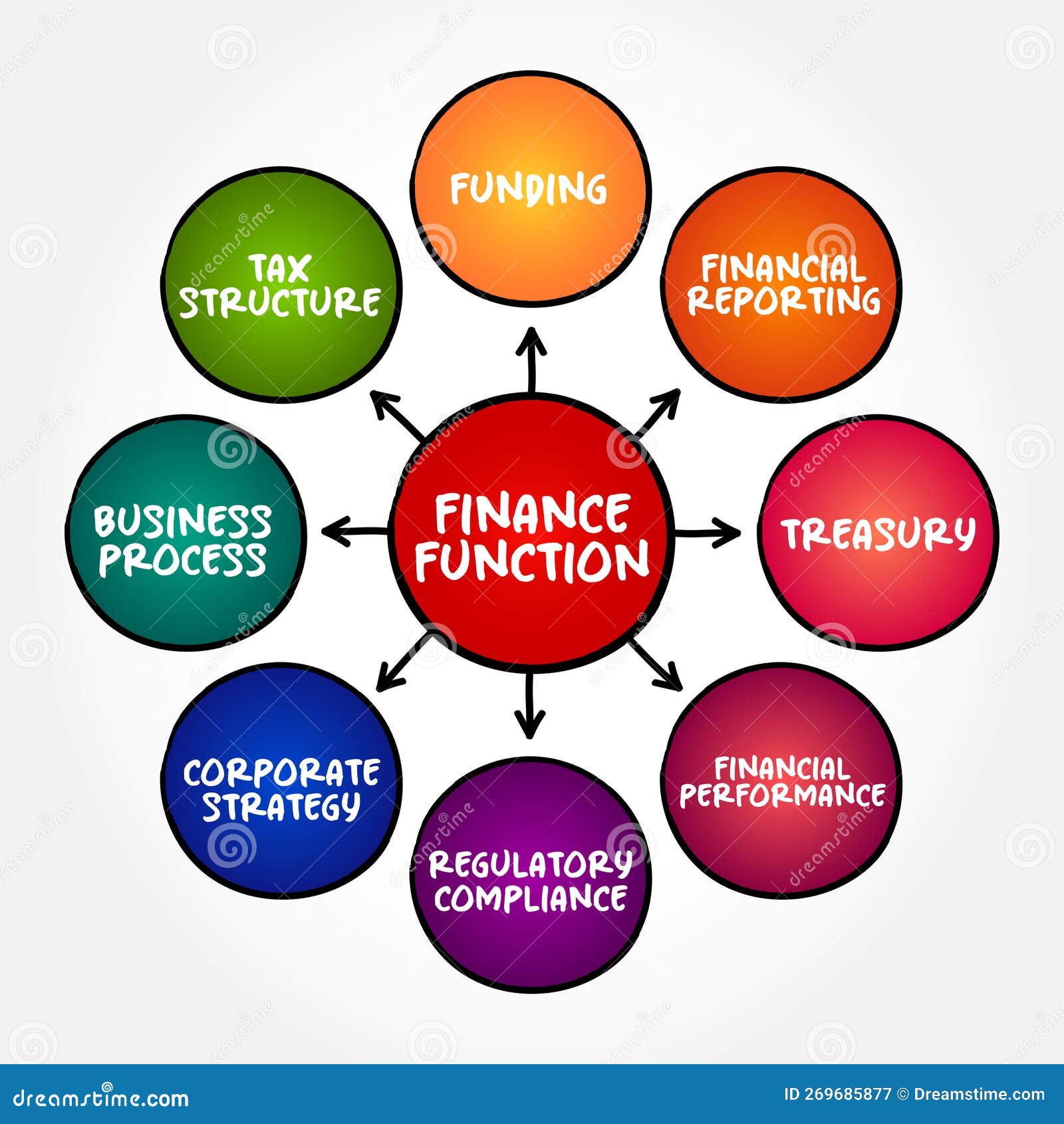
Is finance a STEM field? Officially, traditional finance degrees sit under business schools, but the rapid rise of quantitative modeling, algorithmic trading, and data science blurs these academic boundaries every single day. If you look at university curricula, professional certifications, and day-to-day responsibilities, modern financial analysis relies just as heavily on advanced mathematics, statistics, and computer science as engineering or physics.
To understand why this gray area exists, we have to look past administrative labels and examine the actual mechanics of modern capital markets. Quantitative finance, financial engineering, and algorithmic risk assessment operate almost entirely within the domain of hard science and technology. Let's break down where finance intersects with STEM, where it diverges, and how the industry is evolving.
Defining the Boundaries: What Makes a Field STEM?
The acronym STEM stands for Science, Technology, Engineering, and Mathematics. Official government bodies, such as the U.S. Bureau of Labor Statistics, categorize occupations based on their core competencies, daily tasks, and educational prerequisites.
Traditional finance degree programs—such as a Bachelor of Business Administration (BBA) in Finance—are housed within business colleges rather than colleges of science or engineering. They focus on corporate budgeting, financial accounting, asset valuation, and macroeconomic policy. These subjects involve qualitative human behavior, market sentiment, and regulatory compliance, which historically disqualified them from standard STEM classifications.
However, specialized sub-fields challenge this rigid classification:
- Financial Engineering: Programs use stochastic calculus, partial differential equations, and computational algorithms to price complex derivatives.
- Quantitative Finance: Practitioners build mathematical models to predict asset price movements and optimize portfolios using high-performance computing.
- Fintech: Financial technology companies rely on software development, database architecture, and machine learning models built by computer scientists and software engineers.
Where Quantitative Finance and STEM Overlap
You can't separate modern trading floors from computer science and applied mathematics. Quantitative analysts, often called "quants," hold PhDs in physics, applied mathematics, statistics, or computer science. They don't just read balance sheets; they write code in Python, C++, and Rust to execute millions of trades per second.
Take algorithmic trading as an example. High-frequency trading (HFT) firms rely on low-latency networks, complex event processing, and statistical arbitrage models. The day-to-day work of a quantitative researcher mirrors that of a research scientist in a laboratory. They formulate a hypothesis, backtest it against terabytes of historical tick data, run simulations, and refine their algorithms based on empirical results.
Furthermore, risk management in modern banking requires rigorous mathematical modeling. Stress-testing a major international bank against market crashes involves Monte Carlo simulations, multivariate calculus, and extreme value theory. These methodologies belong squarely in the mathematical sciences.
The Distinct Differences: Finance vs. Pure STEM
Despite heavy technical overlap, finance retains distinct characteristics that separate it from traditional STEM disciplines like biology, civil engineering, or chemistry.
- Human Behavior and Irrationality: Hard sciences rely on immutable physical laws. Gravity works the same way every time. Financial markets, by contrast, are driven by human psychology, geopolitical events, and emotional sentiment. Market participants frequently behave irrationally, rendering pure mathematical models imperfect.
- Regulatory and Legal Frameworks: Finance operates under complex, shifting legal frameworks, tax codes, and compliance mandates set by regulatory bodies like the U.S. Securities and Exchange Commission. Understanding these rules requires legal and institutional knowledge rather than scientific deduction.
- Subjective Valuation: While a bridge's load capacity can be calculated with absolute physical precision, a company's intrinsic value involves subjective forecasts about future cash flows, management quality, and competitive advantages.
Career Implications: Why the Distinction Matters
The blurring line between finance and STEM isn't just an academic debate; it carries real-world implications for employment, immigration, and university funding.
Many international students studying in the United States look for degree programs with a STEM Designated Degree Program code. This designation allows graduates on an F-1 visa to apply for a 24-month OPT (Optional Practical Training) extension, giving them a total of three years to work in the country legally. Recognizing this demand, many top-tier business schools have restructured their Master of Finance (MFin) and Master of Science in Business Analytics (MSBA) programs to qualify for STEM certification.
Universities achieve this by shifting course requirements toward heavier quantitative analytics, econometric modeling, programming languages, and data management. If you're choosing a degree program, verifying whether a finance concentration holds a STEM designation can drastically impact your post-graduation work authorization and career trajectory.
Common Misconceptions About Finance and Math
Many students assume that entering finance requires advanced calculus and coding. While true for quantitative roles, retail banking, corporate finance, and wealth management prioritize relationship-building, communication, and foundational accounting over complex programming.
Another common error is treating finance as purely qualitative. People often assume financial analysis is just reading news articles and guessing market direction. In reality, modern corporate finance relies heavily on discounted cash flow (DCF) modeling, sensitivity analyses, and statistical regressions to make capital allocation decisions.
Frequently Asked Questions
Are all finance degrees considered STEM?
No. Standard undergraduate Bachelor of Business Administration (BBA) degrees in finance are not classified as STEM. Only specific master's programs or specialized concentrations that meet rigorous quantitative and technological credit thresholds receive official STEM designation.
Do I need a STEM background to work on Wall Street?
Not necessarily. While quantitative hedge funds and trading firms exclusively hire physics, math, and computer science PhDs, traditional investment banking, private equity, and corporate finance roles frequently hire general business, economics, and liberal arts majors who possess strong networking and accounting skills.
What is the difference between economics and finance in this context?
Economics is a social science that studies the production, distribution, and consumption of goods and services, often leaning heavily into theoretical modeling and econometrics. Finance is an applied discipline focused specifically on the management of money, investments, and capital creation. Both share significant mathematical overlap with STEM fields.
How can I check if a finance master's program is STEM-certified?
You can review the program's curriculum for a high concentration of quantitative coursework and check its official Classification of Instructional Programs (CIP) code against government educational database lists. Programs with specific CIP codes relating to financial mathematics and analytics qualify for STEM status.



