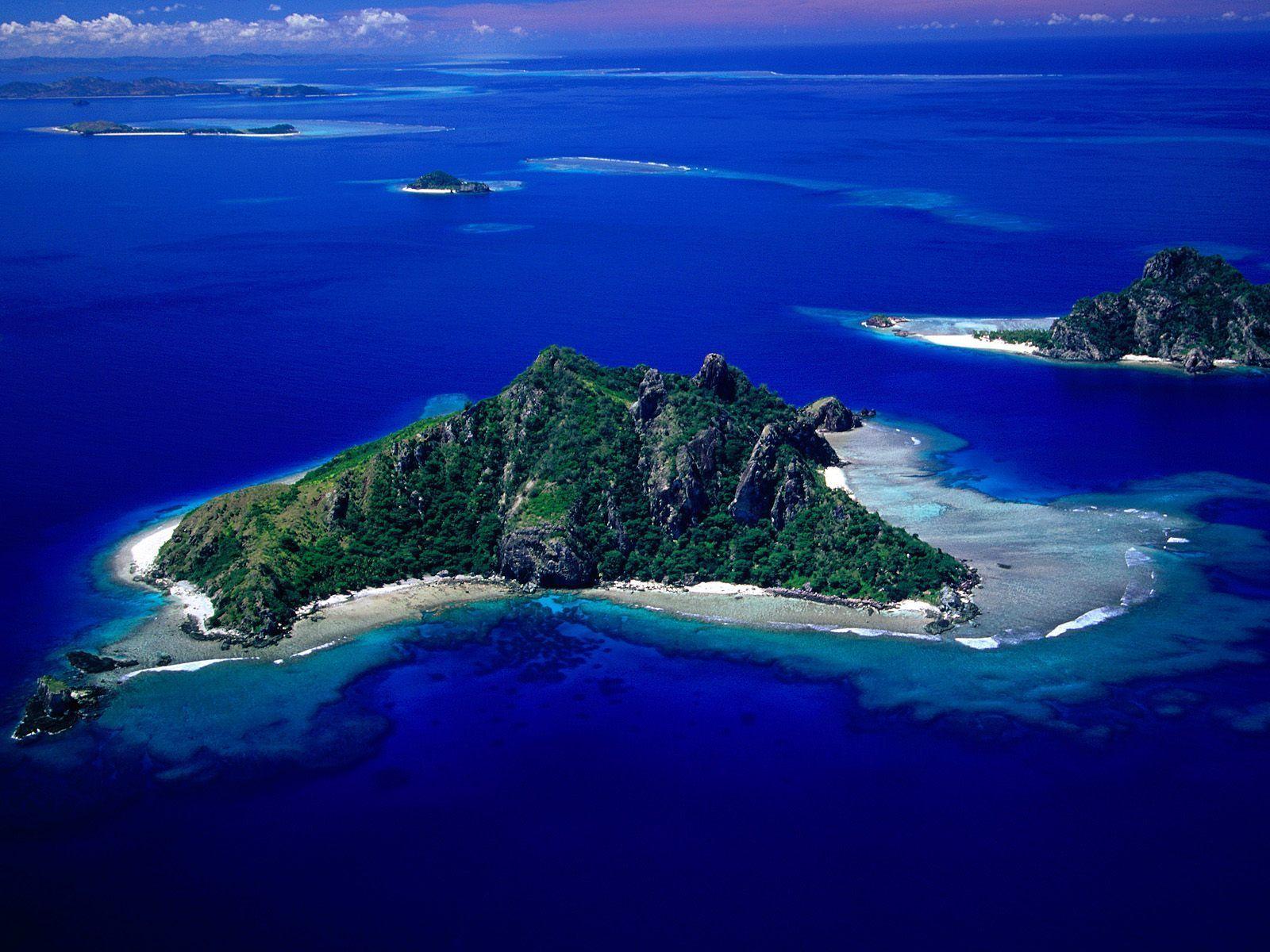
Fiji isn't in Asia. It's an independent archipelagic country located in the South Pacific Ocean, specifically within the subregion of Melanesia and the broader continental grouping of Oceania. If you look at a map, it sits roughly 2,000 kilometers northeast of New Zealand and thousands of miles away from the Asian mainland.
People often confuse Fiji's location because of its unique demographic makeup and heavy economic ties to Asian nations. Understanding why Fiji belongs to Oceania requires looking closely at its physical geography, its diverse cultural roots, and its modern geopolitical alignments.
The Physical Geography of Fiji
Fiji is an isolated island group rather than part of an Asian continental shelf. The archipelago consists of more than 300 islands, though only about 100 are permanently inhabited. The two largest islands, Viti Levu and Vanua Levu, account for the vast majority of the landmass and population.
Geologically, Fiji sits on the Fiji Platform, near the boundary of the Pacific and Indo-Australian tectonic plates. It's thousands of miles east of Southeast Asia, separated by vast stretches of open ocean. It shares tectonic and ecological characteristics with neighboring Pacific island nations like Vanuatu, Tonga, and Samoa, rather than any Asian landmass.
Demographics and the Roots of Cultural Confusion
The primary reason people wonder if Fiji is part of Asia comes down to its people. Fiji is a vibrant, multicultural society. Roughly 37% of the population consists of Indo-Fijians, citizens whose ancestors were brought to the islands as indentured laborers by the British colonial administration between 1879 and 1916.
Because of this history, South Asian languages, Hindu temples, mosques, and traditional Indian cuisine are deeply woven into everyday Fijian life. This strong cultural bridge to South Asia often leads outsiders to assume the country is geographically closer or culturally tied to the Asian continent.
However, the indigenous population—iTaukei—makes up the majority of the population and descends from ancient Polynesian and Melanesian migrations that populated the Pacific over three thousand years ago. English, Fijian, and Fiji Hindi are all recognized as official languages, reflecting this diverse heritage.
- Indigenous Fijians have inhabited the islands for over three millennia.
- Indo-Fijian communities maintain distinct cultural and religious practices, including Hinduism and Islam.
- European and Chinese minorities also contribute to the country's multi-ethnic fabric.
Geopolitics and Trade Ties with Asia
While Fiji's physical location anchors it firmly in the Pacific, its modern political and economic relationships heavily involve Asian superpowers. As a hub for the South Pacific, Fiji maintains robust diplomatic and trade agreements across the globe.
China and India are two of Fiji's most significant economic partners. Beijing has invested heavily in infrastructure, tourism, and loans across the Pacific islands, while New Delhi provides developmental aid, medical cooperation, and educational exchanges. These partnerships mean Asian politics frequently intersect with Fijian governance.
Despite these deep economic ties, Fiji coordinates its regional security and international policy through Pacific-centered organizations. It plays a leading role in the Pacific Islands Forum (PIF), aligning its foreign policy with other Oceanian states to address shared regional challenges like climate change and maritime security.
Common Mistakes When Studying Fiji's Location
It's easy to mix up island groupings if you rely entirely on economic maps or sports affiliations rather than geography.
- Confusing migration with continental drift: Human migration patterns and colonial labor history don't change tectonic plates or continental boundaries.
- Overlooking sports representation: Fiji often competes in athletic events or regional groupings that might span broader Asia-Pacific zones for commercial or competitive reasons, which occasionally muddies the waters for casual observers.
- Assuming proximity based on trade: Heavy import and export reliance on Asian markets doesn't relocate an island nation closer to the continent.
Frequently Asked Questions
Is Fiji considered part of Australasia?
Australasia usually refers strictly to Australia, New Zealand, and neighboring islands. Fiji is generally classified under Oceania and more specifically Melanesia, though it works closely with Australasian nations.
Do you need a visa to visit Fiji from Asia?
Visa requirements depend entirely on your specific passport nationality. Citizens of many Asian countries, including Japan, Singapore, and South Korea, enjoy visa-exempt entry for tourism purposes, while others must apply in advance.
What is the main religion in Fiji?
Christianity is the majority religion, practiced by a large portion of indigenous Fijians. Hinduism and Islam are also widely practiced, primarily within the Indo-Fijian community.
How did British colonization shape modern Fiji?
Britain governed Fiji as a colony from 1874 until its independence in 1970. This era introduced the plantation economy, legal structures based on British law, and the arrival of Indian indentured laborers who shaped the country's modern demographics.



