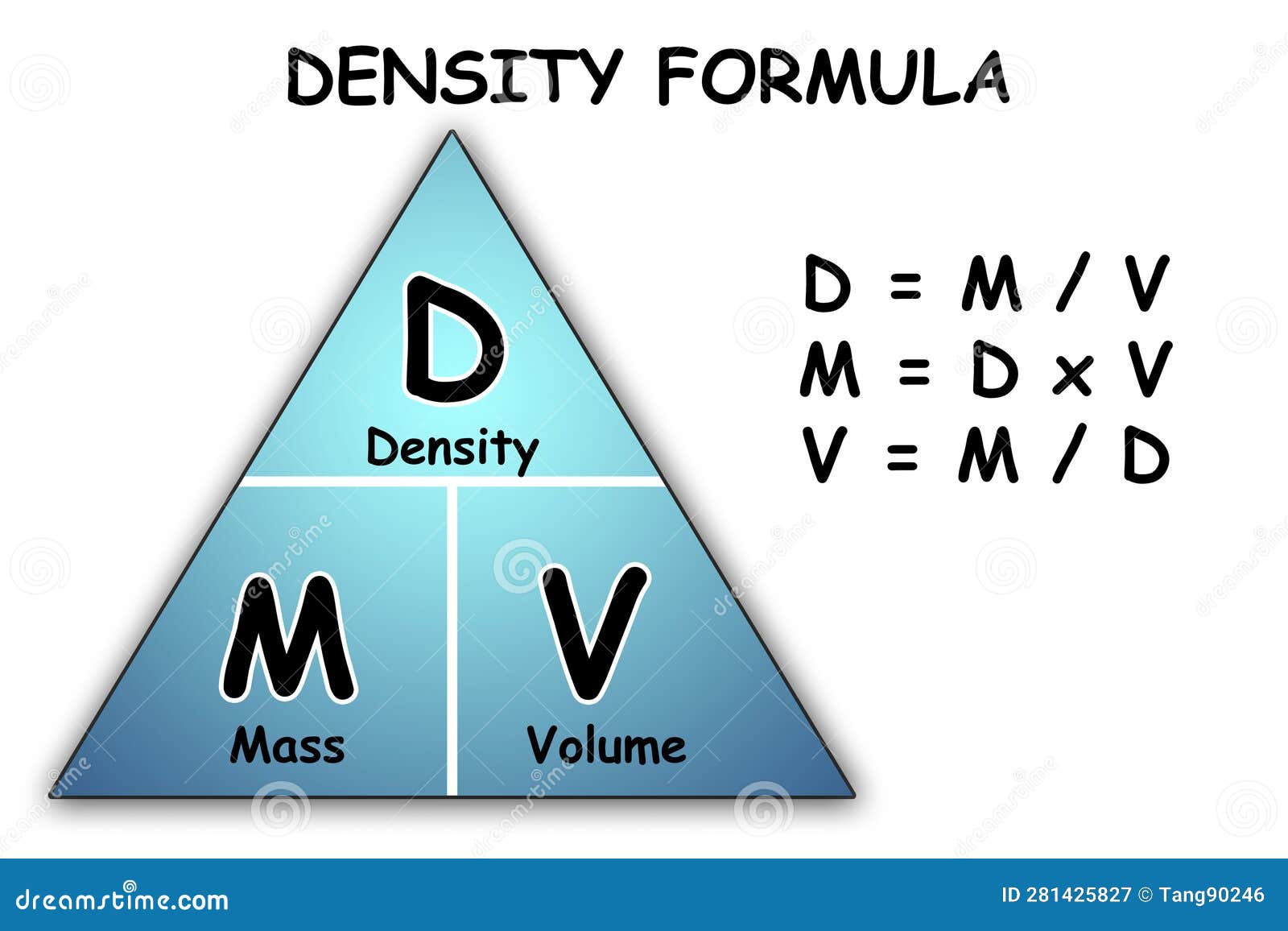
Density is an intensive property, meaning its value stays constant regardless of how much of the substance you have. Whether you're holding a single drop of water or looking at an entire ocean, the density of pure water remains roughly 1 gram per cubic centimeter at standard temperature and pressure.
Understanding why density belongs to this classification requires looking at how thermodynamic properties behave when sample sizes change. While extensive properties scale with matter, intensive properties remain locked to the material's identity.
Defining Intensive and Extensive Properties
In thermodynamics, physical properties of matter fall into two main categories: intensive and extensive. The fundamental difference lies in how they respond when you alter the size or quantity of the system.
Extensive Properties Depend on Size
Extensive properties scale directly with the amount of substance present in the system. If you take two identical blocks of iron and weld them together, you double the total mass and you double the total volume. Further insights into this topic are detailed by Science Magazine.
Common examples of extensive properties include:
- Mass (measured in grams or kilograms)
- Volume (measured in liters or cubic meters)
- Total internal energy (measured in joules)
- Momentum and electrical charge
Intensive Properties Are Independent of Size
Intensive properties do not depend on the quantity of matter. If you cut a solid block of copper in half, neither piece changes color, melting point, or electrical conductivity. Each piece retains the exact same intrinsic traits as the original whole.
Common examples of intensive properties include:
- Temperature
- Melting and boiling points
- Refractive index
- Hardness
- Density
Why Density Is Intensive: The Mathematical Proof
The classification of density as intensive stems directly from its mathematical definition. Density ($\rho$) is calculated as mass ($m$) divided by volume ($V$):
$$\rho = \frac{m}{V}$$
Both mass and volume are extensive properties. When you scale a sample up by a factor of $x$, both mass and volume increase by that exact same factor $x$:
$$\rho_{new} = \frac{x \cdot m}{x \cdot V}$$
Because the scaling factor $x$ appears in both the numerator and the denominator, it cancels out entirely:
$$\rho_{new} = \frac{m}{V} = \rho$$
This mathematical cancellation proves why density remains constant. The ratio of mass to volume represents an intrinsic feature of the substance's molecular packing, making it independent of macroscopic sample size.
Real-World Applications of Intensive Density
The intensive nature of density makes it one of the most practical metrics in science and engineering. Because density doesn't change with sample volume, scientists can use it as a fingerprint to identify unknown materials.
Material Identification and Quality Control
Metallurgists and manufacturing engineers measure the density of small test coupons to verify alloy purity. If an industrial casting plant produces titanium parts, checking the density of a small slice confirms whether internal voids or incorrect alloy ratios compromised the batch. Because density is intensive, a tiny sample yields accurate data for a massive structure.
Buoyancy and Fluid Mechanics
Archimedes' principle relies entirely on density differences between objects and fluids. A massive steel cargo ship floats because its overall average density—factoring in the hollow interior air volume—is less than the density of seawater. Whether evaluating a pebble or an aircraft carrier, engineers compare intensive density values directly without needing to calculate total mass for arbitrary volumes.
Common Exceptions and Edge Cases
While solids and liquids maintain stable densities under normal conditions, gases behave differently due to compressibility.
For ideal gases, density is governed by the ideal gas law combined with molar mass:
$$\rho = \frac{P \cdot M}{R \cdot T}$$
In this equation, density depends directly on pressure ($P$) and inversely on temperature ($T$). If you compress a gas into a smaller volume, its density increases. However, at any fixed, uniform state of temperature and pressure throughout a given gas sample, the density remains an intensive property characterizing that local state.
Frequently Asked Questions
Does temperature affect the density of a substance?
Yes. As temperature increases, most substances expand, causing their volume to increase while mass stays constant. This expansion decreases density. For precise scientific work, density values are always reported alongside their reference temperature.
Is specific gravity the same as density?
Specific gravity is a dimensionless quantity defined as the ratio of a substance's density to the density of a reference substance (usually water). Because it is a ratio of two intensive properties, specific gravity is also strictly intensive.
Can two different substances share the exact same density?
While it's theoretically possible for two distinct materials to share an identical density at a specific temperature, matching multiple intensive properties—such as refractive index, melting point, and hardness—simultaneously rules out false identifications.



