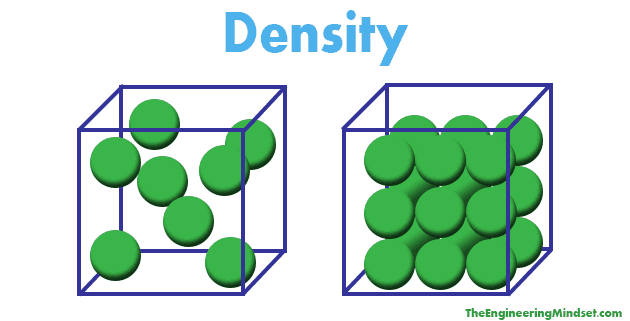
Density is a classic cornerstone of physical science, yet textbooks and students frequently stumble over its exact thermodynamic classification. Is density an intensive property? Yes, density is a classic intensive property because its value remains entirely independent of the total quantity of matter in the system. Whether you hold a microscopic droplet of water or measure an entire ocean basin, the mass per unit volume at a given temperature and pressure stays uniform.
The competitor article reviewed earlier gets this fundamental fact completely wrong, bizarrely claiming that density is an extensive property due to its mathematical dependence on mass and volume. That confusion stems from a misunderstanding of how intensive variables are constructed. In thermodynamics, dividing two extensive properties like mass and volume yields an intensive property that describes the local state of a substance rather than its aggregate size.
Let's break down the precise mechanics of state variables, why density earns its intensive classification, and where exceptions or subtleties arise in real-world materials.
Defining Intensive Versus Extensive Properties
To understand why density belongs firmly in the intensive category, you need to examine the fundamental division of thermodynamic properties. If you want more about the context here, Associated Press offers an excellent breakdown.
Extensive properties scale directly with the size or amount of matter in a system. If you double the amount of gas in a container, properties like total mass, total volume, internal energy, and total heat capacity will all double. They depend entirely on the system's extent.
Intensive properties do not change when you add more of the substance. Temperature, pressure, chemical potential, and refractive index are prime examples. If you have a cup of coffee at 60 degrees Celsius and pour it into a massive thermal reservoir, the temperature doesn't jump to 120 degrees. It remains 60 degrees.
Because density behaves the same way—halving a block of aluminum cuts both its mass and volume in half, leaving the ratio ($\rho = \frac{m}{V}$) exactly constant—it represents the local intensity of matter. You can read more about foundational thermodynamic definitions in the National Institute of Standards and Technology Chemistry WebBook.
Why the Confusion Arises: The Mass-to-Volume Ratio
The misconception that density is extensive usually stems from its mathematical formula:
$$\rho = \frac{m}{V}$$
Because both mass ($m$) and volume ($V$) are extensive variables, people assume their quotient must inherit extensive traits. However, mathematical calculus and dimensional analysis prove otherwise. The ratio of two extensive properties that scale linearly with system size cancels out that scaling factor entirely.
Think of concentration or molarity. Molarity is moles of solute divided by volume of solution—another ratio of two extensive quantities. Yet nobody argues that molarity doubles when you double the volume of a salt solution. The concentration remains identical throughout the beaker. Density works on the exact same principle. It describes how tightly packed matter is at any given point, making it a point property rather than a bulk accumulation property.
How State Variables Depend on Environment
While density is independent of sample size, it is not completely immutable. Density is classified as a state variable, meaning its value depends strictly on the current state of the thermodynamic system, usually defined by temperature and pressure.
When you alter environmental conditions, you change the density:
- Temperature changes: Heating most liquids and gases causes thermal expansion. The molecules move faster, push slightly further apart, and increase the volume while mass stays fixed. This drops the density.
- Pressure changes: Applying high pressure to gases compresses them significantly, cramming more mass into a smaller volume and raising the density. Liquids and solids are far less compressible, but extreme pressures can still force atomic lattices to shift phases.
For a rigorous dive into how state variables interact under varying pressures and temperatures, consult the IAPWS formulations for the properties of water and steam.
Intensive vs Extensive Properties Quick Reference
| Property | Classification | Why? |
|---|---|---|
| Mass | Extensive | Scales directly with the amount of material. |
| Volume | Extensive | Expands as more substance is added. |
| Density | Intensive | Remains constant regardless of sample size. |
| Temperature | Intensive | Measures average kinetic energy, not total heat. |
| Pressure | Intensive | Force per unit area, independent of container size. |
Practical Implications in Engineering and Material Science
Knowing that density is intensive matters immensely for practical engineering and chemical processing.
In fluid mechanics, engineers use density to calculate buoyancy, pressure gradients, and Reynolds numbers in pipe flows. Because density is intensive, you can measure a tiny sample of lubricating oil in a laboratory and apply that exact numerical value to a massive industrial turbine reservoir without scaling factors.
Similarly, in materials science, identifying material purity relies on constant intensive properties. If an alloy's measured density deviates from its standard intensive value, metallurgists immediately know internal voids, porosity, or alloy composition errors exist within the casting.
Common Mistakes to Avoid
- Confusing total mass with local concentration: Don't assume that because a heavy object has a large mass, its density must also be extensive. Mass is the numerator; volume is the denominator. Their scaling cancels out.
- Ignoring temperature effects: Students often treat density as a static constant like pi. Always remember that density shifts with thermal fluctuations.
- Misapplying phase changes: Near critical points, density fluctuations can become anomalous (like water near 4 degrees Celsius), but the property itself remains intensive at any specific local coordinate.
Frequently Asked Questions
Is density considered an intensive property for both fluids and solids?
Yes. Whether you are examining liquid mercury, gaseous helium, or solid iron, density is an intensive property. It describes the local compactness of the substance at any given point in space, independent of how much of the solid or fluid you possess.
Why do some online sources claim density is extensive?
Some poorly written articles confuse the components of the density formula (mass and volume, which are extensive) with the result of the calculation. When you divide one extensive property by another, the resulting ratio is intensive.
Can density change if the sample size stays the same?
Yes, but only if you change the environmental state variables—such as heating the substance or placing it under mechanical pressure. The change is driven by temperature or pressure, never by simply cutting the sample in half or adding more material.
How does density behave in non-uniform or heterogeneous mixtures?
In a heterogeneous mixture (like oil and water, or soil), the bulk density of the entire container depends on the proportions of each component. However, if you measure the density at any specific local point within the uniform phases, those individual local densities remain strictly intensive properties of each respective phase.



