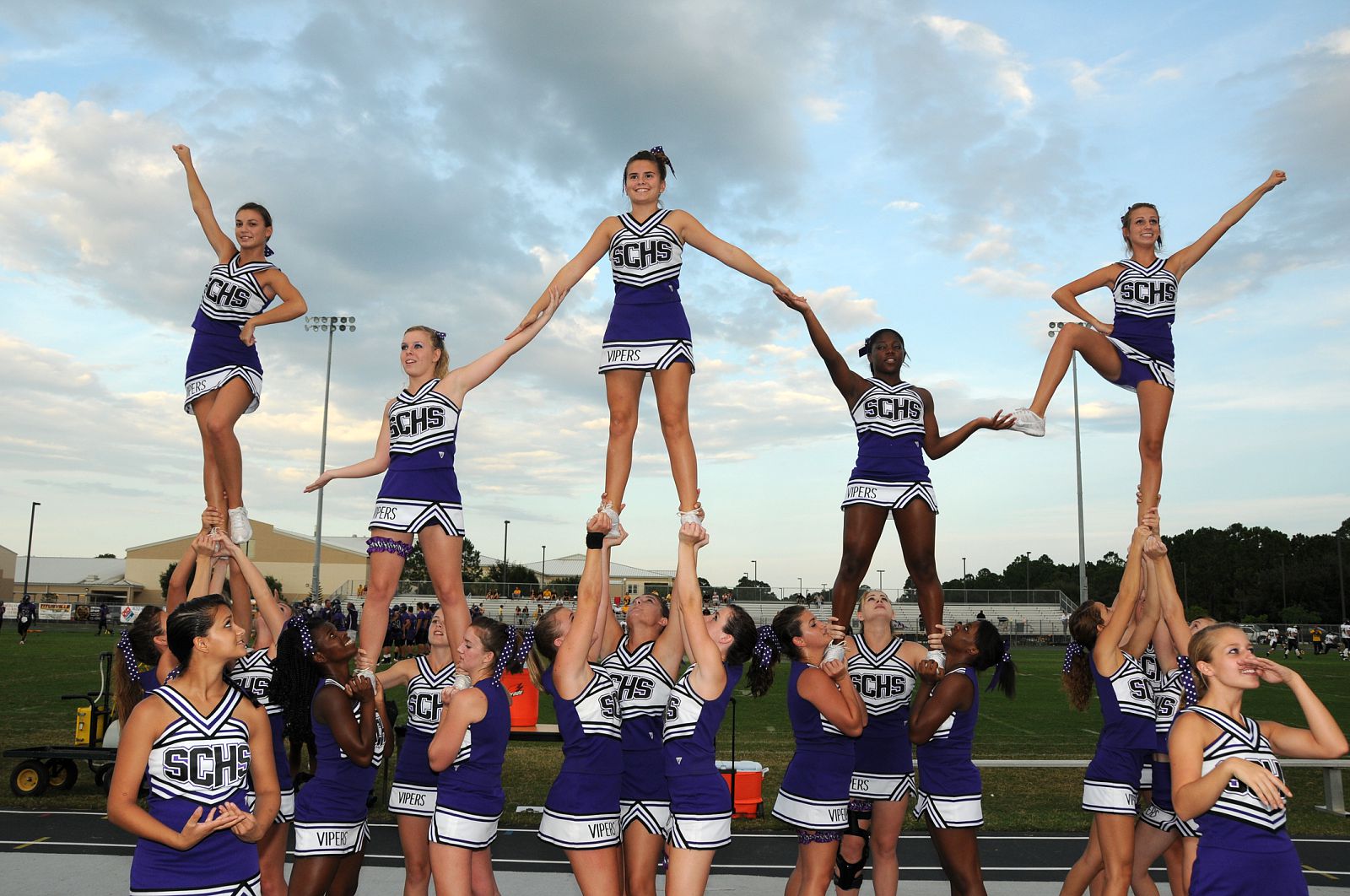
For decades, the cultural perception of cheerleading lived in the shadow of sidelines, megaphones, and pom-poms. People viewed the activity as a spirit-raising performance rather than a grueling athletic test. That cultural gap sparked an intense global conversation about whether cheerleading deserves to stand shoulder-to-shoulder with gymnastics, track, and soccer. The debate shifted profoundly when the International Olympic Committee stepped in, changing the landscape of competitive athletics.
The short answer is yes, cheerleading is officially recognized as a sport by major global athletic authorities, including the International Olympic Committee. However, official recognition didn't happen overnight. It required decades of structural evolution, safety overhauls, and intense lobbying to prove that modern competitive cheer demands the same physiological conditioning, risk management, and technical precision as any traditional Olympic discipline.
The Evolution from Sidelines to Mat Competitions
To understand why a debate ever existed, you have to look at the roots of the activity. In the late nineteenth century, cheerleading began as an all-male sideline pep activity at American universities. Women entered the fold during World War II, and by the mid-twentieth century, the activity evolved away from simple crowd-leading chants into a theatrical display featuring basic pyramids and jumps.
By the 1980s and 1990s, a distinct split occurred. Traditional sideline cheerleading focused on supporting school football and basketball teams, while competitive club cheerleading emerged as an entirely separate entity. Gyms across the world began building teams that never stepped foot near a football field. Instead, these athletes trained year-round for a single, explosive two-and-a-half-minute routine performed on a spring mat.
This modern version of the discipline—often called all-star cheerleading—features high-flying stunts, multi-tier pyramids, elite gymnastics tumbling, and intense synchronized dance. The physical output required for a routine matches high-intensity interval training, pushing athletes to their absolute physiological limits.
The International Olympic Committee Decision
The formal debate reached a turning point through the efforts of the International Cheer Union. Founded in 2004, the ICU set out to establish universal rules, safety standards, and global governance.
In December 2016, the International Olympic Committee granted provisional recognition to the ICU, marking the first official acknowledgement of cheerleading as a legitimate sport at the international level. This status opened doors for government funding, anti-doping education through the World Anti-Doping Agency, and inclusion in multi-sport global events.
On July 20, 2021, during the Tokyo Olympic buildup, the IOC session voted to grant full recognition to the ICU. This milestone meant cheerleading met all criteria established by the Olympic Charter for an international sports federation. While full recognition doesn't automatically guarantee a spot on the Summer Games program—a separate hurdle involving host-city selection and event quotas—it places the discipline on equal footing with other recognized sports awaiting medal-event status. You can track ongoing updates regarding international sports governance directly through the International Olympic Union guidelines.
Physical Demands and Injury Rates
Skeptics often point to the historical roots of cheerleading to dismiss its athletic merit. Yet, sports science data tells a vastly different story. Competitive cheerleaders experience physical trauma rates comparable to, and sometimes exceeding, traditional collision sports like gymnastics, rugby, and soccer.
A competitive routine compresses immense physical exertion into a brief window. Bases lift and throw flyers weighing over a hundred pounds into the air, catching them while maintaining absolute stability to prevent catastrophic falls. Tumblers launch into back handsprings and full-twisting layouts, landing under immense joint compression.
Sports medicine researchers categorize cheerleading injuries into acute trauma, such as concussions from dropped stunts and torn ligaments from landing mistakes, and chronic overuse injuries, including severe tendonitis and stress fractures. According to safety data tracked by organizations like Varsity Spirit, the implementation of mandatory safety rules, certified coaching credentials, and skill progression restrictions has drastically improved athlete safety over the last two decades.
Why the Sport Label Matters
The classification of cheerleading as a sport carries heavy legal and financial implications, particularly within educational institutions. In the United States, Title IX regulations require schools to provide equitable opportunities for male and female athletes. For years, universities hesitated to classify cheerleading as a varsity sport because of its historical association with school spirit rather than athletic competition.
When legal battles and administrative reviews forced institutions to evaluate the physical nature of the activity, courts and athletic departments slowly adapted. Recognizing competitive cheer as a varsity sport allows universities to count team rosters toward Title IX compliance. This shift provides female athletes with crucial funding, academic support, athletic training staff, and scholarship opportunities that were previously unavailable.
Common Misconceptions About Competitive Cheer
- It is just dancing: While choreography and synchronization matter, dance is only one component. The core scoring matrix heavily weights the difficulty and execution of stunts, pyramids, and elite tumbling passes.
- Sideline cheer and competitive cheer are identical: Sideline squads prioritize crowd engagement and school spirit. Competitive teams focus entirely on executing a mastered routine for a panel of judges under strict technical tariffs.
- Men don't compete: Coed divisions feature elite male athletes serving as powerful base and flyer combinations, showcasing strength and explosive power on the global stage.
Frequently Asked Questions
Is cheerleading currently an Olympic medal event?
No. While the International Olympic Committee has granted full recognition to the International Cheer Union, cheerleading has not yet been added to the official program of a specific Summer Games cycle as a medal event.
What is the governing body for competitive cheerleading?
The International Cheer Union serves as the worldwide governing body, overseeing national federations, global championships, and adherence to international sports standards.
Do competitive cheerleaders train like traditional athletes?
Yes. Elite competitive cheerleaders maintain year-round training schedules that include weightlifting, cardiovascular conditioning, flexibility training, and hours of routine repetition.
Why do some people still argue it isn't a sport?
The lingering perception stems from its historical roots as a sideline activity designed to entertain crowds during other sports games, combined with a traditional cultural bias against female-dominated activities.



