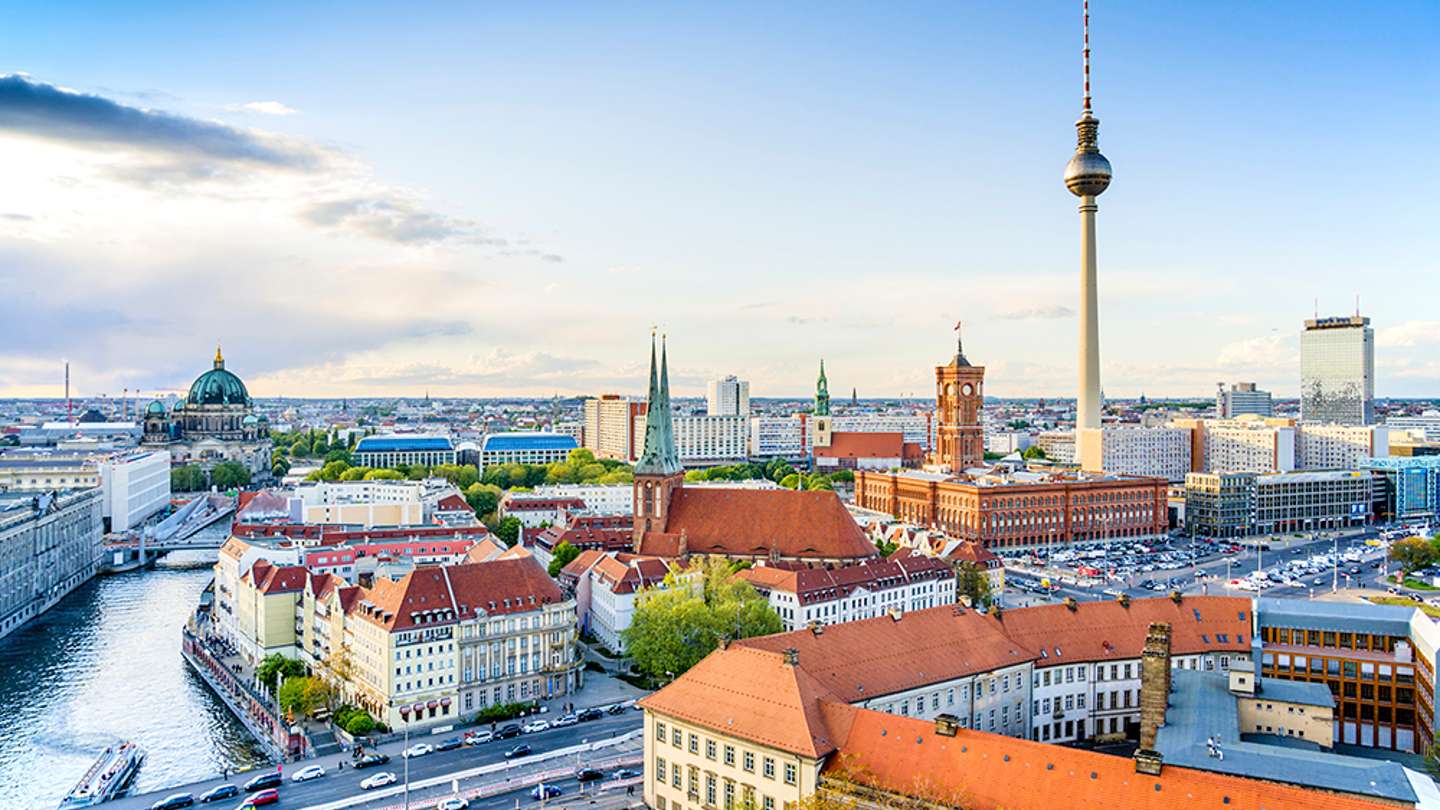
Yes, Berlin is the capital of Germany. It functions as the nation's political center, houses the federal government, and serves as the seat of both the legislative and executive branches.
Beyond its political status, Berlin is the country's largest city by both population and area. It anchors a metropolitan region that drives European culture, politics, and science. While the city's modern administrative role was cemented only after the end of the Cold War, its identity as the nation's capital spans more than a century of turbulent history.
The Legal and Constitutional Framework
Germany's constitutional document, the Basic Law for the Federal Republic of Germany, explicitly establishes Berlin's status. Article 22 states that the federal capital is Berlin, removing any ambiguity from a legal standpoint.
This status anchors the federal republic's institutional layout. The primary organs of the German state operate directly within the city limits:
- The Bundestag: The federal parliament, which convenes in the historic Reichstag building.
- The Bundesrat: The federal council representing the sixteen constituent states.
- The Federal Chancellery: The executive office led by the Chancellor.
- The Federal President: Head of state, residing at Schloss Bellevue.
The Federal Constitutional Court remains located in Karlsruhe, a deliberate constitutional choice designed to separate the judiciary from the immediate physical influence of the legislative and executive branches.
Historical Evolution of Germany's Capital
Berlin hasn't always held an undisputed position as the seat of power. The city's journey reflects the fragmented and complex evolution of the German nation-state itself.
From Prussia to the German Empire
Berlin became the capital of the Kingdom of Prussia and later, following unification in 1871 led by Otto von Bismarck, the capital of the German Empire. During this era, the city expanded rapidly into a major European metropolis of science, industry, and military power.
Division and the Cold War
World War II left Berlin devastated and divided among the Allied occupying powers: the United States, Great Britain, France, and the Soviet Union. As the Cold War intensified, the city split into East Berlin and West Berlin.
When the Federal Republic of Germany (West Germany) was founded in 1949, it chose Bonn as its provisional capital. Bonn functioned as a quiet, functional administrative center for decades. Meanwhile, the German Democratic Republic (East Germany) declared East Berlin its capital.
Reunification and the Berlin Decision
The fall of the Berlin Wall in 1989 changed the geopolitical landscape overnight. On June 20, 1991, the German parliament—then still sitting in Bonn—held a historic and fiercely debated vote known as the Hauptstadtbeschluss (Capital Decision).
Lawmakers voted narrowly to return the seat of government to Berlin. The move wasn't just administrative; it symbolized the reunification of a divided country and a commitment to anchor the new republic in its historic center. The actual relocation took nearly a decade, with ministries and parliament fully operating out of Berlin by 1999 and 2000.
The Bonn Factor: Understanding the Federal City
A common point of confusion arises from the continued presence of government infrastructure in Bonn. People often wonder if Germany has two capitals.
Germany has only one capital, but Bonn retains the official title of Bundesstadt (Federal City). To soften the economic and political blow of losing capital status, the 1991 Berlin Decision mandated that Bonn would remain a secondary administrative hub.
Today, several federal ministries maintain their primary headquarters in Bonn, including the Ministry of Defense, the Ministry of Health, and the Ministry of Environment. Numerous United Nations agencies also operate out of Bonn, making it an international city in its own right. However, strategic governance and foreign policy decisions originate from Berlin.
International Recognition and Embassies
From an international relations perspective, Berlin's status is absolute. Every foreign government recognizes Berlin as the sole capital of Germany.
- Foreign Embassies: All diplomatic missions shifted from Bonn to Berlin during the 1990s and 2000s. Today, embassies cluster around the historic Mitte district, near the Brandenburg Gate.
- State Visits: Foreign heads of state are officially received in Berlin by the Federal President.
- Treaties and Diplomacy: International agreements involving the German state are executed from the capital.
Frequently Asked Questions
Why is Berlin the capital instead of Frankfurt or Munich?
Berlin has historical precedence, having served as the capital of Prussia, the German Empire, and the Weimar Republic. Choosing Berlin signaled unity and continuity after the fall of the Iron Curtain, whereas cities like Frankfurt were viewed as merely provisional alternatives.
Is Bonn still a capital city?
No. Bonn is officially designated as a Bundesstadt (Federal City). It hosts secondary seats for several federal ministries and international organizations, but it is not a capital.
Where is the German parliament located?
The German parliament, the Bundestag, meets in the Reichstag building in Berlin. The building features a famous glass dome designed by architect Norman Foster, symbolizing political transparency.
Do other countries maintain diplomatic offices in Bonn?
Most nations operate only their primary embassy in Berlin. Some countries maintain minor consular or cultural branch offices in Bonn due to the remaining ministries located there, but official diplomatic recognition rests entirely with Berlin.



