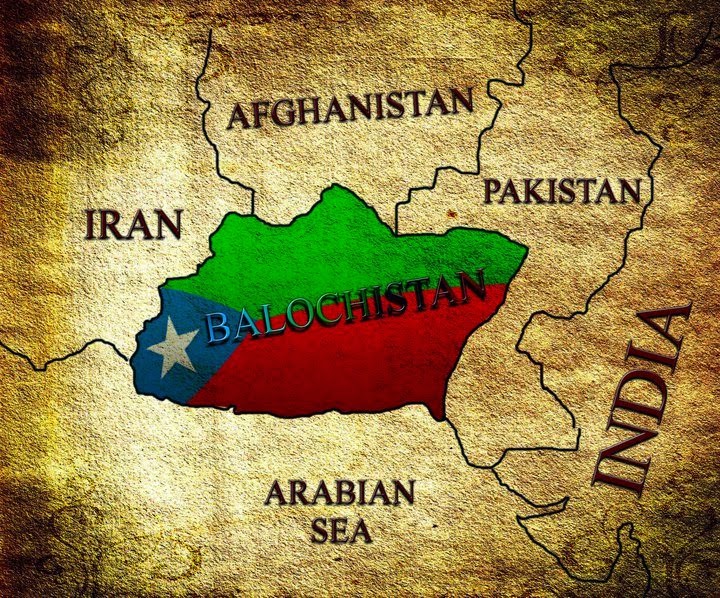
Balochistan isn't a sovereign country, though it frequently appears in international headlines regarding regional autonomy movements, border security, and resource distribution. Instead, the historical region is split across three distinct nation-states: Pakistan, Iran, and Afghanistan. By far the largest portion forms the southwestern province of Pakistan, while other sections span southeastern Iran and southern Afghanistan.
Understanding why confusion persists requires looking closely at international law, regional geography, and historical grievances that fuel local nationalist movements. Let's break down the legal reality, political context, and geographic makeup of the region.
The Legal and International Status
Under international law, statehood requires specific criteria: a defined territory, a permanent population, a government, and the capacity to enter into relations with other states. Crucially, it also requires recognition by the international community.
Balochistan fails to meet these criteria as an independent entity:
- No UN Recognition: No member state of the United Nations recognizes Balochistan as a sovereign country.
- Administrative Control: The largest share operates administratively as a province within the federal structure of Pakistan, complete with its own provincial assembly, chief minister, and representation in the national parliament.
- Global Consensus: Major global powers and regional neighbors treat the territory as an integral part of Pakistan's and Iran's sovereign borders.
Separatist factions and diaspora organizations frequently lobby foreign governments for recognition, but these political advocacy efforts carry no weight in international diplomacy.
Geographic Breakdown: Three Borders
The broader Balochistan region covers an arid, mountainous, and resource-rich expanse spanning roughly 500,000 square miles across South and Southwest Asia.
Pakistani Balochistan
Accounting for roughly 44 percent of Pakistan's total landmass, the Pakistani province of Balochistan is the country's largest by area but its least populated. Its capital is Quetta. Despite holding vast natural gas reserves, mineral wealth, and the deep-water port of Gwadar, it remains economically underdeveloped compared to other Pakistani provinces.
Iranian Balochistan
The southeastern portion of Iran—primarily making up Sistan and Baluchestan Province—is home to a predominantly Sunni Baluch minority living within a predominantly Shia nation. This area shares long, porous borders with Pakistan and faces distinct economic and security challenges.
Afghan Balochistan
A smaller segment extends into the southern desert regions of Afghanistan, particularly around the Helmand and Nimruz provinces, where nomadic and semi-nomadic Baluch tribes move across traditional grazing lands.
Historical Context: From Khanate to Integration
Before British colonial expansion in the 19th century, the region consisted of various tribal confederacies and principalities, the most prominent being the Khanate of Kalat.
During the British Raj, parts of the territory were administered directly, while others remained semi-autonomous princely states. When British India was partitioned in 1947, the status of these territories shifted. The Khanate of Kalat briefly declared independence in August 1947, but subsequent agreements and political developments led to its accession to the newly formed state of Pakistan in March 1948.
This integration remains a core point of contention for modern nationalist groups, who argue that the accession was achieved through coercion rather than genuine consent.
Root Causes of Regional Unrest
Insurgencies, low-level conflicts, and civil unrest have flared multiple times since 1947. To understand why tensions persist, it helps to look at the primary drivers of local dissatisfaction:
- Resource Inequality: Local populations frequently argue that extraction of natural gas, gold, and copper benefits the federal government far more than local communities.
- Economic Marginalization: Infrastructure development, literacy rates, and healthcare access lag behind national averages.
- Enforced Disappearances and Security Operations: Human rights organizations have repeatedly documented heavy-handed military crackdowns and missing persons cases, which deepen resentment against central authorities.
- Mega-Projects: Initiatives like the China-Pakistan Economic Corridor (CPEC) and the development of Gwadar Port [cite: CPEC overview] have sparked local fears of demographic dilution and economic displacement.
Common Misconceptions
Several persistent myths cloud discussions around the region's political standing:
- Myth: Balochistan was a unified, modern nation-state prior to 1947. Fact: The area was historically a collection of shifting tribal alliances and feudal principalities rather than a centralized state with fixed borders.
- Myth: All residents support armed separation. Fact: While nationalist sentiment runs deep, political opinions vary wildly. Many residents seek greater provincial autonomy, constitutional rights, and economic fairness within Pakistan rather than total separation.
- Myth: The region is ethnically uniform. Fact: The population is diverse, including significant Pashtun communities in the northern districts, Brahui speakers, and Sindhi minorities alongside ethnic Baloch.
Frequently Asked Questions
Is Balochistan recognized by the United Nations?
No. The UN and all of its member states recognize the territory as legally belonging to the sovereign nations of Pakistan and Iran.
Can you travel to Balochistan?
Parts of the region, particularly in Pakistan and Iran, experience active security operations and insurgency. Most foreign governments issue strict travel advisories warning against non-essential visits due to the risk of kidnapping and localized violence.
What languages do people speak in the region?
Balochi is the primary language, but Brahui, Pashto, Persian, and Urdu are also widely spoken depending on the specific district and country.
Why is the Gwadar Port so important?
Located on the Arabian Sea, Gwadar is a cornerstone of the China-Pakistan Economic Corridor [cite: Gwadar Port details], designed to connect western China directly to warm-water shipping lanes, giving the port immense geopolitical value.



