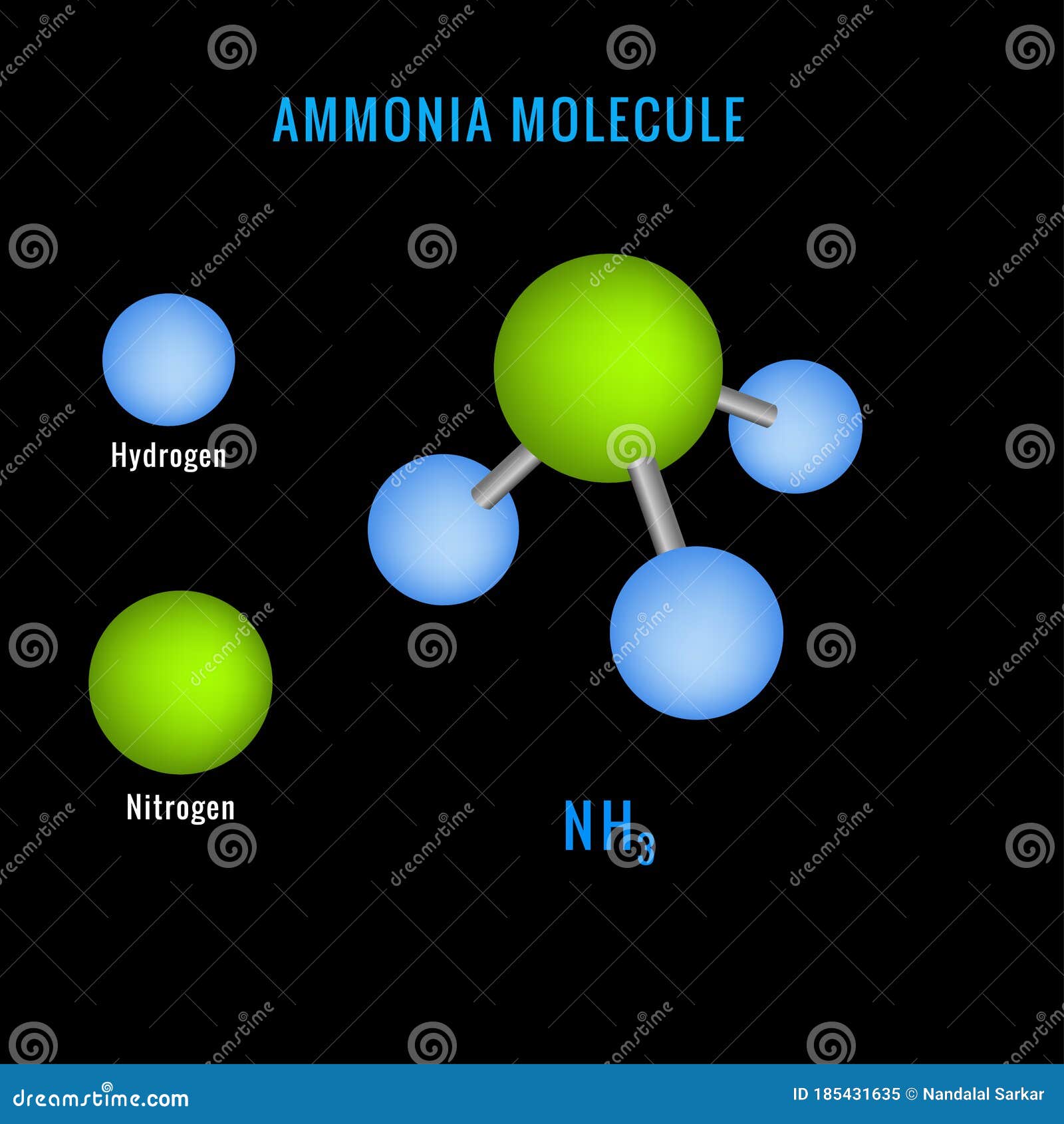
Yes, ammonia is a base. It doesn't look like a typical metal hydroxide such as sodium hydroxide, yet its chemical behavior defines it clearly as a weak base. When you dissolve ammonia in water, it accepts a proton rather than donating a hydroxide ion directly. This unique mechanism trips up many students who look for an obvious hydroxide group in the chemical formula.
Understanding why ammonia acts this way requires looking past simple memorization. We'll break down how molecular structures dictate acid-base behavior across multiple chemical frameworks.
Why Ammonia Functions as a Base
The chemical formula for ammonia is $NH_3$. At first glance, it lacks the classic $OH^-$ structure seen in bases like potassium hydroxide. So how does it increase the pH of a solution?
When you mix ammonia with water, it acts as a proton acceptor. The nitrogen atom pulls a hydrogen ion ($H^+$) away from a water molecule ($H_2O$). This reaction produces two key species:
- Ammonium ions ($NH_4^+$), which form when ammonia captures that stray proton.
- Hydroxide ions ($OH^-$), which are left behind when water loses its hydrogen ion.
The accumulation of free hydroxide ions in the liquid drives the pH upward. Any aqueous solution of ammonia typically sits at a pH around 11 or 12, depending on the concentration. That high alkalinity makes it corrosive in concentrated forms and slippery to the touch.
To explore the broader context of chemical classifications, you can read more about atomic structure and properties via the National Institute of Standards and Technology.
Ammonia Through Different Chemical Theories
Chemistry relies on different models to define acids and bases. Ammonia fits neatly into modern definitions, even if it challenges older ones.
The Brønsted-Lowry Perspective
Under the Brønsted-Lowry framework, an acid is a proton donor and a base is a proton acceptor. Ammonia fits this definition perfectly. The single lone pair of electrons sitting on the nitrogen atom acts like a magnet for stray hydrogen ions. It grabs an $H^+$ from its environment to form the stable ammonium ion.
The Lewis Perspective
The Lewis theory defines bases as electron-pair donors and acids as electron-pair acceptors. Look closely at the Lewis structure of $NH_3$: the nitrogen atom possesses one unshared pair of valence electrons. It can share that pair with an electron-deficient species, such as a hydrogen ion or a metal cation. Because it donates those electrons, ammonia acts as a classic Lewis base.
The Arrhenius Limitation
Arrhenius defined bases strictly as substances that dissociate in water to yield hydroxide ions directly. By this strict historical standard, ammonia poses a puzzle because it doesn't contain a hydroxide group in its dry molecular structure. Instead, it generates hydroxide by reacting with water molecules. Modern textbooks classify it as an Arrhenius base only in the broader sense that aqueous solutions end up with elevated $OH^-$ concentrations.
Why Ammonia Is Classified as a Weak Base
Not all bases behave with equal intensity. Strong bases like sodium hydroxide dissociate completely in water. Ammonia does something entirely different.
In an aqueous solution, only a small fraction of the ammonia molecules actually react with water to form ammonium and hydroxide. The vast majority of the $NH_3$ molecules remain intact as dissolved gas molecules. Because the forward reaction reaches an equilibrium quickly and favors the reactants, the concentration of free hydroxide ions stays relatively low.
This partial dissociation makes it a weak base. Its base dissociation constant ($K_b$) is approximately $1.8 \times 10^{-5}$ at room temperature, confirming that only a tiny percentage of molecules pull protons at any given moment.
Real-World Implications of Ammonia's Basicity
Ammonia's behavior as a weak base isn't just a textbook concept; it dictates how we use the compound in industries and households.
- Household Cleaners: Glass cleaners and surface degreasers often feature dilute ammonia because its mild basicity cuts through grease and oils without dissolving skin instantly.
- Agriculture: Farmers apply anhydrous ammonia to soils to neutralize acidity and deliver essential nitrogen nutrients directly to crops.
- Biological Systems: Aquatic organisms excrete nitrogen waste as ammonia because its basic nature allows it to buffer safely in large volumes of water.
For safety guidelines regarding chemical handling in industrial or laboratory settings, check the Occupational Safety and Health Administration.
Common Misconceptions to Avoid
Students often stumble over a few recurring traps when studying ammonia:
- Confusing physical appearance with chemical action: Just because ammonia is a gas at room temperature doesn't mean it cannot act as a base once dissolved in liquid.
- Expecting a direct $OH$ split: Many learners assume every base must contain a hydroxide group like $NaOH$ or $KOH$. Ammonia proves that proton acceptance creates hydroxide just as effectively.
- Assuming weak means harmless: Concentrated solutions of weak bases can still cause severe chemical burns because the equilibrium shifts continuously as the chemical reacts with tissues.
Frequently Asked Questions
Is ammonia an acid or an alkali?
Ammonia is both a base and an alkali. An alkali is a subset of bases that dissolve in water to form hydroxide ions. Because ammonia dissolves readily in water to yield a basic solution, it qualifies as an alkali.
What is the conjugate acid of ammonia?
The conjugate acid of ammonia is the ammonium ion ($NH_4^+$). When ammonia accepts a proton, it transforms into this positively charged ion.
Can ammonia act as an acid?
Under extreme conditions and in the presence of extremely strong bases (like sodium hydride), ammonia can lose a proton to form the amide ion ($NH_2^-$). However, under normal conditions and in aqueous solutions, it behaves strictly as a base.
Why does household ammonia smell so pungent?
The distinct sharp odor comes from unreacted ammonia gas escaping from the liquid solution. Because it is volatile, it vaporizes easily into the air, where it irritates nasal passages.



