Turtles are unmistakably vertebrates. They belong to the class Reptilia, meaning they possess a true backbone, a spinal cord, and an internal bony skeleton. Far from being soft-bodied creatures protected by an external shell like crabs or snails, turtles have a skeletal structure where their iconic shell is actually fused directly to their ribs and vertebrae.
Understanding turtle anatomy reveals how a vertebrate skeleton can adapt into a protective armor box. While invertebrates rely on exoskeletons made of chitin, turtles carry their inner skeletons on the outside of their shoulder and hip girdles. This structural design separates them from every other animal group on Earth.
The Vertebrate Blueprint of Turtles
A backbone defines all vertebrates, and turtles are no exception. Their spinal column runs down the length of their body, housing and protecting the central nervous system.
When you look at a turtle skeleton, you notice something unusual. The spine isn't loose or flexible along the back like a cat's or a dog's. Instead, the thoracic vertebrae are permanently fused to the interior surface of the carapace, which is the upper dome of the shell.
- The Spine: Forms the central ridge along the top inner shell.
- The Ribs: Broaden and flatten out during embryonic development to form the solid plates of the carapace.
- The Skull: Fully ossified and robust, lacking teeth but featuring a sharp, keratinous beak.
Because their ribs cannot expand and contract the way human ribs do, turtles use specialized abdominal muscles to force air in and out of their lungs. This internal arrangement represents a major evolutionary divergence from other reptiles like lizards and snakes. According to the Smithsonian National Museum of Natural History, reptilian skeletal adaptations allowed these lineages to conquer terrestrial habitats millions of years ago.
How the Shell Integrates with the Skeleton
Many casual observers assume a turtle can crawl out of its shell. This is a persistent myth. The shell is an integral part of the turtle's skeleton, not a portable house it wears.
The shell consists of two main sections: the upper carapace and the lower plastron. Both components are lined with bony plates covered by tough, keratin scales called scutes.
- Carapace Integration: Formed by roughly 50 distinct bones, primarily fused ribs, neural plates from the vertebrae, and peripheral bones along the rim.
- Plastron Integration: Forms the belly plate, developed from the fusion of the clavicles, interclavicles, and abdominal ribs known as gastralia.
- Girdle Shift: Unlike any other vertebrate, a turtle's shoulder and pelvic girdles are located inside its rib cage.
This layout means the turtle's backbone and ribs encase its shoulder blades and hip bones. It's a tight architectural constraint that limits how fast a turtle can move, but it offers unmatched defense against predators.
Skeletal Variations Across Species
Not all turtle skeletons look identical. Aquatic species, semi-aquatic pond turtles, and terrestrial tortoises display distinct skeletal modifications driven by their habitats.
Sea Turtles
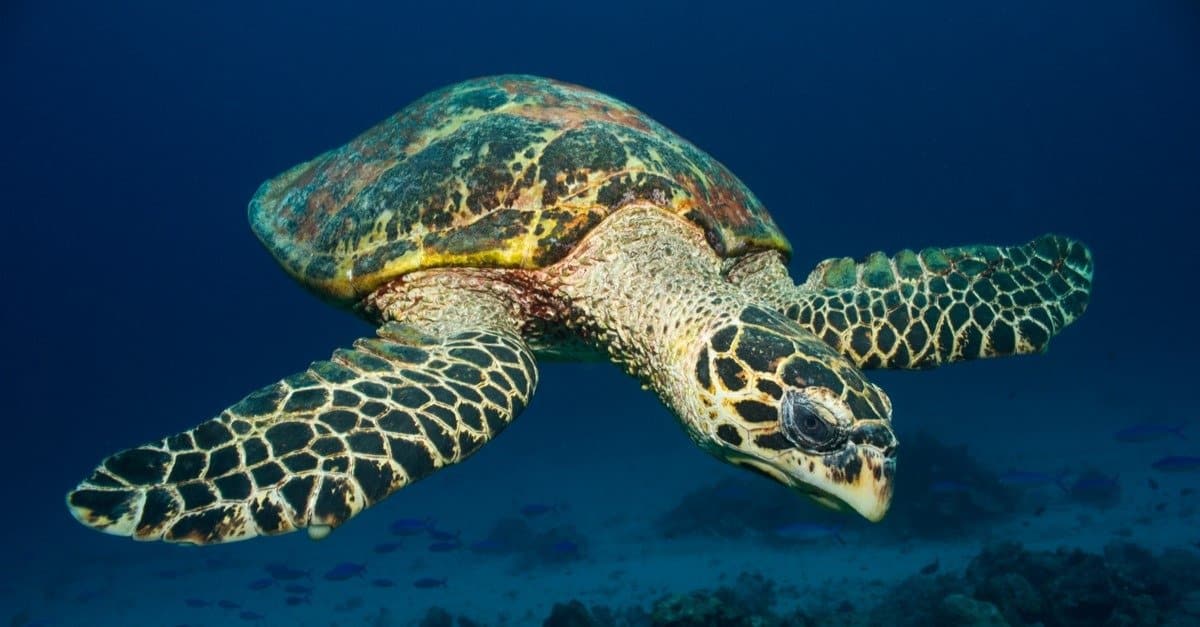
Marine species like the green sea turtle or leatherback feature lighter, more streamlined skeletons. Sea turtles cannot pull their heads or flippers completely inside their shells. Their bone density is reduced compared to land tortoises to help them maintain buoyancy in open water, as detailed by the NOAA Fisheries marine life divisions.
Tortoises
Land-dwelling tortoises have heavy, dome-shaped shells and sturdy, pillar-like legs. Their skeletal framework supports significant weight against gravity. Their cervical and caudal vertebrae allow them to tuck their heads and limbs entirely inside the shell for protection.
Softshell Turtles
Softshell turtles trade heavy, hard scutes for a leathery, flat carapace. Their skeletal plates are reduced around the edges, making them lighter and faster swimmers in muddy river bottoms.
Common Misconceptions About Turtle Anatomy
Confusion often arises because the turtle shell mimics the function of an invertebrate exoskeleton. People see a hard exterior and mistakenly think of beetles or clams.
Another point of confusion involves how turtles grow. A turtle's shell grows right along with the animal. The individual scutes add keratin rings as the animal feeds and matures, but the underlying bone expands outward from the skeletal plates. The skeleton and the shell are locked together in a single biological unit from birth.
Frequently Asked Questions
Can a turtle survive if its shell is cracked?
The shell contains nerve endings and a rich blood supply. Severe cracks that expose the internal organs or spine are life-threatening, though minor shell fractures can heal over time with veterinary care.
Do turtles have teeth?
Modern turtles do not have teeth. Instead, they feature sharp, horny beak margins made of keratin that slice through vegetation or animal tissue.
Are tortoises and turtles the same thing?
All tortoises are technically turtles, as they belong to the order Testudines, but not all turtles are tortoises. Tortoises are specifically adapted for terrestrial life, while turtles spend most of their lives in or near water.
How many bones are in a turtle shell?
A standard turtle shell contains roughly 50 to 60 distinct bones, tightly fused together with vertebrae and ribs during growth.