Choosing a college major requires balancing passion with financial reality, and a geophysics degree sits at an intense intersection of heavy mathematics, physics, and planetary science. If you love solving large-scale physical puzzles about the Earth, it looks compelling. But with cyclical energy markets and shifting environmental sectors, it's fair to ask whether the rigorous coursework pays off.
A geophysics degree is generally worth the time if you possess strong quantitative skills and want a specialized career in energy, environmental consulting, or natural hazard mitigation. However, if you dislike advanced calculus and differential equations, or expect a plug-and-play job market immune to commodity cycles, the heavy academic investment might frustrate you. This breakdown covers what you study, where graduates work, real salary expectations, and the exact trade-offs to weigh before enrolling.
What is Geophysics and What Do You Study?
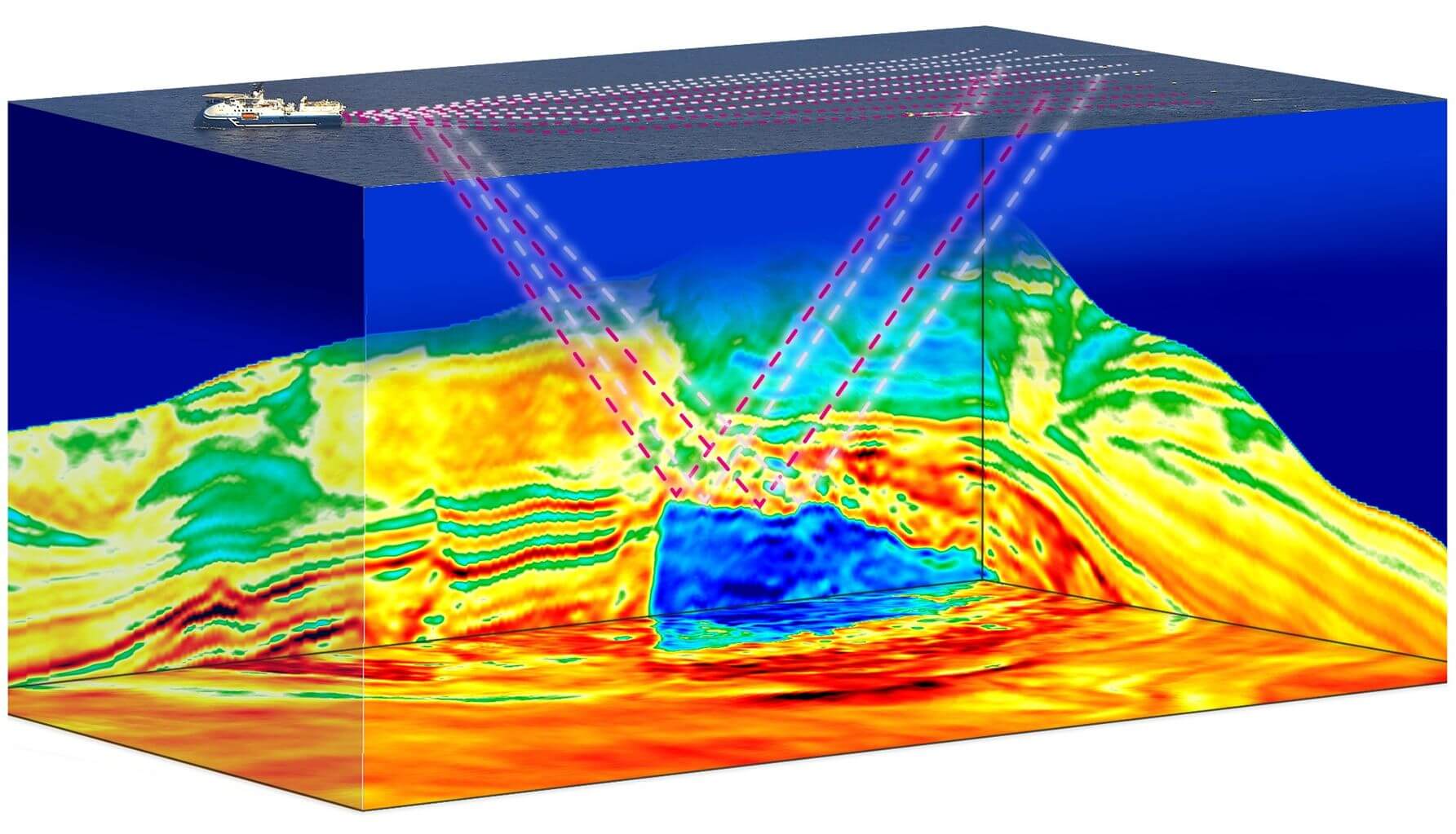
Geophysics applies the principles of physics to study the Earth and its surrounding atmosphere. While traditional geology focuses on observable rocks, minerals, and surface mapping, geophysics looks inward and downward using quantitative measurements. You measure gravitational fields, seismic waves, magnetic anomalies, and electrical conductivity to image subsurface structures you can't see with the naked eye.
Undergraduate programs require a steep math and science commitment. Expect to take multivariable calculus, ordinary and partial differential equations, classical mechanics, electromagnetism, and thermodynamics alongside structural geology and mineralogy. Later coursework covers specialized techniques like seismic data processing, inverse theory, and geophysical signal analysis.
Programming forms a massive part of the modern curriculum. You'll spend hours writing scripts in Python, MATLAB, or C++ to model subsurface anomalies or invert gravity datasets. If writing code to solve numerical physics problems sounds tedious rather than exciting, you'll struggle through upper-level classes.
The Pros of Getting a Geophysics Degree
Graduating with a specialized physical science degree opens doors that general science majors rarely access. Here are the core advantages:
- High Earning Potential: Entry-level salaries for geophysicists outpace many other science and humanities fields, driven by technical scarcity and demand in resource extraction and geotechnical engineering.
- Diverse Industry Applications: Your skills apply across multiple sectors. You aren't locked into one industry; you can pivot from geothermal energy to environmental remediation or civil engineering.
- Fieldwork and Travel Opportunities: Many roles mix office-based computer modeling with fieldwork, taking you to remote sites, seismic survey vessels, or international project locations.
- Strong Quantitative Versatility: The computational and mathematical modeling skills you learn transfer cleanly into data science, software engineering, and financial analytics if you decide to leave the geosciences.
The Cons and Real Challenges
Every major has drawbacks, and geophysics carries unique hurdles that university recruitment brochures often gloss over:
- Cyclical Job Markets: Traditional hiring heavily tracks commodity prices. When oil, gas, and mineral exploration slump, hiring freezes or layoffs follow quickly.
- Rigorous Academic Burnout: The combination of advanced physics and geology creates one of the heaviest credit-hour workloads on campus, leaving little room for electives or a relaxed schedule.
- Geographic Concentration: Jobs cluster heavily around energy hubs, mining centers, and specialized engineering firms. You may need to relocate to specific regions or accept frequent travel.
- Advanced Degree Pressure: While entry-level jobs exist with a bachelor's degree, career advancement into research, senior exploration roles, or specialized consulting often requires a master's degree.
Career Paths and Realistic Salaries
Geophysicists find employment across several distinct sectors. Understanding these paths helps clarify whether the degree aligns with your professional goals.
Energy and Resource Exploration
Traditionally the largest employer, the oil, gas, and mining sectors hire geophysicists to locate deposits and map subsurface formations. According to data from the U.S. Bureau of Labor Statistics, the median annual wage for geoscientists was over 92,000 dollars, with senior professionals in resource exploration earning significantly more. While fossil fuel exploration faces long-term transitions, mining geophysicists are in high demand to locate critical minerals required for renewable energy tech.
Environmental Consulting and Geotechnical Engineering
Environmental firms hire geophysicists to map groundwater aquifers, detect subterranean contamination plumes, locate abandoned underground storage tanks, and assess soil stability before large civil engineering projects like bridges and skyscrapers. This sector offers more stability than oil and gas, though initial salaries tend to be slightly lower.
Government and Research Institutions
Agencies like the U.S. Geological Survey employ geophysicists to monitor seismic activity, track volcanic hazards, study plate tectonics, and manage national geodetic surveys. These roles often require graduate degrees but offer steady employment and strong work-life balance.
Common Mistakes to Avoid
Students often stumble into or through this major due to avoidable miscalculations. Keep these pitfalls in mind:
- Ignoring Programming Skills: Treating coding as an afterthought. Students who graduate without strong Python or MATLAB proficiency struggle to find entry-level technical roles.
- Failing to Network Early: Waiting until senior year to join professional organizations like the Society of Exploration Geophysicists. Summer internships matter immensely in this field.
- Assuming One Industry Fits All: Getting hyper-focused on oil and gas without realizing how easily geophysical skills transfer to hydrogeology or geotechnical engineering during market downturns.
- Neglecting Field Camp: Skipping optional summer field camps. Practical hands-on data collection experience separates competitive applicants from the rest of the graduating class.
Frequently Asked Questions
Do I need a master's degree to work as a geophysicist?
You can secure entry-level positions in environmental consulting and geotechnical engineering with a bachelor's degree. However, specialized roles in seismic interpretation, hazard research, and senior exploration typically require a master's degree or Ph.D.
How hard is the math in a geophysics major?
It is exceptionally challenging. You must complete multiple semesters of calculus, differential equations, and linear algebra. You'll apply these formulas constantly to model physical phenomena beneath the Earth's surface.
Is geophysics a dying field due to the green energy transition?
No, it is evolving. While petroleum exploration hiring fluctuates, the demand for geophysicists in geothermal energy, carbon capture and storage, hydrogeology, and critical mineral mining for electric vehicle batteries is expanding rapidly.
Can I transition into software engineering with this degree?
Yes. Because geophysics programs require heavy numerical modeling, data inversion, and scientific computing, many graduates successfully transition into data science, machine learning, and software development roles.



