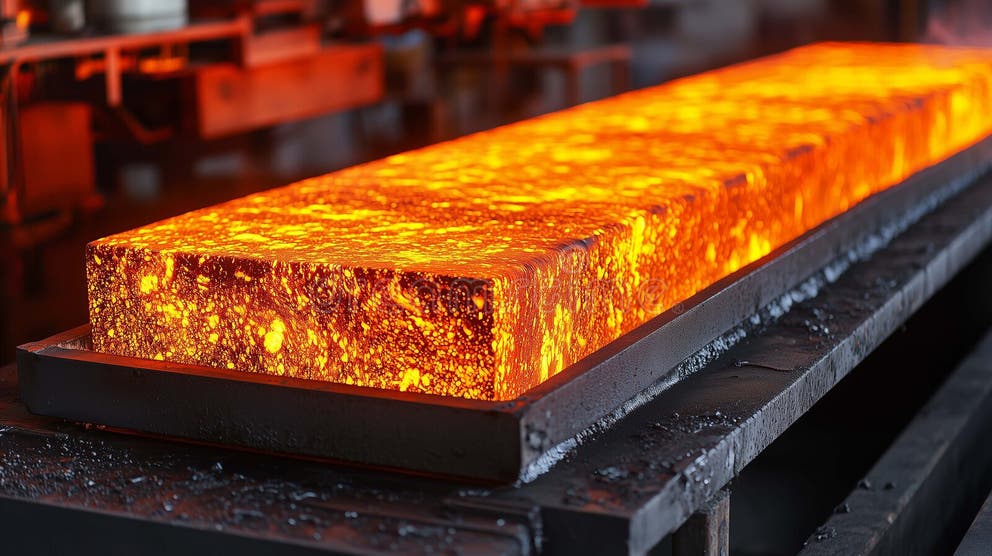
Iron is a pure chemical element mined from the earth, while steel is a human-engineered alloy made by combining iron with precise amounts of carbon and other elements. This single chemical distinction alters everything from melting points and tensile strength to how each metal reacts to moisture, stress, and heat.
If you're choosing materials for construction, manufacturing, or restoration, treating iron and steel as interchangeable leads to structural failure or wasted budgets. Iron offers unique malleability and historical authenticity, while steel delivers the high load-bearing capacity required for modern architecture and heavy industry.
The Atomic Foundation: Composition Differences
To understand why these metals behave so differently, look at their molecular makeup.
Pure iron is far too soft for heavy structural work. In historical terms, wrought iron contained roughly 99.5% iron alongside microscopic glass-like fibers called slag. This slag gave wrought iron its characteristic fibrous grain structure, making it tough and resistant to certain types of localized shock, but structurally weak under intense tension.
Steel changes the equation entirely. According to the World Steel Association, steel is an iron-carbon alloy where carbon content ranges from 0.02% up to 2.1% by weight. That tiny addition of carbon atoms slips into the spaces between iron crystals, locking the crystal lattice in place and preventing atoms from sliding past one another easily. This internal friction is what makes steel dramatically harder and stronger than pure iron.
Alloying Elements in Modern Steel
Modern manufacturing doesn't just stop at carbon. Metallurgists mix various elements into the molten iron bath to target specific mechanical behaviors:
- Chromium: Added at a minimum threshold of 10.5% to create stainless steel, forming an invisible, self-healing oxide skin that blocks rust.
- Manganese: Increases hardenability, wear resistance, and tensile strength during hot rolling.
- Nickel: Improves low-temperature toughness and overall corrosion resistance.
- Vanadium: Refines grain size, boosting strength without sacrificing ductility.
Mechanical Performance: Strength, Ductility, and Hardness
When engineers compare mechanical properties, steel outperforms iron across almost every structural metric.
Tensile and Yield Strength
Tensile strength measures how much pulling force a material can withstand before snapping. Wrought iron typically yields under loads around 150 to 200 megapascals (MPa). Standard structural carbon steel (like ASTM A36) easily handles 250 to 400 MPa, while high-strength alloy steels push past 700 MPa. This means a steel beam can support significantly heavier loads with far less bulk than an iron beam of identical dimensions.
Ductility Versus Brittleness
Cast iron sits at the opposite end of the spectrum from wrought iron. It contains high carbon concentrations (2% to 4%), making it extremely hard and compressive, but notoriously brittle. Hit a cast iron skillet with a hammer, and it shatters rather than bends. Wrought iron and low-carbon steel absorb impacts by bending and deforming plastically instead of fracturing instantly.
Hardness and Heat Treatment
You can heat and quench steel to alter its internal crystalline structure through a process called phase transformation, creating razor-sharp cutting edges or wear-resistant gear teeth. Wrought iron doesn't respond well to traditional quenching because it lacks sufficient carbon to form martensite.
Corrosion Behavior and Environmental Resistance
Rust is the primary enemy of both metals, but they fight it through different mechanisms.
When exposed to oxygen and moisture, pure iron oxidizes rapidly, forming a porous, reddish-brown layer of rust that flakes off continuously. This exposes fresh metal underneath until the entire object degrades.
Steel's corrosion resistance varies wildly based on its grade:
- Carbon Steel: Corrodes even faster than iron if left unprotected because impurities create microscopic galvanic cells within the metal when wet. It requires paint, powder coating, galvanizing (dipping in molten zinc), or oil treatments.
- Stainless Steel: Resists rust successfully because chromium reacts with oxygen to form a passive chromium oxide layer. If scratched, this layer reforms instantly in the presence of air.
- Weathering Steel: Designed to form a stable, adherent rust patina over several years that seals the underlying metal against further deep corrosion, eliminating the need for exterior paint on bridges and outdoor sculptures.
Use Cases: Where Each Metal Excels
Selecting the right material requires matching its strengths to the demands of the environment.
Where Iron Still Wins
- Historic Restorations: Architects restoring 19th-century bridges, Victorian gates, and historic architectural ironwork rely on authentic wrought iron because modern steel has a different chemical texture and corrosion profile that doesn't match heritage standards.
- Specialized Electromagnetics: High-purity iron possesses high magnetic permeability and low coercivity, making it ideal for transformer cores, electromagnets, and relay switches where magnetic fields must switch on and off instantly without retaining residual magnetism.
- Culinary Arts: Traditional cast iron cookware retains heat exceptionally well and develops a natural non-stick seasoning layer through polymerized oils.
Where Steel Dominates
- Structural Engineering: Skyscrapers, long-span bridges, stadiums, and highway rebar rely exclusively on structural steel for its unmatched strength-to-weight ratio.
- Transportation: Automotive chassis, ship hulls, railway tracks, and aerospace components use specialized high-strength steel sheets to balance crash safety with weight efficiency.
- Industrial Piping: Oil and gas pipelines, pressure vessels, and chemical processing facilities require alloyed steel to withstand extreme internal pressures and corrosive fluids.
Common Mistakes in Material Selection
Choosing the wrong metal often leads to costly project failures. Avoid these frequent errors:
- Assuming all metal is weldable: Low-carbon steel welds easily, but high-carbon cast iron is notoriously difficult to weld without preheating and specialized nickel rods due to cracking risks.
- Neglecting galvanic corrosion: Fastening carbon steel screws into stainless steel plates in a marine environment causes the carbon steel to corrode rapidly due to electrochemical potential differences.
- Confusing hardness with toughness: Choosing cast iron for structural brackets because it feels hard, forgetting that sudden impact loads will snap it cleanly.
Frequently Asked Questions
Is steel heavier than iron?
No. Steel is essentially iron mixed with a small amount of carbon. Their base densities are nearly identical, hovering around $7.85\text{ g/cm}^3$. Because steel is stronger, you often need less of it by volume than iron to support the same load, making steel structures lighter in practice.
Can you weld iron to steel?
It depends on the specific type of iron. You can weld steel to wrought iron with standard techniques, but welding cast iron requires rigorous surface preparation, pre-heating, and specialized nickel-based electrodes to prevent cracking as the joint cools.
Why do old iron bridges still stand if steel is stronger?
Wrought iron resists certain types of atmospheric corrosion remarkably well due to its slag inclusions, and historical engineers often over-engineered structures with massive safety margins. However, those same bridges cannot safely support modern multi-axle semi-truck traffic without reinforcement.
Does stainless steel rust?
Stainless steel resists staining and corrosion, but it is not completely rust-proof. If exposed to stagnant saltwater, industrial chlorides, or if its protective chromium oxide layer is damaged by physical contamination, stainless steel can still develop surface corrosion.