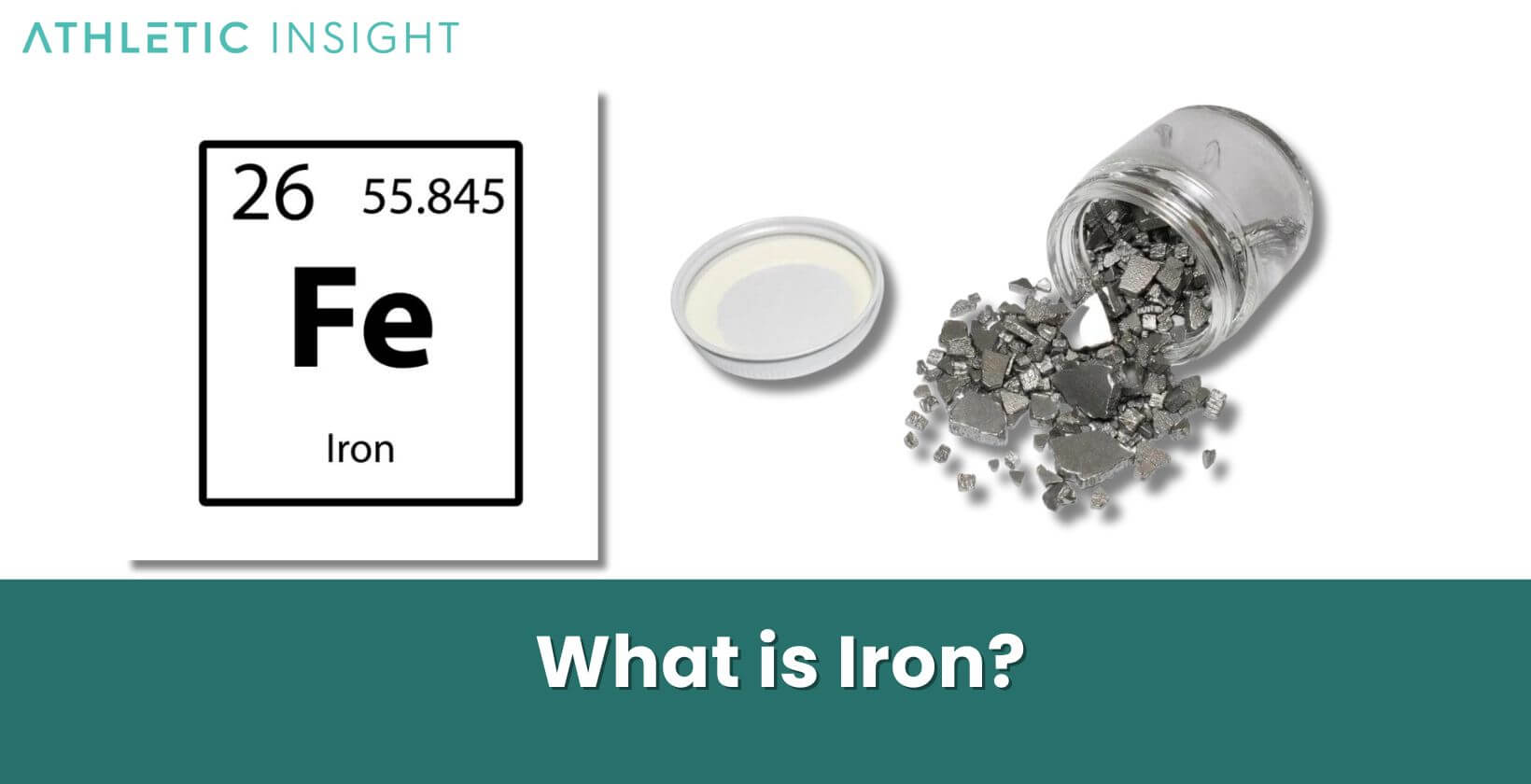
The iron molar mass is approximately 55.845 grams per mole, a fundamental metric for chemical calculations, manufacturing, and structural engineering. This value represents the mass of one mole of iron atoms, factoring in the natural isotopic abundance of the element. You need this precise figure to convert between grams and moles when balancing chemical equations, formulating alloys, or calculating stoichiometric yields in industrial metal production.
Understanding this value requires looking beyond a simple number on the periodic table. Iron, represented by the symbol Fe and atomic number 26, serves as the backbone of global infrastructure. From skyscraper skeletons to microscopic components in electronics, its mass properties govern how engineers compute loads, reactions, and material requirements.
Defining Iron Molar Mass and Atomic Weight
The molar mass of an element tells you how many grams are present in one mole, which equals $6.022 \times 10^{23}$ atoms. For iron, the standard atomic weight is 55.845 u (or g/mol). This number isn't a whole integer because it's a weighted average of iron's stable isotopes found naturally in the Earth's crust.
Iron consists primarily of four stable isotopes: Iron-54, Iron-56, Iron-57, and Iron-58. Iron-56 makes up the vast majority of natural iron at roughly 91.75 percent. Because these isotopes have slightly different masses due to varying neutron counts, the weighted average lands at 55.845. When you work out stoichiometry problems in a lab or calculate raw materials for a blast furnace, you use 55.845 g/mol as the standard conversion factor. Observers at Bloomberg have also weighed in on this trend.
To see how this works in practice, consider a simple conversion. If you have 111.69 grams of pure iron, you divide that mass by the molar mass:
$$\frac{111.69\text{ g}}{55.845\text{ g/mol}} = 2\text{ moles of iron}$$
This math dictates how metallurgists calculate exact quantities of ore required to yield specific tonnages of structural steel.
Why Iron Dictates Industrial Output
Iron isn't just a classroom chemistry topic. It's the most consumed metal on Earth by mass, accounting for over 90 percent of all worldwide metal production. Its unique combination of abundance, structural strength, and chemical versatility makes it an industrial powerhouse.
The Chemistry of Alloy Production
Pure iron is relatively soft and ductile, making it poor for heavy-duty structural applications on its own. To turn it into industrial-grade steel or cast iron, manufacturers introduce carbon and other transition metals into the atomic matrix.
During the smelting process in a blast furnace, iron ore (typically hematite or magnetite) reacts with carbon monoxide derived from coke. The chemical reduction strips oxygen away from the iron oxides:
$$\text{Fe}_2\text{O}_3 + 3\text{CO} \rightarrow 2\text{Fe} + 3\text{CO}_2$$
Knowing the molar mass of iron and its compounds allows chemical engineers to calculate exact mass balances. They know precisely how many tons of coal, limestone, and iron ore must enter the furnace to produce a targeted tonnage of liquid iron. A miscalculation in these molar ratios leads to wasted energy, impure batches, or structural weaknesses in the final alloy.
Real-World Stoichiometry in Metallurgy
In industrial manufacturing, precision prevents catastrophic failures. Let's look at rust formation, a chemical reaction that costs economies billions of dollars annually. When iron corrodes, it reacts with oxygen and moisture to form hydrated iron(III) oxide.
Using molar masses, corrosion engineers calculate how much iron is consumed over time in a bridge cable or pipeline based on the mass of rust flakes collected. If a structural beam loses 160 grams of iron to oxidation, you can determine exactly how many moles of iron atoms were compromised:
$$\frac{160\text{ g}}{55.845\text{ g/mol}} \approx 2.86\text{ moles of Fe lost}$$
This calculation helps predict structural lifespan and dictates maintenance schedules for critical infrastructure like bridges, ships, and railways. You can explore more about how material properties dictate industrial applications through resources like Xometry's Material Guide.
Common Calculation Mistakes to Avoid
Working with iron's atomic weight introduces a few traps that trip up students and junior engineers alike. Avoid these common errors to keep your calculations accurate:
- Confusing atomic mass units (u) with molar mass (g/mol). While the numerical value is identical for practical chemistry, the units represent different physical concepts (mass per single atom versus mass per Avogadro's number of atoms).
- Forgetting to account for alloying elements. If you're calculating the molar mass of a complex stainless steel alloy containing chromium, nickel, and carbon, you can't just use iron's molar mass for the entire calculation. You must weight each component by its mass percentage.
- Overlooking hydration states in iron compounds. Iron oxides often bind water molecules (such as $\text{Fe}_2\text{O}_3 \cdot n\text{H}_2\text{O}$). Failing to add the molar mass of the water molecules to the overall formula mass skews analytical results.
Frequently Asked Questions
What is the exact molar mass of iron used in most calculations?
Most standard chemistry applications and industrial calculations use 55.845 g/mol. For quick estimations or high school chemistry, rounding to 55.85 g/mol is generally acceptable.
Why is iron's atomic weight not a whole number?
It isn't a whole number because it represents a weighted average of all naturally occurring stable isotopes of iron, combined with the tiny mass defect associated with nuclear binding energy.
How does iron's molar mass differ from its atomic number?
The atomic number is 26, which represents the fixed count of protons inside an iron atom's nucleus. The molar mass is roughly 55.845 g/mol, representing the total mass of protons, neutrons, and electrons scaled across one mole of atoms.
Why is iron considered an industrial powerhouse?
Iron forms the base of steel, which remains the world's most important engineering and construction material due to its tensile strength, low relative production cost, and adaptability through alloying. You can read more about iron's historical and energy profile via Energy Education.


