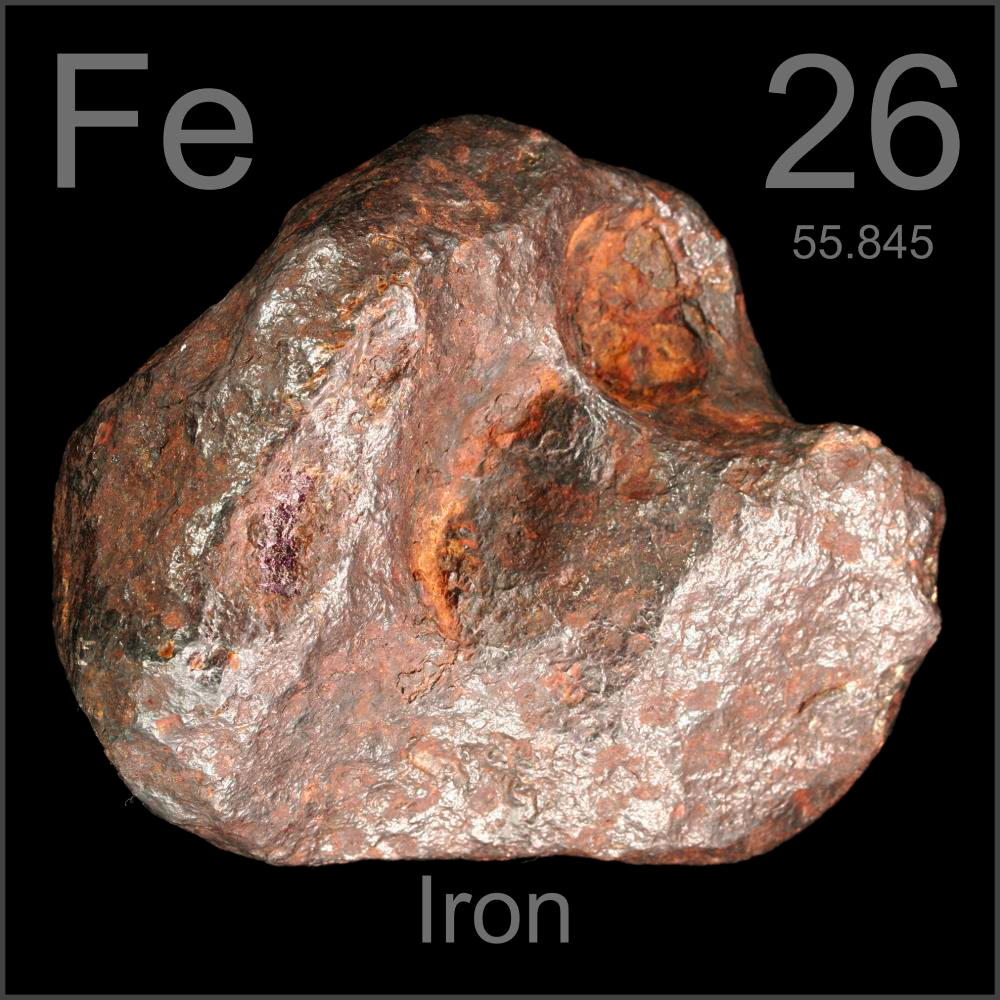
Iron is the backbone of modern infrastructure, sitting at atomic number 26 with the chemical symbol Fe. When looking at how it's classified, iron belongs to Group 8 of the periodic table, nestled within the d-block as a transition metal. Understanding its group placement reveals why this element behaves the way it does, why it forms specific alloys, and how its electron configuration dictates its physical strength.
The periodic table organizes elements by their atomic structure and repeating chemical properties. For iron, its designation within Group 8 and Period 4 isn't just an arbitrary label. It tells chemists how electrons fill its shells and how it interacts with other elements to form everything from structural steel to biological hemoglobin.
The Periodic Table Placement of Iron
To understand iron's classification, you have to look at its coordinates on the table. Iron (Fe) sits in Period 4 and Group 8 (historically referred to in older notation as Group VIII or VIIIB).
As a transition metal, iron occupies the central block of the periodic table between groups 3 and 12. These elements are characterized by partially filled d-orbitals. For iron, the electron configuration is written as $[Ar] 3d^6 4s^2$.
- The 4s Shell: Contains two valence electrons that are typically lost first during ionization, leading to the common +2 oxidation state.
- The 3d Shell: Contains six electrons. Because d-electrons can participate heavily in chemical bonding, iron easily shifts between a +2 and +3 oxidation state.
This electronic setup is why iron acts as a powerful reducing agent and readily bonds with oxygen, sulfur, and carbon.
Group 8 Elements: Who Shares Space with Iron?
Group 8 of the periodic table contains four transition metals:
- Iron (Fe)
- Ruthenium (Ru)
- Osmium (Os)
- Hassium (Hs) - a synthetic, highly radioactive element.
While iron, ruthenium, and osmium share group characteristics like multiple oxidation states and high melting points, iron is by far the most abundant and economically vital member of the group. Unlike the heavier platinum-group metals found nearby, iron is reactive, abundant in planetary cores, and cheap to extract.
You can read more about standard periodic classifications directly on the Royal Society of Chemistry Periodic Table.
Etymology: Where the Name and Symbol Come From
The word "iron" has deep linguistic roots. It stems from the Anglo-Saxon word īren or īsern, which likely traces back even further to ancient Germanic roots meaning "holy metal" or "strong metal."
The chemical symbol Fe, on the other hand, comes from the Latin word ferrum, meaning "iron." This Latin root is preserved in modern scientific terminology, such as:
- Ferrous: Pertaining to or containing iron (specifically iron in the +2 oxidation state).
- Ferromagnetic: Materials like iron that can form permanent magnets or are strongly attracted to magnets.
- Transferrin: The blood plasma protein that iron binds to for transport in the human body.
Why Iron's Group Characteristics Matter for Alloys
Because iron sits in the transition block with accessible d-orbitals, it accepts other atoms into its crystal lattice with ease. This characteristic allows metallurgy to transform pure, relatively soft iron into high-performance structural materials.
- Carbon Steel: By injecting small amounts of carbon into iron's crystal matrix, manufacturers disrupt crystal slippage, dramatically increasing tensile strength.
- Stainless Steel: Adding at least 10.5% chromium creates a passive oxide layer that prevents the iron underneath from rusting.
- Cast Iron: Higher carbon content (typically 2% to 4%) creates an alloy that melts easily and resists wear, though it becomes more brittle.
For a broader look at how structural metal extraction works, check out the World Steel Association.
Frequently Asked Questions
Why is iron classified as a transition metal?
Iron is a transition metal because it has an incomplete d-subshell in its neutral atom or its ions. This configuration gives transition metals distinct traits like colored compounds, multiple oxidation states, and catalytic properties.
What does the symbol Fe stand for?
The symbol Fe stands for ferrum, the Latin word for iron. The international chemical symbol system uses Latin roots for several elements that were known since antiquity.
Is iron the only magnetic metal in Group 8?
No. Ruthenium and osmium also share group characteristics, and iron, cobalt, and nickel are famous for their strong ferromagnetism at room temperature. However, iron's crystal structure at room temperature (body-centered cubic ferrite) makes it uniquely practical for large-scale industrial magnetism.
Why is iron so abundant on Earth?
Iron is the final element produced during standard stellar nucleosynthesis in massive stars before they collapse. Because it requires an input of energy to fuse further, it accumulates in the cores of stars and is later scattered across space by supernova explosions, forming the core building blocks of rocky planets like Earth.



