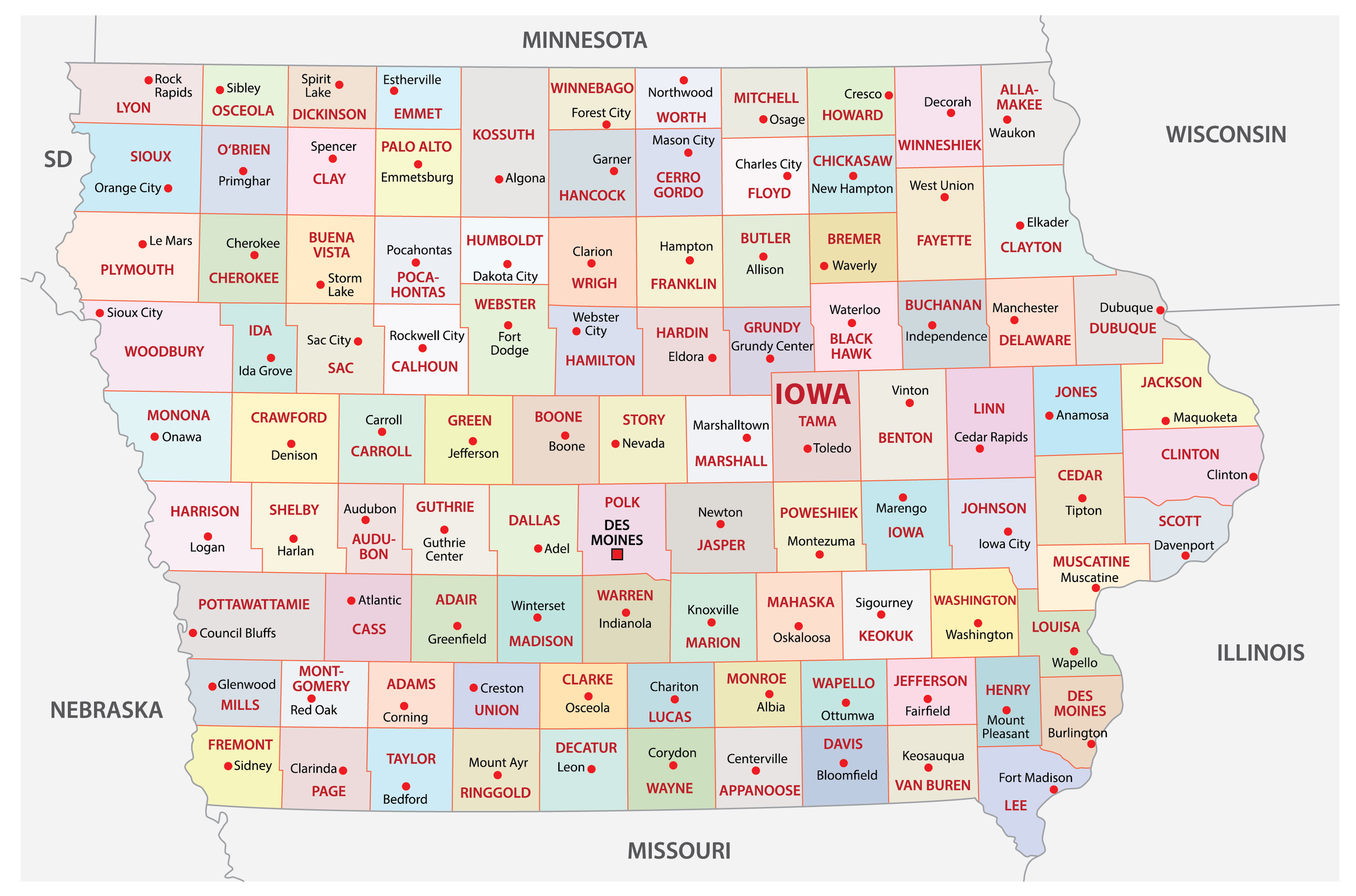
Navigating the Iowa judicial system requires understanding a structured framework designed to resolve disputes, uphold state laws, and manage constitutional rights. From rural county courthouses to the statehouse in Des Moines, Iowa's court system operates through a unified hierarchy that balances local trial access with centralized appellate review.
The state judiciary is split into three primary tiers: trial-level district courts, an intermediate court of appeals, and the state supreme court. Recognizing how cases move through these levels helps citizens, researchers, and legal professionals navigate filings, trials, and appeals effectively.
The Structure of Iowa Courts
Iowa operates a unified state court system established under Article V of the Iowa Constitution. Power flows from local trial courts up to the state's highest tribunal.
Iowa District Courts
The foundational layer of the state judiciary consists of the Iowa District Courts. Operating across all 99 counties, these trial courts are organized into eight judicial districts. District courts possess general jurisdiction, meaning they handle the vast majority of original legal filings, including felony criminal cases, major civil disputes, family law, juvenile matters, and probate administration.
Within these district courts, judicial officers vary by authority:
- District Judges: Handle major civil suits, felony prosecutions, and serious domestic relations cases.
- District Associate Judges: Preside over lesser felonies, aggravated misdemeanors, civil claims up to specific statutory limits, and juvenile proceedings.
- Judicial Magistrates: Oversee small claims, simple misdemeanors, traffic infractions, and initial arrest appearances.
Iowa Court of Appeals
Established to alleviate appellate backlogs, the Iowa Court of Appeals serves as the state's intermediate appellate court. Composed of nine judges sitting in Des Moines, this court reviews trial court decisions assigned to it by the supreme court. Litigants don't present new evidence or witnesses here; instead, panels review written legal briefs and oral arguments to determine whether trial procedures contained reversible errors.
Iowa Supreme Court
At the apex sits the Iowa Supreme Court, the state court of last resort. Made up of seven justices led by a chief justice, the court operates from the Judicial Branch Building in Des Moines. Its rulings on state laws and the state constitution are final. Beyond hearing appeals from lower courts, the supreme court regulates attorney admissions, governs legal ethics, and manages administrative control over the entire state judicial branch.
The Judicial Selection and Retention Process
Judges in Iowa aren't chosen through partisan political campaigns. Instead, the state relies on a merit-based appointment system often called the Missouri Plan, designed to insulate the bench from political pressure.
When a vacancy opens on the supreme court or court of appeals, a state judicial nominating commission screens applicants and submits a short list of finalists to the governor. The governor must appoint a judge from that specific list. District level vacancies follow a similar process using local commissions.
Once seated, Iowa judges face a retention election during the next general election following their appointment, and periodically thereafter (every eight years for supreme court justices, and six years for district and appellate judges). Voters cast a simple "yes" or "no" ballot on whether the judge should remain in office. This system emphasizes professional qualification over political alignment. Official administration details are managed through the Iowa Judicial Branch.
How Cases Move Through the System
Understanding the lifecycle of a legal dispute clarifies how these courts interact. Most matters begin at the district court level.
In a criminal matter, charges are filed, an arraignment occurs, and pretrial discovery takes place. If the case proceeds to trial, a judge or jury determines guilt or innocence. In civil matters, plaintiffs file petitions seeking damages or injunctions, followed by motions, settlements, or bench trials.
If a party believes the trial court judge made a significant legal mistake, they can file an appeal. Cases typically go first to the Court of Appeals. If parties are dissatisfied with that intermediate ruling, they can petition the Iowa Supreme Court for further review, though the supreme court accepts only a fraction of those requests.
Common Mistakes When Navigating Iowa Courts
Litigants and researchers often stumble when interacting with court systems due to procedural missteps. Avoiding these errors saves time and prevents case dismissals:
- Filing in the wrong venue: Lawsuits must generally be filed in the county where the defendant resides or where the incident occurred. Filing in an improper district triggers administrative delays or transfers.
- Missing strict deadlines: Appellate briefs, motion responses, and small claims filings adhere to strict statutory timelines. Missing a filing window forfeits legal rights.
- Confusing state and federal jurisdiction: Iowa houses two federal district courts (Northern and Southern) alongside its state courts. Matters involving federal statutes or interstate questions belong in federal court, while local criminal codes and family law belong in state district courts.
For broader statutory research, consult resources like the Iowa Legislature to review current codes.
Frequently Asked Questions
How many justices sit on the Iowa Supreme Court?
The Iowa Supreme Court consists of seven justices, including one chief justice. They hear oral arguments and issue binding interpretations of state law from Des Moines.
Are Iowa judges elected by voters?
Iowa uses a merit selection system where judges are appointed by the governor from curated lists of nominees. Judges then stand for periodic retention elections where voters decide whether to keep them in office.
What is the difference between district courts and the court of appeals?
District courts are trial courts where original evidence, witnesses, and juries operate to resolve facts. The court of appeals is an intermediate review court that evaluates whether trial judges applied the law correctly, relying solely on written records rather than new testimony.
Where can I find public court records in Iowa?
Iowa manages public court records through the state's online case management system, known as Iowa Courts Online, where individuals can look up docket information, scheduled hearings, and case dispositions.



