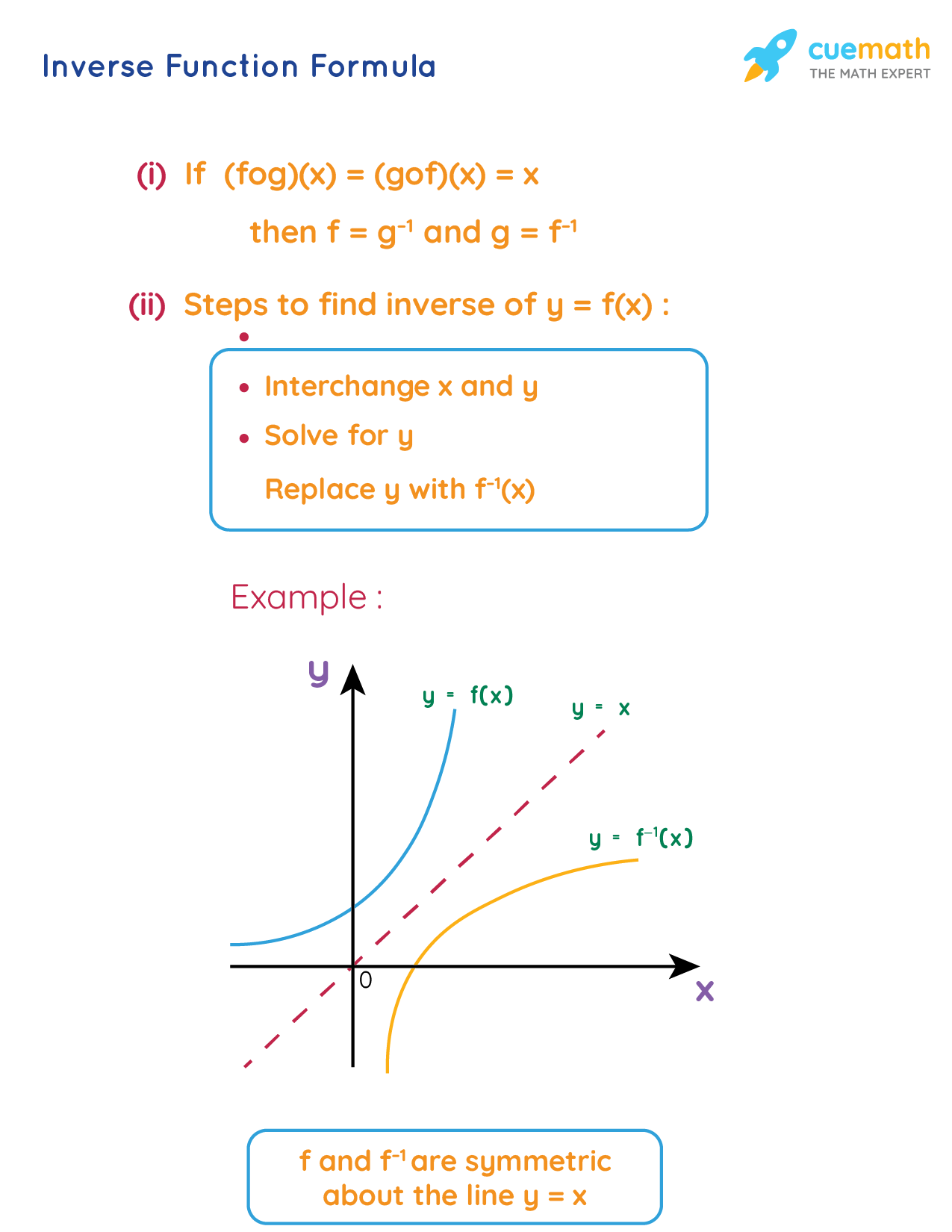
Mastering inverse trig derivatives unlocks the tools needed for advanced calculus, differential equations, and complex integration techniques. When you encounter functions like arcsine or arctangent in a problem, you don't have to guess how they change. You can apply precise formulas and combine them with the chain rule to solve complex rates of change.
This guide breaks down every core formula, walks through the underlying proofs using implicit differentiation, and provides explicit step-by-step examples. You'll also learn how to avoid common pitfalls that trip up calculus students during exams.
The Six Core Formulas
Before you can differentiate inverse trigonometric functions, you need the standard formulas memorized or readily accessible. Each formula relies on algebraic expressions in the denominator, often featuring square roots or sums of squares.
Here are the six fundamental derivatives with respect to $x$:
- Derivative of $\arcsin(x)$: $\frac{1}{\sqrt{1 - x^2}}$
- Derivative of $\arccos(x)$: $\frac{-1}{\sqrt{1 - x^2}}$
- Derivative of $\arctan(x)$: $\frac{1}{1 + x^2}$
- Derivative of $\operatorname{arccot}(x)$: $\frac{-1}{1 + x^2}$
- Derivative of $\operatorname{arcsec}(x)$: $\frac{1}{|x|\sqrt{x^2 - 1}}$
- Derivative of $\operatorname{arccsc}(x)$: $\frac{-1}{|x|\sqrt{x^2 - 1}}$
Notice the structural symmetries. Co-functions like $\arccos(x)$ and $\operatorname{arccot}(x)$ share the exact same denominators as their counterparts, but with a negative numerator. Furthermore, secant and cosecant variants incorporate an absolute value term $|x|$ outside the radical to handle negative inputs safely.
Why These Formulas Work: Derivations
Calculus teachers don't expect you to memorize formulas blindly without knowing their origin. We can prove these rules using implicit differentiation and basic right-triangle trigonometry.
Let's look at how to derive the formula for $y = \arcsin(x)$.
- Rewrite the equation without the inverse function: $\sin(y) = x$.
- Differentiate both sides implicitly with respect to $x$: $\cos(y) \cdot \frac{dy}{dx} = 1$.
- Solve for the derivative: $\frac{dy}{dx} = \frac{1}{\cos(y)}$.
- Use the Pythagorean identity $\sin^2(y) + \cos^2(y) = 1$ to express $\cos(y)$ in terms of $x$. Since $\sin(y) = x$, we get $\cos(y) = \sqrt{1 - x^2}$.
- Substitute this back into the derivative equation to yield $\frac{1}{\sqrt{1 - x^2}}$.
This exact logic applies across all six functions, bridging standard trigonometry with differential calculus.
Step-by-Step Examples
Formula memorization is only half the battle. You need to see how these rules interact with algebraic manipulations and the chain rule.
Example 1: Applying the Chain Rule with Arcsine
Find the derivative of $f(x) = \arcsin(5x^2)$.
- Identify the outer function ($\arcsin(u))$ and the inner function ($u = 5x^2$).
- Recall the standard derivative for arcsine: $\frac{1}{\sqrt{1 - u^2}}$.
- Find the derivative of the inner function: $\frac{du}{dx} = 10x$.
- Multiply the base derivative by the inner derivative according to the chain rule: $$f'(x) = \frac{1}{\sqrt{1 - (5x^2)^2}} \cdot 10x$$
- Simplify the expression: $$f'(x) = \frac{10x}{\sqrt{1 - 25x^4}}$$
Example 2: Combining Products and Arctangent
Calculate the derivative of $g(x) = x^3 \arctan(x)$.
- Recognize that this expression requires the product rule because it's two functions multiplied together.
- Let $u = x^3$ and $v = \arctan(x)$. Their respective derivatives are $u' = 3x^2$ and $v' = \frac{1}{1 + x^2}$.
- Set up the product rule formula: $(uv)' = u'v + uv'$.
- Substitute the terms: $$g'(x) = 3x^2 \arctan(x) + x^3 \left(\frac{1}{1 + x^2}\right)$$
- Clean up the fraction: $$g'(x) = 3x^2 \arctan(x) + \frac{x^3}{1 + x^2}$$
Example 3: Rational Functions with Arccosine
Find the derivative of $h(x) = \arccos\left(\frac{2}{x}\right)$.
- Treat the inner function as $u = 2x^{-1}$.
- The derivative of $\arccos(u)$ is $\frac{-1}{\sqrt{1 - u^2}} \cdot \frac{du}{dx}$.
- Compute $\frac{du}{dx} = -2x^{-2} = -\frac{2}{x^2}$.
- Substitute everything into the chain rule template: $$h'(x) = \frac{-1}{\sqrt{1 - \left(\frac{2}{x}\right)^2}} \cdot \left(-\frac{2}{x^2}\right)$$
- Simplify the negatives and square the inner fraction: $$h'(x) = \frac{2}{x^2 \sqrt{1 - \frac{4}{x^2}}}$$
- Bring the $x^2$ inside the square root by treating it as $\sqrt{x^4}$: $$h'(x) = \frac{2}{\sqrt{x^4 - 4x^2}}$$
For additional practice problems and comprehensive calculus problem sets, you can explore resources like Paul's Online Math Notes or review foundational proofs on Khan Academy Calculus.
Common Mistakes to Avoid
Even experienced students make avoidable errors when working with these functions. Keep these checkpoints in mind during exams:
- Dropping the absolute value: When differentiating $\operatorname{arcsec}(x)$ or $\operatorname{arccsc}(x)$, always keep $|x|$ in the denominator. Skipping it changes the domain validity for negative inputs.
- Forgetting the chain rule: Whenever your input is anything other than a plain $x$ (such as $3x$ or $x^3$), you must multiply your final expression by the derivative of that inner function.
- Confusing signs: Remember that co-functions ($\arccos$, $\operatorname{arccot}$, $\operatorname{arccsc}$) always yield a negative derivative.
Frequently Asked Questions
Why do inverse trig derivatives not contain trigonometric functions in their results?
When you differentiate an inverse trigonometric function, you are looking for the rate of change of an angle with respect to a side ratio. By using right-triangle geometry and Pythagorean identities, we convert those intermediate trigonometric expressions back into pure algebraic ratios of $x$.
How do I know when to use arctangent versus arcsine?
Look at the denominator structure. If the denominator features the sum of squares like $1 + x^2$, it points to arctangent. If it features a difference of squares under a square root like $\sqrt{1 - x^2}$, it points to arcsine or arccosine.
Are inverse trig derivatives used in integration?
Yes. Recognizing these derivative formulas is essential because integration is reverse differentiation. When you integrate a function like $\frac{1}{1 + x^2}$, you get $\arctan(x) + C$ immediately.
What is the domain restriction for inverse sine derivatives?
The derivative $\frac{1}{\sqrt{1 - x^2}}$ is undefined at $x = 1$ and $x = -1$ because the denominator becomes zero, resulting in a vertical tangent line on the graph.


