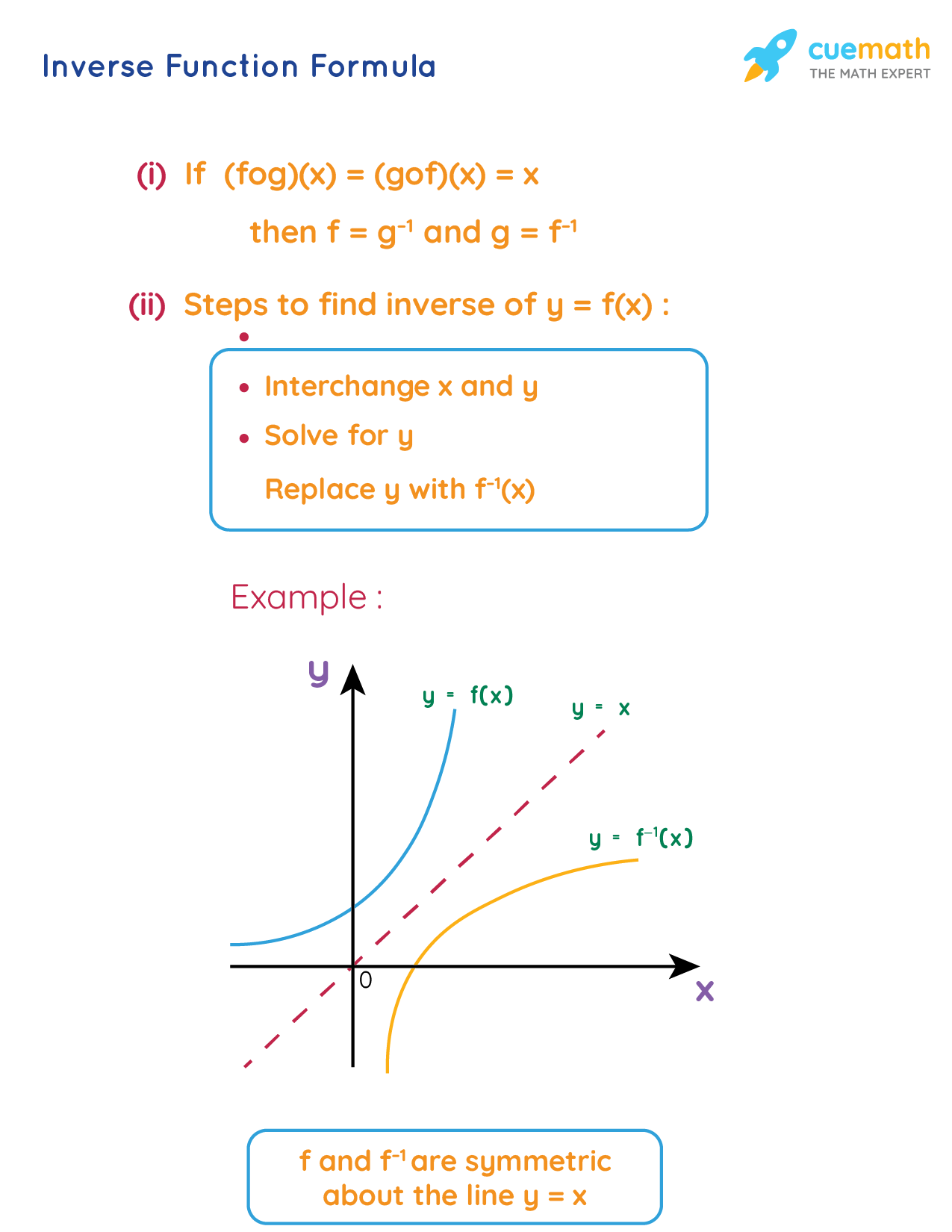
Exponents multiply a number by itself repeatedly to generate rapid scaling, while their mathematical inverses deconstruct that growth to find the origin. If you're looking for the opposite of an exponent, you aren't dealing with a single operation. Mathematics splits this inverse function into two distinct paths: roots, which find the base factor, and logarithms, which solve for the missing exponent.
Understanding how these operations work lets you reverse compound interest, analyze exponential decay, and decode logarithmic scales like decibels or pH. Let's break down how roots and logarithms function as the true counterparts to exponentiation.
Defining the Exponential Inverse
Every forward operation in math requires a reverse to maintain balance. Addition has subtraction, and multiplication has division. Exponentiation is no exception, but because it involves two distinct moving parts—the base and the exponent—its inverse splits depending on which variable you need to isolate.
When you write an exponential equation like $b^n = a$, you have three variables:
- The base ($b$)
- The exponent or power ($n$)
- The resulting value ($a$)
Finding the opposite of an exponent means you know the result and want to work backward. Depending on whether you're searching for the base or the exponent itself, you will use either a root or a logarithm.
Roots as the Arithmetical Inverse
When you want to find the base that was multiplied by itself, you use a root. This is the arithmetical inverse of an exponent. If a square scales a number up by multiplying it by itself, a square root strips away that multiplication to reveal the original value.
For example, raising $4$ to the power of $3$ gives you $64$. The cube root reverses this entirely:
$$\sqrt[3]{64} = 4$$
Common Types of Roots
- Square Roots: The inverse of squaring a number ($n = 2$). If $9^2 = 81$, then $\sqrt{81} = 9$.
- Cube Roots: The inverse of cubing a number ($n = 3$). If $5^3 = 125$, then $\sqrt[3]{125} = 5$.
- Nth Roots: The generalized inverse for any positive integer power, written as $\sqrt[n]{a}$.
Roots show up whenever you're dealing with geometric scaling, spatial dimensions, or proportional growth rates where dimensions expand uniformly.
Logarithms as the Functional Inverse
What happens when you know the base and the final result, but you need to find out how many times the multiplication happened? Roots won't help you here. You need a logarithm.
A logarithm is the functional inverse of the exponential function. If an exponential equation asks what is $10^3$?, the logarithmic equation asks 10 raised to what power equals 1,000?
We write that question as:
$$\log_{10}(1000) = 3$$
Why Logarithms Matter
Without logarithms, handling data across massive orders of magnitude becomes nearly impossible. They convert multiplication into simple addition, which allows scientists and engineers to chart data that spans from microscopic fractions to astronomical quantities on a single, readable graph.
- The Common Logarithm (Base 10): Used widely in engineering, chemistry, and measurement scales like the Richter scale for earthquakes.
- The Natural Logarithm (Base e): Denoted as $\ln(x)$, this uses Euler's number ($e \approx 2.718$) and is foundational in calculus, finance, and continuous growth models.
For a deeper dive into the constant behind natural logs, you can check out the National Institute of Standards and Technology mathematical constants reference.
Real-World Uses for Exponent Inverses
These inverse operations aren't just abstract classroom exercises. They govern how we measure the physical world and manage financial systems.
1. Decoding Logarithmic Scales
Many natural hazards and human senses don't scale linearly. Our ears perceive sound logarithmically, meaning a sound isn't twice as loud just because its energy doubles.
The decibel scale relies on logarithms to measure sound pressure cleanly. Similarly, the U.S. Geological Survey uses logarithmic calculations to measure earthquake magnitudes, where every whole-number increase represents roughly 32 times more energy released.
2. Solving Financial Growth Problems
If you invest money at a fixed annual compound interest rate, your balance grows exponentially over time according to the formula $A = P(1 + r)^t$.
If an investment analyst wants to know how many years it will take for a portfolio to reach a specific target value, they can't rely on basic division. They must isolate the time variable ($t$) by applying logarithms to both sides of the equation.
3. Algorithm Efficiency in Computer Science
In software engineering, the efficiency of search algorithms is measured using logarithmic time complexity, commonly written as $O(\log n)$.
When a binary search cuts a sorted dataset in half with every single check, the total number of operations required scales logarithmically with the size of the dataset. This inverse relationship is the reason modern databases can search through billions of records in milliseconds.
Common Misunderstandings
When learning about exponential inverses, people often run into a few common conceptual traps.
- Confusing roots with division: A root is not division. Dividing $64$ by $3$ gives you $21.33$, but the cube root of $64$ is $4$ because $4 \times 4 \times 4 = 64$.
- Assuming logs are only for base 10: While base 10 is common for human-readable scales, any positive number except $1$ can serve as a valid logarithmic base.
- Forgetting domain restrictions: You cannot take the logarithm of a zero or a negative number in standard real numbers, because no real-number exponent can turn a positive base into a negative or zero result.
Frequently Asked Questions
Is a negative exponent an inverse?
No. A negative exponent denotes a reciprocal, not an inverse operation. For example, $2^{-3}$ equals $\frac{1}{2^3}$, which is $\frac{1}{8}$. It still uses exponentiation, just flipped into a fraction.
Can you take an even root of a negative number?
Within the realm of real numbers, no. Because multiplying an even number of negative integers always yields a positive result, you cannot take the square root or fourth root of a negative number without entering the domain of imaginary numbers.
What is the difference between $\log(x)$ and $\ln(x)$?
$\log(x)$ typically refers to a base-10 common logarithm, whereas $\ln(x)$ specifically denotes a natural logarithm with the base $e$. Calculus and physics prefer $\ln(x)$ because its rate of change simplifies complex derivatives.
How do you solve an equation with an unknown exponent?
You apply logarithms to both sides of the equation. Taking the log allows you to pull the unknown exponent down as a coefficient, turning a difficult exponential equation into a straightforward linear algebra problem.


