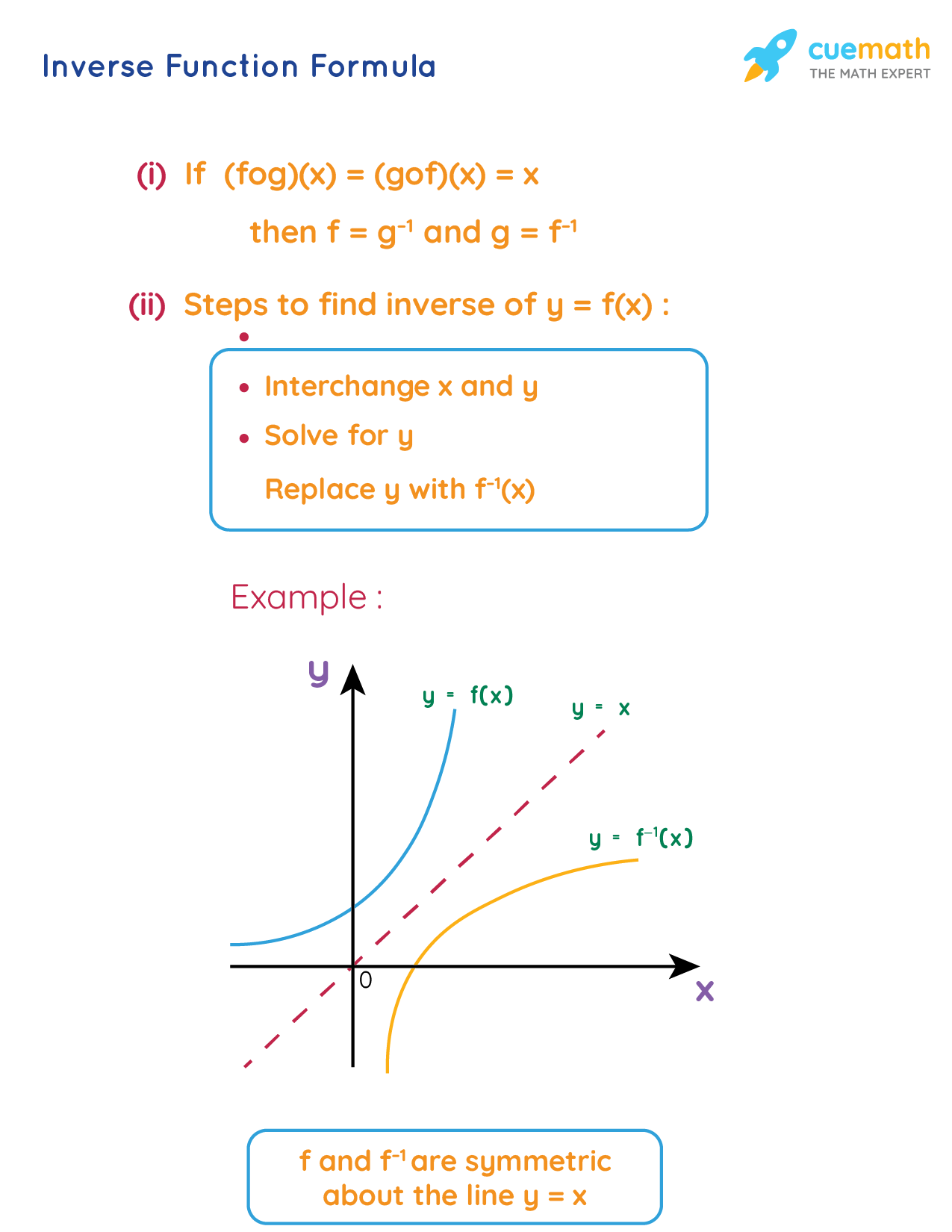
Finding the inverse of a 2x2 matrix allows you to reverse linear transformations and solve multi-variable equations with precision. If you have a square matrix $A$, its inverse $A^{-1}$ acts as the reciprocal counterpart, meaning that multiplying the original matrix by its inverse yields the identity matrix.
Knowing how to compute this manually requires checking the determinant, rearranging elements according to a strict formula, and scaling the result. Mastering this procedure forms the foundation for solving linear systems in physics, engineering, computer graphics, and economics.
Understanding Matrix Inversion Fundamentals
Before diving into calculations, it's helpful to understand what an inverse represents in linear algebra. Think of it as the matrix equivalent of division. If you multiply a number by its multiplicative inverse, you get one. In matrix algebra, multiplying a matrix by its inverse produces the identity matrix, which functions as the matrix equivalent of the number one.
The standard 2x2 identity matrix looks like this:
$$I = \begin{bmatrix} 1 & 0 \ 0 & 1 \end{bmatrix}$$
When you multiply any valid 2x2 matrix by this identity matrix, the original matrix remains completely unchanged. The primary objective of finding an inverse is to undo a transformation, taking an altered state back to its starting configuration. For practical reference, you can explore the Linear Algebra Overview at MIT OpenCourseWare for deeper theoretical context.
The Invertibility Condition and Determinants
Not every matrix can be inverted. A matrix must be square (having an equal number of rows and columns) and non-singular. Non-singular simply means its determinant is not equal to zero.
Consider a general 2x2 matrix $A$:
$$A = \begin{bmatrix} a & b \ c & d \end{bmatrix}$$
The determinant of $A$, denoted as $\det(A)$ or $|A|$, is calculated by cross-multiplying the diagonal elements and subtracting the product of the off-diagonal elements:
$$\det(A) = ad - bc$$
This single scalar value dictates whether an inverse exists:
- Non-zero determinant: If $ad - bc \neq 0$, the matrix is invertible, and a unique inverse exists.
- Zero determinant: If $ad - bc = 0$, the matrix is singular. It lacks an inverse because division by zero would occur during the calculation.
Step-by-Step Formula for the 2x2 Inverse
When the determinant is confirmed to be non-zero, you can apply the standard inversion formula. For matrix $A$, the inverse $A^{-1}$ is found through a three-step procedure:
- Calculate the determinant using the formula $ad - bc$.
- Swap the main diagonal elements ($a$ and $d$).
- Change the signs of the off-diagonal elements ($b$ and $c$ become $-b$ and $-c$).
- Multiply the resulting matrix by the scalar reciprocal of the determinant ($1 / \det(A)$).
Expressed algebraically, the formula is:
$$A^{-1} = \frac{1}{ad - bc} \begin{bmatrix} d & -b \ -c & a \end{bmatrix}$$
Worked Example: Calculating a Matrix Inverse
Let's work through a concrete numerical example to see this formula in action. Suppose we want to find the inverse of matrix $M$:
$$M = \begin{bmatrix} 3 & 5 \ 2 & 4 \end{bmatrix}$$
Step 1: Compute the Determinant
Multiply the main diagonal and subtract the product of the off-diagonal:
$$\det(M) = (3 \times 4) - (5 \times 2) = 12 - 10 = 2$$
Since the determinant is $2$ (which is not zero), the inverse exists.
Step 2: Rearrange the Matrix Elements
Swap $3$ and $4$, and negate $5$ and $2$:
$$\begin{bmatrix} 4 & -5 \ -2 & 3 \end{bmatrix}$$
Step 3: Scale by the Determinant
Multiply every element in the rearranged matrix by $\frac{1}{2}$:
$$M^{-1} = \frac{1}{2} \begin{bmatrix} 4 & -5 \ -2 & 3 \end{bmatrix} = \begin{bmatrix} 4/2 & -5/2 \ -2/2 & 3/2 \end{bmatrix}$$
Simplifying the fractions yields our final inverse matrix:
$$M^{-1} = \begin{bmatrix} 2 & -2.5 \ -1 & 1.5 \end{bmatrix}$$
Verifying Your Result Through Multiplication
A great habit in linear algebra is checking your work. If you calculated the inverse correctly, multiplying the original matrix by its inverse must result in the identity matrix. Let's test our result for $M$:
$$M \times M^{-1} = \begin{bmatrix} 3 & 5 \ 2 & 4 \end{bmatrix} \begin{bmatrix} 2 & -2.5 \ -1 & 1.5 \end{bmatrix}$$
Perform row-by-column multiplication for each position:
- Top-left: $(3 \times 2) + (5 \times -1) = 6 - 5 = 1$
- Top-right: $(3 \times -2.5) + (5 \times 1.5) = -7.5 + 7.5 = 0$
- Bottom-left: $(2 \times 2) + (4 \times -1) = 4 - 4 = 0$
- Bottom-right: $(2 \times -2.5) + (4 \times 1.5) = -5 + 6 = 1$
The product matrix is:
$$\begin{bmatrix} 1 & 0 \ 0 & 1 \end{bmatrix}$$
Because the product equals the identity matrix, our calculated inverse is verified as correct.
Common Mistakes to Avoid
Students and professionals often make a few recurring errors when computing inverses manually. Keeping these pitfalls in mind will save you time and calculation errors:
- Forgetting to divide by the determinant: It's common to swap and negate elements and then forget to scale by $1/\det(A)$, leaving you with an adjugate matrix rather than an inverse.
- Incorrect sign changes on off-diagonal elements: Remember that both off-diagonal terms change signs. If a term is positive, it becomes negative; if it's already negative, it becomes positive.
- Attempting to invert a singular matrix: Always calculate the determinant first. If you get zero, stop immediately because an inverse does not exist.
- Arithmetic errors with fractions: Working with decimals can introduce rounding errors. Keeping coefficients as simplified fractions prevents propagation errors in multi-step problems.
Real-World Applications
Matrix inversion isn't just an abstract classroom exercise. It plays a critical role across technical industries. For more insights on applied mathematical modeling, you can check resources like Wolfram MathWorld.
Solving Linear Systems
Linear equations with two variables can be written in matrix form as $AX = B$, where $A$ is the coefficient matrix, $X$ is the variable vector, and $B$ is the constant vector. Multiplying both sides by the inverse isolates the variables:
$$X = A^{-1}B$$
This provides a clean programmatic method for solving simultaneous equations.
Computer Graphics Transformations
In 2D game development and computer graphics, transformations like scaling, rotation, and translation are handled using matrices. If an object undergoes a specific transformation, applying the inverse matrix reverses those graphical operations, returning the object to its local coordinate space.
Economic Input-Output Models
Economists use matrix equations to track the interdependence between different sectors of a regional or national economy. Inverting the transaction matrix helps analysts determine the exact production output required to satisfy shifting consumer demands.
Frequently Asked Questions
What happens if the determinant of a matrix is zero?
If the determinant is zero, the matrix is classified as singular. It lacks an inverse because the formula requires dividing by the determinant, which would result in division by zero. Geometrically, this means the matrix collapses a two-dimensional space into a single line or point, destroying the information needed to reverse the transformation.
Can non-square matrices have an inverse?
No. Standard matrix inverses only exist for square matrices (such as 2x2, 3x3, or nxn). Non-square matrices can sometimes possess generalized inverses, like the Moore-Penrose pseudoinverse, but they do not have a traditional multiplicative inverse.
How do I know if my calculated inverse is correct?
Multiply your calculated inverse matrix by the original starting matrix. If the resulting product is the standard identity matrix, your inverse calculation is correct. Order matters in matrix multiplication, so verify both $A \times A^{-1}$ and $A^{-1} \times A$ if you want absolute certainty.
Is the inverse of a 2x2 matrix difficult to compute by hand?
Once you memorize the formula—swapping the main diagonal, negating the off-diagonal elements, and dividing by the determinant—finding a 2x2 inverse takes less than a minute. Larger matrices like 3x3 or 4x4 require more complex methods like Gaussian elimination or cofactor expansion, but the 2x2 case is straightforward.


