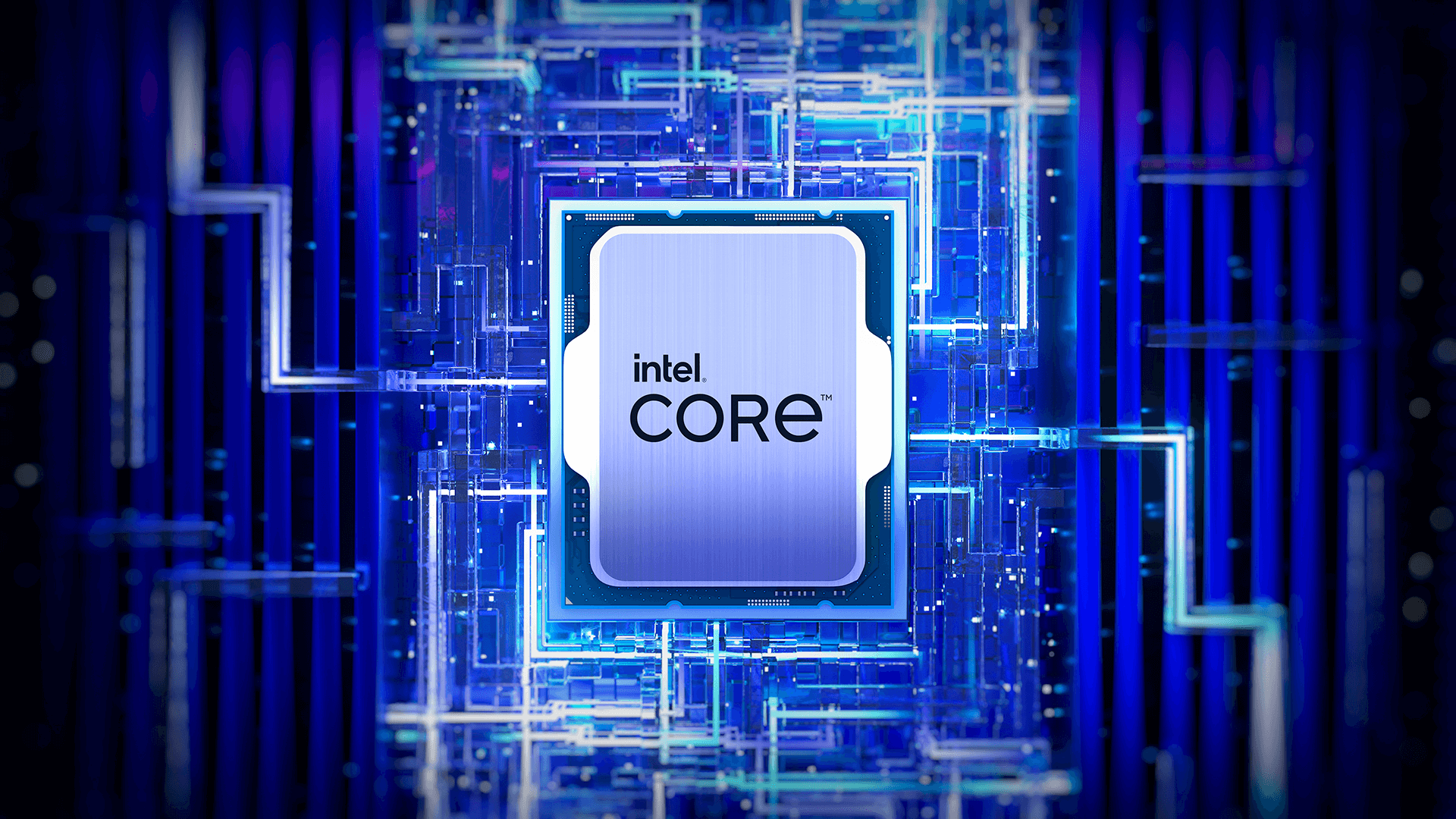
When Intel released its 7th Generation Intel Core processor family, codenamed Kaby Lake, the industry was shifting toward refined microarchitectures rather than massive structural leaps. If you're looking at how these processors stack up today, it helps to understand that Kaby Lake was built on a mature 14nm manufacturing process known as 14FF+. Instead of rewriting the rulebook established by the previous Skylake architecture, engineers focused heavily on transistor optimizations, clock speed transitions, and dedicated media engines.
Performance gains for the 7th generation centered around improved efficiency, faster frequency scaling via enhanced Speed Shift technology, and native hardware decoding for demanding video codecs. While modern computing has moved far past these quad-core and dual-core chips, analyzing their underlying mechanics gives you a clear picture of how mainstream desktop and mobile computing evolved during the late 2010s.
Core Architectural Refinements
Intel didn't alter the base instructions per cycle (IPC) significantly over Skylake, but the physical implementation received major tuning. Transistor channel strain was adjusted to allow higher frequencies without a proportional spike in thermal design power (TDP).
- Intel Speed Shift Technology: Frequency adjustments became nearly instantaneous. The CPU could ramp from a low idle state to maximum turbo frequency in milliseconds, which directly improved snappy everyday responsiveness.
- Gen 9.5 Graphics Engine: The integrated graphics block was upgraded to handle hardware-accelerated 10-bit HEVC and VP9 decode and encode tasks. This allowed laptops and small form-factor desktops to stream 4K video streams smoothly without exhausting the main CPU cores.
- Platform Integration: Desktop variants paired with Intel 200-series chipsets introduced support for Intel Optane Memory caching, bridging the speed gap between mechanical hard drives and solid-state storage.
Desktop Lineup and Specifications
The desktop ecosystem, anchored by the LGA 1151 socket, offered straightforward drop-in compatibility for existing motherboards with a simple BIOS update. The flagship quad-core units, such as the Core i7-7700K, pushed base clocks to 4.2 GHz with turbo frequencies reaching 4.5 GHz out of the box.
- Core i7 Series: Typically featured 4 cores and 8 threads with 8MB of shared L3 cache, aimed at high-end consumer multitasking and gaming enthusiasts.
- Core i5 Series: Provided 4 cores and 4 threads without hyper-threading, sitting at a 65W TDP for standard setups.
- Core i3 Series: Brought hyper-threading to budget-conscious builders for the first time in mainstream desktop tiers.
For official technical specifications and platform documentation, check the Intel ARK Database.
Mobile Variants and Power Scaling
Mobile efficiency defined the 7th generation's commercial footprint. Intel divided its mobile offerings into distinct thermal brackets to target different device form factors:
- U-Series (15W - 28W): Found in ultra-thin notebooks and convertibles, balancing sustained productivity with all-day battery life.
- H-Series (45W): Powered mobile workstations and performance laptops, handling demanding multi-threaded workflows like audio editing and lightweight rendering.
- Y-Series (5W - 7W): Originally badged under legacy naming schemes, these fanless processors enabled ultra-slim tablet-laptop hybrids.
Detailed mobile performance metrics and benchmark comparisons are available through Intel's Performance Index.
Common Misconceptions and Upgrade Realities
Many users mistake Kaby Lake for a revolutionary node shrink. In reality, it was the third refinement of Intel's 14nm process node, following Broadwell and Skylake. Because subsequent generations introduced core count explosions in response to competitive market pressures, 7th generation processors are often evaluated by their hard limits as quad-core components.
If you are maintaining systems running these chips, keep a few operational constraints in mind:
- Operating System Boundaries: Official support matrices for modern operating systems heavily favor newer microarchitectures, meaning older platforms require manual workaround steps for recent software suites.
- Thermal Maintenance: Over time, thermal paste degrades. Replacing the compound on high-end chips like the i7-7700K yields immediate drops in peak operating temperatures.
- Memory Ceilings: Desktop platforms max out at DDR4-2400 natively on standard chipsets, limiting memory bandwidth compared to modern multi-channel configurations.
Frequently Asked Questions
Can a 7th generation processor run modern software smoothly?
Everyday productivity tasks, web browsing, and office applications run without trouble. However, heavy multi-threaded workloads and modern AAA gaming titles will bottleneck due to the physical limitation of four cores.
What motherboard chipset do these processors require?
They use the LGA 1151 socket. While they are forward and backward compatible with 100-series and 200-series chipsets, using a 200-series board unlocks native features like Optane storage acceleration.
Did Kaby Lake introduce hardware security patches?
Later security vulnerabilities discovered across multiple processor generations required microcode updates that impacted raw performance under specific heavy system calls. Keeping the system BIOS updated is essential for stability.
How does it compare to modern multi-core architectures?
Modern architectures feature heterogeneous core designs with double or quadruple the physical core counts, making current entry-level processors vastly superior in parallel processing and content creation speeds.