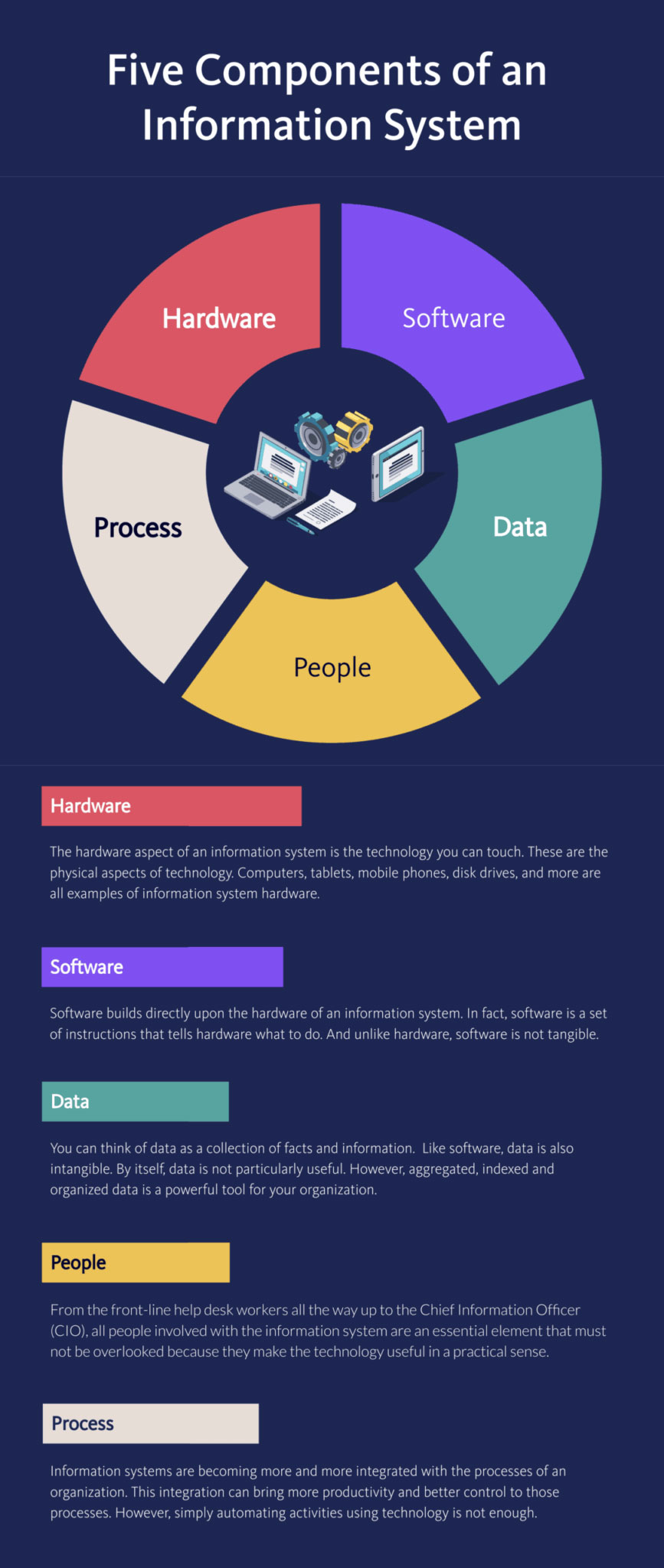
Information technology powers the digital systems, networks, and data architectures that drive modern commerce and daily operations. Far from a simple collection of computers, it functions as an integrated ecosystem where hardware, software, protocols, and data pipelines meet to process and secure organizational information at scale.
Modern IT infrastructures rely on structured layers to maintain uptime, secure data integrity, and support scalable growth. Whether you're managing on-premises data centers or migrating to hybrid cloud environments, understanding these core components helps teams avoid costly system bottlenecks, security gaps, and operational silos.
Core Architectural Pillars of Modern IT
Every functional IT ecosystem is built on a structured hierarchy of physical assets, software layers, and transmission pathways. Without a balanced approach across these layers, systems degrade in performance and security.
Hardware and Physical Infrastructure
The physical foundation of any IT stack includes servers, client devices, switches, routers, and storage arrays. Modern enterprise hardware prioritizes high-density processing, energy efficiency, and modular expansion.
- Servers and Compute: Rack-mounted and blade servers equipped with multi-core processors handle intensive computational workloads.
- Switching and Routing: Enterprise-grade networking hardware directs data packets across local and wide-area networks with minimal latency.
- Storage Area Networks (SAN) and Network-Attached Storage (NAS): High-speed block and file storage systems guarantee redundancy through RAID configurations and mirrored arrays.
Operating Systems and Virtualization Layers
Hardware alone cannot process tasks without operating systems and virtualization tools that abstract physical resources into flexible virtual environments.
- Operating Systems: Enterprise Linux distributions and Windows Server manage direct hardware access, kernel-level security, and system resources.
- Hypervisors: Type-1 hypervisors like VMware ESXi and open-source alternatives partition physical servers into isolated virtual machines, maximizing hardware utilization.
- Containerization: Engines like Docker package applications with their dependencies, allowing consistent execution across different testing and production environments.
Data Governance and Storage Strategies
Data is only as valuable as its organization, security, and accessibility. Modern IT teams must implement rigorous data lifecycle management policies to prevent data bloat and compliance failures.
Structured Versus Unstructured Data
Organizations handle two primary forms of data, each requiring distinct storage strategies:
- Structured Data: Stored in relational database management systems using rows and columns, optimized for SQL queries and transactional integrity.
- Unstructured Data: Encompasses emails, sensor logs, video files, and documents managed via object storage or NoSQL databases.
Backup and Disaster Recovery Protocols
Data loss can cripple an organization within minutes. A robust IT strategy mandates the 3-2-1 backup rule: maintain three total copies of data, across two different media types, with at least one copy stored offsite or in immutable cloud storage. Regular restoration tests ensure recovery point objectives (RPO) and recovery time objectives (RTO) are met during unexpected hardware failures or ransomware attacks.
Network Architecture and Security
As organizations decentralize their workforces, securing data in transit becomes just as critical as protecting data at rest. Network design must balance high availability with strict access controls.
Core Networking Protocols
Reliable communication depends on standard networking models. TCP/IP suites manage packet delivery, while DNS translates human-readable domains into machine-readable IP addresses. Virtual Private Networks (VPNs) and Software-Defined Wide Area Networks (SD-WAN) connect remote branch offices securely over public internet lines.
Cybersecurity Best Practices
Protecting modern IT assets requires a defense-in-depth approach rather than relying on a single perimeter firewall.
- Zero Trust Architecture: Never trust, always verify. Every user and device must authenticate continuously before accessing internal resources.
- Identity and Access Management (IAM): Enforce multi-factor authentication and role-based access control to limit lateral movement during a breach.
- Patch Management: Regularly update operating systems, firmware, and third-party libraries to close known Common Vulnerabilities and Exposures (CVEs).
Common IT Implementation Mistakes
Organizations often stumble during digital transformations due to poor planning or rushed deployments. Watch out for these frequent pitfalls:
- Neglecting Scalability: Purchasing hardware or building database schemas that cannot handle peak traffic leads to sudden downtime and expensive emergency refactoring.
- Skipping Documentation: Failing to map network topologies, IP allocations, and software dependencies leaves IT teams blind during troubleshooting incidents.
- Overlooking Vendor Lock-in: Relying entirely on proprietary cloud APIs without containerization strategies makes migrating workloads to alternative providers difficult and costly.
- Inadequate Employee Training: Phishing simulations and basic security awareness training are frequently ignored, leaving human error as the easiest vector for cyberattacks.
Frequently Asked Questions
What is the difference between IT and computer science?
Computer science focuses on software engineering, algorithmic theory, and writing code to create new programs. Information technology focuses on deploying, managing, and securing existing hardware, networks, and software systems so organizations can operate efficiently.
How does cloud computing change traditional IT infrastructure?
Cloud computing shifts capital expenditure on physical servers into operational expenditure on subscription-based services. It allows companies to provision virtual servers, storage, and databases instantly without managing physical data centers.
What is edge computing and why is it growing?
Edge computing processes data closer to where it is generated—such as IoT sensors or local machinery—rather than sending every byte back to a centralized cloud server. This reduces network latency and saves bandwidth in real-time applications.
How often should an organization audit its IT security?
Comprehensive vulnerability assessments and penetration testing should happen at least annually, while automated software vulnerability scans should run continuously in the background.



