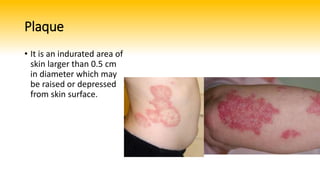
Induration is the medical term for localized hardening or firming of soft tissue, most commonly the skin and the subcutaneous layers beneath it. When tissue becomes indurated, it loses its normal elasticity, feeling stiff, dense, or rubbery to the touch. This physical change happens when the body responds to injury, chronic inflammation, infection, or abnormal protein and calcium deposits by producing excess fibrous connective tissue. Recognizing what causes this firming helps patients and clinicians determine whether a patch of hardened skin is a harmless healing response or a warning sign of an underlying systemic illness.
The physical presentation of induration varies widely based on the root trigger. A patient might notice a small, firm nodule under the skin after a minor puncture, or they could experience a broad area of tight, thickened skin across a limb. Because induration isn't a disease itself but rather a physical sign of another process, doctors always look beyond the skin surface to find the exact trigger. Let's look at why tissue hardens, how clinicians diagnose the underlying issue, and what options exist for restoring normal tissue flexibility.
What Causes Induration?
Tissue hardening occurs through several distinct biological mechanisms, ranging from standard wound healing gone awry to deep-seated chronic infections and autoimmune diseases. Understanding the primary drivers helps clarify why standard moisturizers or anti-itch creams won't fix the problem.
Fibrosis and Abnormal Scarring
The most frequent cause of localized tissue hardening is excessive collagen deposition during the tissue repair process. When the dermis experiences trauma, surgery, or deep burns, fibroblasts synthesize collagen fibers to patch the wound. In some cases, this production continues long after the wound has closed, creating dense, raised areas known as hypertrophic scars or keloids. These formations feel rigid because the collagen fibers pack together in thick, disorganized bundles rather than the loose, basket-weave pattern of normal skin.
Chronic Inflammation and Autoimmune Disorders
Systemic and localized inflammatory states frequently trigger tissue induration. Autoimmune conditions like scleroderma cause the immune system to attack connective tissues, leading to widespread fibrosis of the skin and internal organs. Similarly, chronic venous insufficiency in the lower legs can cause red blood cells to leak into surrounding tissues, setting off an inflammatory cascade that results in lipodermatosclerosis—a painful hardening and tightening of the lower calf skin often described as looking like an inverted champagne bottle.
Infections and Abscess Formation
Bacterial, fungal, and mycobacterial infections often present with firm, indurated borders. When pathogens invade deep tissue layers, the body walls them off with an influx of white blood cells, creating an inflammatory zone around an abscess or granuloma. For example, classic skin tests for tuberculosis rely on measuring the localized induration—not just redness—produced by a delayed hypersensitivity reaction to tuberculin proteins injected under the skin.
Foreign Body Reactions and Calcification
When the body encounters foreign materials, medical implants, or abnormal calcium deposits, it attempts to isolate them by building a dense fibrous capsule. This process leads to localized induration around the site. Dystrophic calcification—where calcium salts deposit in previously damaged or necrotic tissue—also creates hard, rock-like plaques beneath the epidermis.
Key Symptoms Associated with Induration
Identifying induration relies heavily on physical palpation and observing accompanying skin changes. Because the condition spans many different medical specialties, symptoms can manifest abruptly or develop over years.
- Loss of skin pliability: The primary hallmark is a distinct area that resists pinching or gentle depression, feeling stiff compared to surrounding healthy tissue.
- Surface discoloration: Depending on the cause, the hardened skin may appear red, purple, brown, or hyperpigmented.
- Tenderness and warmth: Acute inflammatory or infectious indurations often feel painful, warm, and swollen to the touch.
- Bound-down appearance: The skin may appear tethered or pulled tight against underlying muscle and bone, restricting full range of motion if located near a joint.
- Ulceration or skin thinning: In chronic cases like stasis dermatitis, the indurated skin may eventually thin out, become shiny, and break down into stubborn ulcers.
Diagnostic Procedures for Hardened Tissue
Because tissue hardening spans everything from benign scar tissue to aggressive malignancy, clinicians rely on a structured diagnostic workup to pinpoint the exact cause.
During a physical examination, a physician assesses the border, depth, and mobility of the hardened area. They evaluate whether the lesion is tethered to deep structures and check for signs of local infection or systemic illness. According to the National Institutes of Health, persistent localized skin changes that don't resolve within a few weeks warrant professional evaluation to rule out deep-seated infections or inflammatory disorders.
When physical exams are inconclusive, doctors utilize several diagnostic tools:
- Skin Biopsy: A small tissue sample is harvested and examined under a microscope to inspect collagen architecture, check for granulomas, or identify malignant cells.
- Imaging Studies: Ultrasound or magnetic resonance imaging (MRI) helps determine the depth of the induration, ruling out intramuscular involvement or foreign bodies.
- Laboratory Blood Work: Complete blood counts, inflammatory markers (like C-reactive protein), and specific autoantibody panels help identify underlying autoimmune or systemic conditions.
Medical Treatments and Management Strategies
Treating induration requires addressing the root cause rather than just softening the surface skin. A dermatologist or rheumatologist will tailor the therapeutic plan based on biopsy results and clinical history.
Pharmacological Interventions
Topical or intralesional corticosteroids are frequently prescribed to calm localized inflammation and reduce collagen synthesis in hypertrophic scars. For systemic autoimmune conditions causing widespread tissue hardening, immunomodulating medications or biologic therapies help halt the progression of fibrosis. If an active bacterial infection is driving the induration, targeted antibiotic courses resolve the underlying inflammatory response.
Physical Therapy and Mechanical Modalities
When induration restricts joint mobility or causes muscle tightness, physical therapy plays a vital role. Techniques such as myofascial release, specialized massage, and scar mobilization help break down dense fibrous bands and restore elasticity to the affected limbs.
Advanced Dermatological Procedures
For stubborn scars, keloids, or localized fibrotic plaques, clinical procedures offer effective reshaping. Options include fractional laser therapy to remodel collagen fibers, cryotherapy to break down abnormal tissue, and in severe cases, surgical excision followed by preventative radiation or pressure therapy to prevent recurrence.
Frequently Asked Questions
Is all induration a sign of cancer?
No. The vast majority of indurated areas stem from benign causes such as standard scar formation, healed insect bites, localized infections, or chronic venous stasis. However, because certain aggressive skin cancers can also present with firm, indurated plaques, any persistent or growing hard spot on the skin should be evaluated by a healthcare professional.
Can induration go away on its own?
Mild induration caused by acute trauma, minor inflammation, or a healing insect bite often softens and resolves naturally over several weeks or months as tissue remodeling finishes. Chronic induration driven by systemic autoimmune diseases, deep calcification, or established keloids rarely disappears without targeted medical intervention.
What is the difference between inflammation and induration?
Inflammation is the body's general immune response to injury or infection, characterized by redness, heat, swelling, and pain. Induration is a specific physical consequence of that process—the actual hardening and firming of the tissue caused by the accumulation of fluid, cells, and excess fibrous protein.
How do doctors measure induration during a tuberculosis skin test?
During a tuberculin skin test (Mantoux test), clinicians do not measure the surrounding red area. Instead, they palpate the injection site with their fingertips to find the edges of the hard, raised induration, and use a specialized ruler to measure the diameter of this firm area in millimeters.



