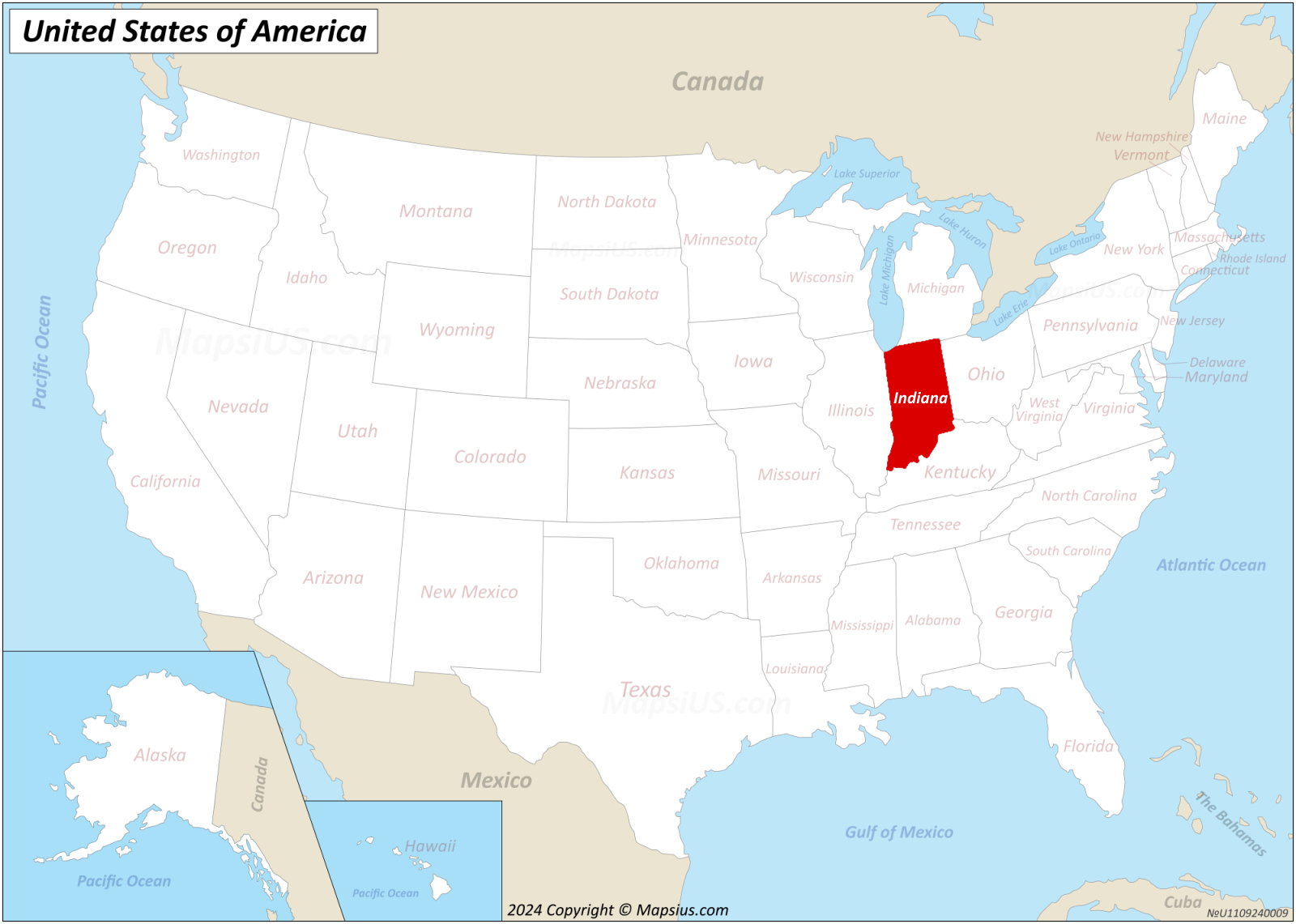
Navigating Indiana time zones requires knowing that the state is split between the Eastern and Central time zones. Eighty of Indiana's 92 counties observe Eastern Time, while the remaining 12 counties sit in the Central Time Zone. This unique geographic layout affects daily commutes, business operations, and travel across the state.
If you are crossing state lines or meeting clients in different parts of the state, missing a boundary can throw off your schedule by an hour. The divide isn't split straight down the middle. Instead, it clusters in two distinct corners: the industrial northwest suburbs near Chicago and the southwestern river counties near Evansville. Understanding how this map functions keeps your travel plans on track.
The Indiana Time Zone Split
The modern layout places the vast majority of the state on Eastern Standard Time (EST) and Eastern Daylight Time (EDT). Indianapolis, Fort Wayne, South Bend, and Bloomington all run on Eastern time. However, two clusters operate on Central Standard Time (CST) and Central Daylight Time (CDT).
The Northwest cluster includes six counties closely tied to the Chicago metropolitan economy: Lake, Porter, LaPorte, Jasper, Newton, and Starke. Residents in cities like Gary, Hammond, and Valparaiso live on Central time, matching their neighbors across the Illinois border.
The Southwest cluster comprises six counties anchored by the Evansville region: Gibson, Posey, Vanderburgh, Warrick, Spencer, and Perry. Towns like Evansville, Mount Vernon, and Tell City operate on Central time, aligning with nearby parts of Kentucky and Illinois. The remaining 80 counties follow the Eastern clock, creating a patchwork that took decades of federal petitions and legislative battles to settle.
According to historical archives from the National Conference of State Legislatures, businesses and local governments settled on this current boundary to balance commercial ties with Chicago, Louisville, and Cincinnati.
Major Indiana Cities and Their Time Zones
Knowing where major urban centers fall prevents scheduling errors. Because county lines define the borders, municipal boundaries occasionally brush against time changes, though entire cities within those 12 counties share the same offset.
- Indianapolis: Eastern Time. As the state capital in Marion County, it anchors the eastern standard majority.
- Fort Wayne: Eastern Time. Located in Allen County near the Ohio border, it operates strictly on Eastern time.
- Evansville: Central Time. Situated in Vanderburgh County, it follows Central time alongside its surrounding river communities.
- South Bend: Eastern Time. Though St. Joseph County sits in the northern tier near Michigan and the Central-time counties, it observes Eastern time.
- Gary: Central Time. Located in Lake County, it shares a time zone with Chicago.
- Bloomington: Eastern Time. Home to Indiana University in Monroe County, it runs on Eastern time.
History of Daylight Saving Time in Indiana
Indiana's relationship with clocks involves a century-long tug-of-war. For decades, many counties refused to observe Daylight Saving Time (DST), creating massive confusion for television broadcasts, train schedules, and long-distance commerce. Some counties observed DST while adjacent ones stayed on standard time year-round.
In 2005, the Indiana General Assembly voted to mandate Daylight Saving Time statewide, which took effect in April 2006. This change prompted several counties to petition the U.S. Department of Transportation to switch from Eastern to Central time or vice versa. By November 2007, the map stabilized into the 80-12 split seen today. Official regulations and historical documentation are managed through IN.gov, the state's official portal.
Common Mistakes When Navigating Indiana Time
Travelers and remote workers frequently make errors when crossing or doing business across Indiana time zones.
- Assuming north means Central: People often think northern Indiana is entirely on Central time because of Chicago. In reality, South Bend, Elkhart, and Fort Wayne are all on Eastern time. Only the extreme northwestern corner shares Chicago's time.
- Ignoring smartphone automatic updates: While digital devices usually update automatically based on cellular towers, driving through rural parts of counties near the boundary can cause phones to flip back and forth temporarily. Always verify meeting times manually when scheduling across the zone line.
- Forgetting past exemption habits: Older travel guides or outdated web articles sometimes claim that parts of Indiana do not observe Daylight Saving Time. Today, the entire state springs forward and falls back uniformly.
Frequently Asked Questions
Does all of Indiana observe Daylight Saving Time?
Yes. Since 2006, every county in Indiana has observed Daylight Saving Time, moving clocks forward in March and back in November.
Which counties are in the Central Time Zone?
There are 12 counties on Central time: Lake, Porter, LaPorte, Jasper, Newton, Starke, Gibson, Posey, Vanderburgh, Warrick, Spencer, and Perry.
Why does part of Indiana use Central Time?
Proximity to major economic hubs like Chicago in the northwest and Evansville/Owensboro in the southwest drove these specific counties to align their clocks with neighboring Illinois and Kentucky business partners.
How many time zones does Indiana span?
Indiana spans two time zones: Eastern and Central. No other time zones touch the state.


